Longevity Pagoda
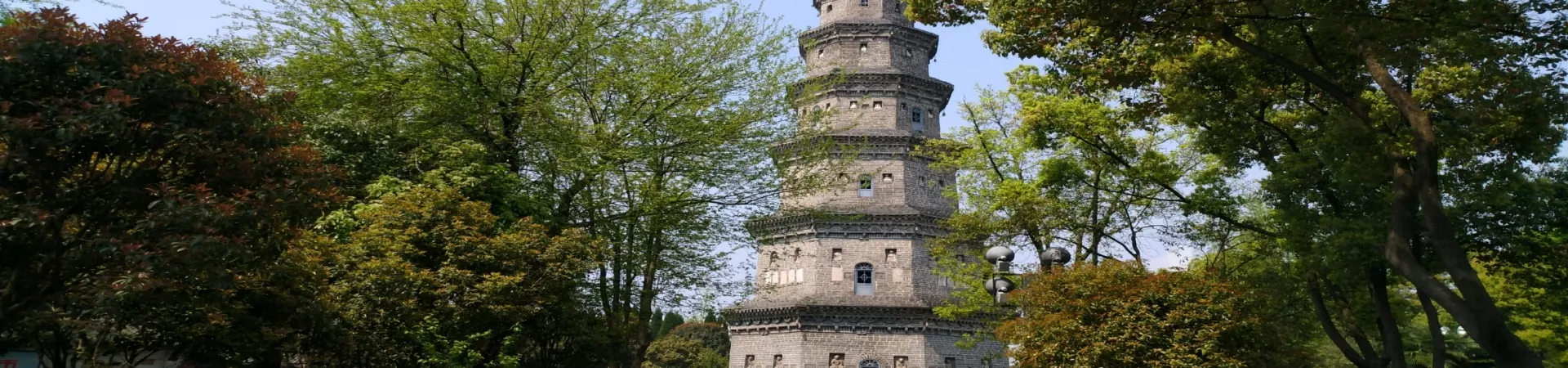
Subtitle: A Journey Through Time: Exploring the Historical and Cultural Significance of Jingzhou's Longevity Pagoda
Introduction: A Sentinel on the River
Standing as a weathered yet resilient sentinel on the southern bank of the mighty Yangtze River in Jingzhou City, Hubei Province, the Wan Shou Bao Ta, or the Longevity Pagoda, is far more than an ancient architectural relic. It is a profound testament to Chinese religious art, hydraulic engineering history, and the enduring human spirit in the face of nature's power. Constructed during the Ming Dynasty, this unique pagoda has witnessed centuries of seasonal floods, its very structure bearing silent witness to the relentless battle between the land and the river. Unlike pagodas built solely for spiritual contemplation or scenic enhancement, the Longevity Pagoda embodies a dual purpose: serving as a Buddhist sanctum while also functioning as a critical flood control marker and a symbolic guardian against the river's inundations. A visit here is not merely an architectural tour; it is an immersive step into a narrative where faith, history, and geology are intricately intertwined.
1. Historical Context and Architectural Significance
1.1. Ming Dynasty Origins and Imperial Patronage The Longevity Pagoda was commissioned in 1548 during the reign of the Jiajing Emperor of the Ming Dynasty. Its construction was initiated by Zhu Xianhong, the Prince of Liao, a feudal lord whose fiefdom included the Jingzhou region. The primary motivation, as inscribed in historical records and echoed in its name, was to pray for the longevity of the emperor and the stability of the realm. This act of piety reflects the deep interconnection between imperial authority and Buddhist patronage in feudal China. The pagoda was thus born from a blend of political duty, filial piety (towards the emperor), and religious devotion, establishing its significance from the outset as a state-sanctioned spiritual monument.
1.2. Architectural Style and Structural Design The pagoda is a superb example of a brick-and-stone masonry pagoda from the mid-Ming period. It stands approximately 40 meters tall, with an octagonal footprint—a shape commonly associated with Buddhist cosmology in Chinese architecture. The structure comprises seven exterior tiers, each featuring elegant upturned eaves, though weathering has softened their original sharp profiles. What makes its architectural narrative particularly compelling is its current appearance: the pagoda appears to sink into the ground, with its base now situated several meters below the surrounding riverbank level. This is not an illusion but a historical record etched in stone and earth.
2. The Pagoda and the River: A Story Written in Sediment
2.1. The "Sinking" Phenomenon: A Geological Archive The most striking feature of the Longevity Pagoda is its submerged base. Over the more than 470 years since its construction, successive floods of the Yangtze River have deposited immense layers of silt and sediment around its foundation. With each major flood, the river would overflow its banks, leaving behind a new stratum of earth. Gradually, the ground level around the pagoda rose, while the pagoda itself remained anchored to its original foundation. This process has created a vivid, open-air geological exhibit. The original entrance and the first tier are now partially buried, offering a tangible, awe-inspiring measure of the sediment accumulation and the sheer frequency and power of historical floods. It serves as a silent, powerful chronicle of the Yangtze's hydrological history.
2.2. A Functional Flood Marker Beyond its religious purpose, the pagoda served a crucial practical role. For generations, local officials and residents used the water levels on the pagoda's body to gauge the severity of floods. Marks and observations of how high the river waters reached on its bricks provided critical data for disaster assessment and response. In this sense, the pagoda was an early hydrological instrument, its stone surface a calibrated ruler against the river's fury. This functional aspect transformed it from a purely spiritual symbol into a community guardian, intimately linked with the safety and fortunes of Jingzhou's inhabitants.
3. Artistic and Religious Heritage
3.1. Exterior Iconography and Inscriptions The exterior of the pagoda is adorned with over 2,300 exquisitely carved brick and stone statues of Buddhas, bodhisattvas, and various Buddhist deities, along with intricate floral and geometric patterns. These carvings, though eroded by centuries of wind and water, retain remarkable detail and showcase the craftsmanship of Ming-era artisans. Additionally, the pagoda features numerous stone tablets inscribed with Buddhist sutras, donor names, and commemorative texts. These inscriptions are invaluable for historical research, providing insights into the patrons, craftsmen, and religious practices of the time.
3.2. The Underground Palace and Relics In accordance with traditional Chinese pagoda construction, the Longevity Pagoda is believed to house a "digong" or underground palace beneath its foundation—a sealed chamber typically containing Buddhist relics, scriptures, and other precious offerings. While not openly accessible, its presumed existence adds a layer of sacred mystery and significance to the site, aligning it with the core Buddhist tradition of using pagodas as reliquaries.
4. The Modern Preservation and Visitor Experience
4.1. Conservation as a Cultural Relic Recognized as a key National Cultural Relic Protection Unit, the Longevity Pagoda is now under stringent state protection. Conservation efforts focus on stabilizing its structure, managing environmental erosion, and preserving its intricate carvings. The site is not just preserved as a static monument but as a dynamic historical document. The decision to leave the pagoda in its "sunken" state, rather than excavating it to its original base, is a conscious one. It allows the pagoda to continue telling its most compelling story—the story of its dialogue with the Yangtze River.
4.2. Experiencing the Site Today Visitors approach the pagoda by descending a staircase from the modern river embankment, literally walking down through layers of historical time to reach its entrance. This physical descent is a powerful prelude to the visit. The surrounding area has been developed into the Wan Shou Yuan (Longevity Garden) park, providing a serene green space with informative plaques that explain the pagoda's history and ecological context. From the park, one can appreciate the stark contrast between the ancient, silt-encased tower and the modern, massive flood-control walls that now line the Yangtze, highlighting the evolution of humanity's relationship with the river.
Practical Information for Visitors
Opening Hours: The park surrounding the Wan Shou Bao Ta is generally accessible throughout the day. However, access to the pagoda's interior or immediate grounds may be subject to specific management schedules. It is highly recommended that visitors check the latest opening hours and any access restrictions posted on-site at the scenic area or verify through official local tourism channels before planning their visit, as these details can vary.