Jingzhou Guanyu Temple
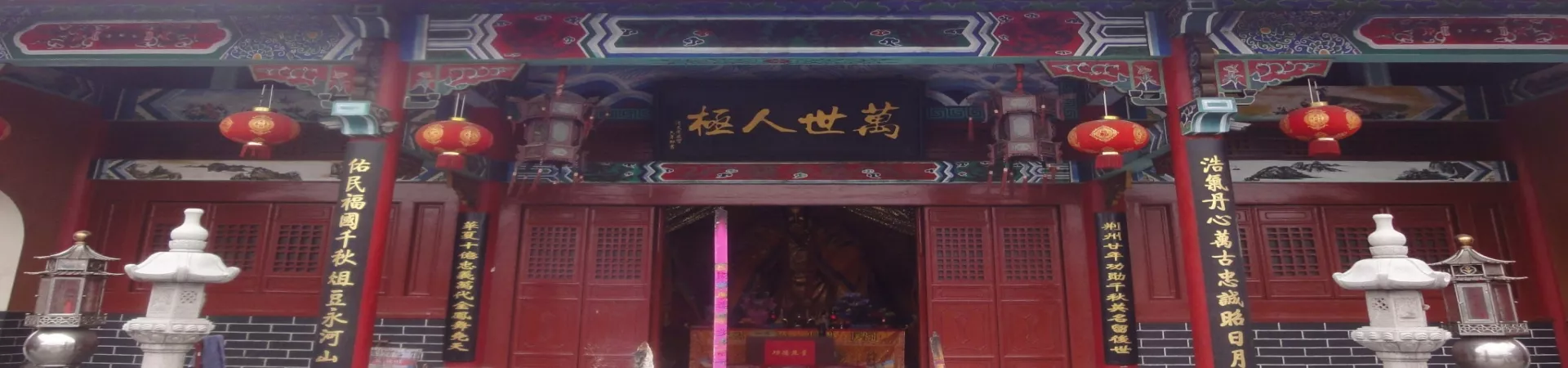
Subtitle: A Sacred Sanctuary Honoring a Legend: Exploring the Jingzhou Guanyu Temple
Introduction: From the Ashes of War to a Cultural Beacon
Nestled within the historic city of Jingzhou in Hubei Province, the Jingzhou Guanyu Temple stands as a profound testament to resilience, reverence, and cultural revival. This temple is not merely a collection of halls and statues; it is a vibrant, living center dedicated to Guanyu, the deified Chinese general from the Three Kingdoms period (c. 220-280 AD) who is venerated as a paragon of loyalty, righteousness, and martial prowess. Its story is one of destruction and rebirth. The original temple, located on Xiejia Mountain (卸甲山, meaning "Unloading Armor Mountain"), was tragically destroyed during the devastating conflicts of the Japanese invasion in the last century. Its loss was a significant cultural wound. However, in a powerful act of cultural restoration, the temple was meticulously reconstructed under the joint approval of China's National Cultural Heritage Administration and the Hubei Provincial People's Government. Rising from the ashes of its predecessor, the new Jingzhou Guanyu Temple now serves as the premier destination for global Chinese communities to pay homage to Lord Guan and an essential stop for any visitor seeking to understand the deep cultural and historical currents that flow through central China.
Architectural Grandeur: A Ming and Qing Dynasty Vision Reborn
The architectural philosophy guiding the temple's reconstruction was one of authentic historical revival. The complex was designed to embody the distinctive local architectural style prevalent during the Ming (1368-1644) and Qing (1644-1912) dynasties. This choice creates an immediate sense of historical immersion for visitors. As you pass through the temple gates, you are greeted by a harmonious layout of courtyards, halls, and pavilions featuring classic elements such as gracefully upturned eaves adorned with intricate carvings, robust wooden pillars, and traditional grey brick and tile work. The spatial arrangement follows traditional Chinese temple architecture, guiding visitors on a symbolic journey from the worldly to the sacred. The careful attention to detail in the construction—from the stone lion guardians to the painted beams and lattice windows—ensures that the site is not just a museum piece but a fully realized architectural environment that evokes the solemnity and grandeur befitting its divine occupant. The serene atmosphere within the temple walls, punctuated by ancient trees and the soft scent of incense, provides a stark, peaceful contrast to the modern city beyond, allowing for contemplation and appreciation of a timeless aesthetic.
Cultural Significance: Claiming the Title of "Foremost Under Heaven"
What truly sets the Jingzhou Guanyu Temple apart and earns it the prestigious epithet "The Foremost Guanyu Temple Under Heaven" (天下第一关羽祠) is its unparalleled cultural depth and the record-breaking scale of its devotional art. The temple's planners and curators aimed to create a comprehensive and authoritative center for Guanyu worship, resulting in several national "firsts" that solidify its unique status.
The Colossal Bronze Statue and Accompanying Sculptures The most awe-inspiring of these achievements is the main hall's centerpiece: a monumental seated statue of Guanyu. Crafted from bronze, this statue is recognized as the largest of its kind in China. Its sheer size and masterful artistry are designed to overwhelm the viewer with a sense of the general's formidable presence and divine majesty. Flanking this central figure are equally impressive life-sized statues of his trusted companions: his son, Guan Ping, holding his seal, and his loyal arms-bearer, Zhou Cang, gripping his iconic Green Dragon Crescent Blade. This trio, cast in bronze with exquisite detail, presents a powerful, frozen narrative of loyalty and martial readiness.
The Unrivaled Stone Blade and Narrative Reliefs Further enhancing this claim to supremacy is another remarkable artifact: the largest stone-carved replica of the Green Dragon Crescent Blade in the country. This standalone sculpture symbolizes Guanyu's martial spirit and serves as a focal point for reverence. Furthermore, the temple grounds feature the longest continuous stone relief in China depicting the life and legendary exploits of Guanyu. This sprawling artistic narrative, carved with precision, winds through the complex, illustrating key episodes from his oath in the Peach Garden to his tragic end, effectively making the temple walls a vast, open storybook of his mythology.
A Center for Pilgrimage and Global Connection These extraordinary features collectively transform the temple from a local shrine into a national cultural landmark. It has become the top choice for pilgrimage among Chinese communities worldwide (华人), who visit to connect with their heritage, seek blessings for business and personal endeavors, and honor the universal values Guanyu represents. Simultaneously, it offers an accessible and visually stunning introduction to Chinese history, folklore, and religious syncretism for international tourists, making it an ideal观光胜境 (sightseeing destination) where profound cultural insight meets architectural splendor.
Visitor Information: Planning Your Pilgrimage
To ensure a smooth and respectful visit to this sacred site, please note the following practical details.
Admission and Operating Hours The temple is open to the public year-round. The standard admission fee is 15 RMB per person, offering exceptional value for the depth of experience provided. The temple operates daily from 8:30 AM to 5:30 PM. The last admission is at 5:00 PM, so it is advisable to arrive with sufficient time to explore the complex at a leisurely pace without feeling rushed.
Contact Information For any specific inquiries regarding group visits, special ceremonies, or other detailed questions, you may contact the temple administration at 13114318681.
A visit to the Jingzhou Guanyu Temple is more than a sightseeing trip; it is an engagement with a living legend. It is where history is carved in stone and cast in bronze, where architecture tells a story of loss and renewal, and where the values of loyalty and integrity are perpetually honored. Walking its quiet courtyards, one stands in the presence of a cultural legacy that has captivated the Chinese imagination for nearly two millennia.