Guandi Temple
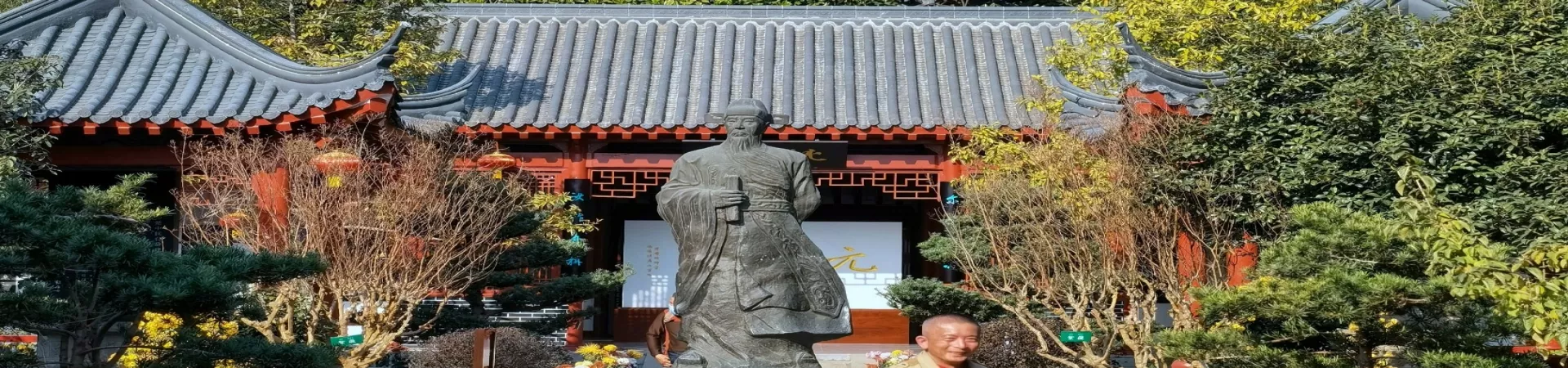
Subtitle: A Journey Through Faith and History at Jingzhou's Guandi Temple
1. Introduction: The Sacred Grounds of Loyalty and Righteousness
Nestled within the ancient city walls of Jingzhou, Hubei Province, stands a monument not just of brick and wood, but of enduring cultural spirit—the Jingzhou Guandi Temple. Dedicated to Guan Yu, a legendary general from the Three Kingdoms period (220-280 AD) later deified as Guandi, the God of War and patron of martial virtue, this temple complex is far more than a tourist attraction. It is a living testament to the Chinese values of loyalty, righteousness, integrity, and bravery, values that Guan Yu embodied in both history and folklore. For centuries, this site has served as a focal point for reverence, drawing pilgrims, history enthusiasts, and curious travelers alike to walk in the footsteps of a hero who transcended mortal life to become a central figure in Chinese folk religion, Confucianism, and Taoism. A visit here is an immersive plunge into a narrative where history, mythology, architecture, and spiritual devotion intertwine seamlessly.
2. Historical and Cultural Significance: From General to Deity
2.1. The Man Behind the Legend: Guan Yu To understand the temple's profound significance, one must first understand Guan Yu. As a key general serving under Liu Bei in the storied Three Kingdoms era, his exploits were romanticized in the classic novel Romance of the Three Kingdoms. He was renowned not merely for his martial prowess but for his unshakeable loyalty to his oath of brotherhood and his unwavering sense of honor and justice. After his death, his legend grew, and he was progressively elevated in popular culture and state religion. By the Ming and Qing dynasties, he was officially venerated as "Guandi," a divine protector and a moral exemplar.
2.2. The Temple's Role in Jingzhou's Tapestry Jingzhou's connection to Guan Yu is particularly deep and poignant. It was here that he was entrusted with guarding the strategic city for years. The current temple, though reconstructed in later periods (primarily during the Qing Dynasty), stands on ground steeped in this history. It functions as a crucial cultural node, preserving the collective memory of the Three Kingdoms period and facilitating the continuous worship and celebration of Guan Yu's virtues. The temple is not a silent museum; it is an active space where cultural identity is reinforced through ritual, architecture, and storytelling.
3. Architectural Layout and Key Features
The temple follows a traditional Chinese symmetrical layout along a central north-south axis, guiding visitors through a sequence of courtyards and halls that symbolize a journey from the secular world into a sacred realm.
3.1. The Entrance and First Courtyard Passing through the imposing mountain gate (Shanmen), visitors enter the first courtyard. Often guarded by stone lions or legendary creatures, this space sets the tone, separating the outside bustle from the temple's solemnity. Drum and Bell Towers may flank the sides, their instruments historically used to mark time and ceremonies.
3.2. The Main Hall (Daxiong Baodian) This is the architectural and spiritual heart of the complex. Housing a majestic, vividly painted statue of Guandi, often depicted in a seated posture with a solemn yet dignified expression, his face famously red and his long beard flowing. He is typically flanked by his adopted son Guan Ping holding his seal and his loyal arms-bearer Zhou Cang holding his iconic Green Dragon Crescent Blade (Qinglong Yanyue Dao). The hall's interior is adorned with intricate wood carvings, murals depicting scenes from Guan Yu's life and battles, and inscribed plaques praising his virtues. The atmosphere here is one of awe and reverence, where visitors light incense and offer prayers.
3.3. Secondary Halls and Exhibits * The Rear Hall or Ancestral Hall: Often dedicated to Guan Yu's ancestors or family, reflecting the Chinese emphasis on lineage. * The Chamber of the Green Dragon Blade: Some temples feature a pavilion showcasing a replica of his legendary weapon. * Stelae Forests: Corridors or pavilions lined with stone tablets (steles) inscribed with poems, historical records, and calligraphy from various dynasties, offering a tangible link to the temple's long scholarly and cultural patronage. * Gardens and Ancient Trees: Quiet courtyards with old cypress or gingko trees provide spaces for contemplation, their gnarled roots and spreading branches adding layers of natural serenity and historical depth to the man-made structures.
4. Practical Visitor Information
To ensure a smooth and respectful visit, please note the following practical details.
4.1. Location and Access The Guandi Temple is located within the historic center of Jingzhou City, easily accessible by taxi, public bus, or on foot if staying within the old city district. Its proximity to other historical sites like the Jingzhou City Walls and Museum makes it a convenient part of a broader cultural itinerary.
4.2. Opening Hours and Admission The temple is open to the public daily. The operating hours are from 08:00 to 17:30. The last admission is at 17:30. It is advisable to allocate at least 1.5 to 2 hours for a thorough visit to appreciate the architecture, exhibits, and ambiance fully. Please check locally for any seasonal variations or special holiday schedules.
4.3. Etiquette and Tips for Visitors * Dress Code: As an active place of worship, modest dress is recommended. Avoid overly revealing clothing. * Photography: Be respectful when taking photographs, especially inside the main hall. Avoid using flash on ancient paintings and statues, and observe any posted signs restricting photography. * Behavior: Maintain a quiet and respectful demeanor. While not all visitors are worshippers, being mindful of those who are engaged in prayer or meditation is important. * Cultural Context: Consider hiring a local guide or using an audio guide to fully grasp the rich historical narratives and symbolic details embedded in every statue, carving, and courtyard. This transforms the visual experience into a deeply informative one. * Contact: For specific inquiries, you may contact the temple management at 0595-28092252.