Xianling Mausoleum of Ming Dynasty
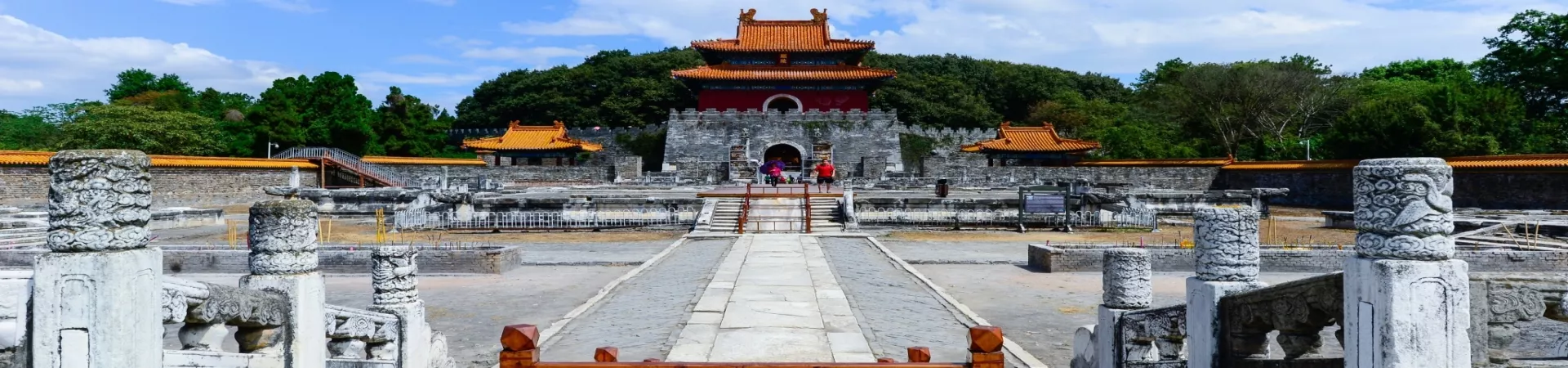
Subtitle: A Journey into the Ming Dynasty's Architectural Marvel and World Heritage Site
I. An Introduction to Xianling Tomb
Nestled against the Songlin Mountain on the eastern outskirts of Zhongxiang City, Hubei Province, lies the Xianling Tomb, a pinnacle of Chinese imperial burial architecture and a UNESCO World Heritage Site. This is the joint tomb of Zhu Youyuan, the Prince of Xingxian (posthumously honored as Emperor Gongruixian), and his wife, Empress Zhangsheng—the parents of Emperor Jiajing of the Ming Dynasty. More than just a royal cemetery, Xianling stands as a unique masterpiece in China's millennia-long history of imperial mausoleums, captivating visitors with its profound historical narrative, groundbreaking architectural design, and harmonious integration with the natural landscape.
II. Historical Significance and the "Great Rites Controversy"
The story of Xianling Tomb is inextricably linked to one of the most dramatic political events of the mid-Ming Dynasty: the "Great Rites Controversy." Its original occupant, Zhu Youyuan, was buried here as a prince after his death in 1519. The tomb's destiny changed dramatically when his son, Zhu Houcong, ascended the throne as Emperor Jiajing in 1521 following the death of the childless Emperor Zhengde.
Emperor Jiajing was determined to posthumously elevate his father to imperial status, sparking a fierce three-year political and ritual debate with the court bureaucracy. This struggle, which resulted in severe punishments for over a hundred officials who opposed him, culminated in Jiajing's victory. He successfully established his own lineage, renamed his father Emperor Gongruixian, and embarked on an ambitious project to transform the existing princely tomb into a full-fledged imperial mausoleum. Construction and expansion lasted from 1519 to 1566, a period of 47 years, only ceasing with the emperor's own death. This transformation from a prince's tomb to an emperor's陵寝 (lingqin, imperial tomb) is what makes Xianling utterly unique, creating the world's only known example of a "twin-mound" imperial burial within a single enclosure.
III. Architectural Layout and Unique Features
Spanning approximately 183.13 hectares, Xianling Tomb is a vast complex of over 30 structures, meticulously arranged according to traditional Chinese geomancy (Feng Shui) and imperial ritual protocols. Its layout is a testament to ingenious planning and symbolizes the cosmological beliefs and supreme power of the feudal era.
A. The Double-Walled Enclosure and "Twin Mounds" The most distinctive feature is its double-walled system. The outer "luocheng" (enclosure wall), an exceptionally well-preserved rarity among Chinese imperial tombs, stretches for over 3,600 meters. This 6-meter-high, 1.8-meter-thick wall, with its yellow-glazed tiles atop red walls, snakes gracefully through the mountainous terrain. Within these walls lies the tomb's core marvel: two separate underground burial chambers ("baocheng") under two distinct earth mounds—one for the emperor and one for the empress. This "one tomb, twin mounds" (一陵双冢) configuration is a direct result of the site's upgrade and is unparalleled globally.
B. Key Structures Along the Sacred Axis The complex unfolds along a central spiritual axis, guiding visitors through a sequence of symbolic spaces: * The Gates: Entry is marked by the Old Red Gate and the later-added New Red Gate. * The Stele Pavilion: Houses the merit stele praising the virtues of the entombed. * The Sacred Way: A remarkably preserved "Dragon-shaped Sacred Way" (龙形神道) winds through the site, its design mimicking a dragon's body. * The Ling'en Gate and Hall: This gate leads to the Ling'en Hall (棱思殿), the main sacrificial hall where ceremonies were held. * The Ming Tower (Fangcheng Minglou): A towering pavilion atop a square platform housing a giant stone tablet inscribed with the tomb's name. * The Treasure Mounds (Baocheng): The twin earth mounds covering the underground palaces, surrounded by ornate battlements. * The Ming Ponds: Both an inner and outer "Mingtang" (明塘), or bright pond, are incorporated into the design, serving ritual purposes and enhancing the Feng Shui.
The architecture is further adorned with exquisite stone carvings, dragon and phoenix motifs, and yellow-glazed tiles, showcasing the zenith of Ming craftsmanship.
IV. Practical Visitor Information
A. Tickets and Opening Hours * Opening Hours: 8:30 AM - 5:30 PM daily. Last admission is at 5:00 PM. * General Admission: Full-price ticket is 65 RMB. * Concessions (32 RMB): Applies to minors aged 6-18, full-time students (undergraduate and below), seniors aged 60-69, and registered residents of Zhongxiang (with ID). * Free Admission: Granted to children under 6 or under 1.3m tall, seniors aged 70+, active-duty and retired military personnel, individuals with disabilities, and—in a unique homage to the tomb's lineage—citizens with the surnames Zhu or Jiang (upon presenting ID). Special periodic offers may apply; visitors are advised to check for current promotions for specific provinces or professional groups like medical workers. * Note: All discounted or free tickets require valid original identification documents.
B. Transportation and Visit Duration * Getting There: The most convenient public transport is the Zhongxiang Bus No. 6. Alight at the "Xianling Tourist Center" bus stop, from where the tomb entrance is within walking distance. * Suggested Duration: Plan for 1 to 3 hours to fully explore the extensive grounds and appreciate the key architectural highlights at a comfortable pace.
V. Recognition as a World Heritage Treasure
Xianling Tomb's outstanding value has been widely recognized. It was declared a Major National Historical and Cultural Site in 1988. Its bid for global significance culminated in the year 2000, when it was inscribed on the UNESCO World Heritage List as part of the "Imperial Tombs of the Ming and Qing Dynasties." It was honored as the sole Ming imperial tomb nominated independently at that time.
UNESCO evaluated it under criteria addressing its masterpiece of human creative genius, unique testimony to a cultural tradition, and direct association with events of universal significance. The committee noted that these royal tombs represent "a fusion of sacred human beliefs and natural landscapes," expertly sited and designed to illustrate traditional architectural and decorative concepts, explaining the worldview and power structure of feudal China over five centuries. The profound impression it leaves was summarized by a UNESCO expert, Jean-Louis Luxen, who marveled at its "magical" quality and found the pristine condition of its 500-year-old outer wall "simply incredible." Today, Xianling Tomb stands not merely as a silent monument to the past, but as a vibrant, awe-inspiring portal into the artistic ambition and complex history of China's imperial age.