Jingdezhen China Ceramic Museum
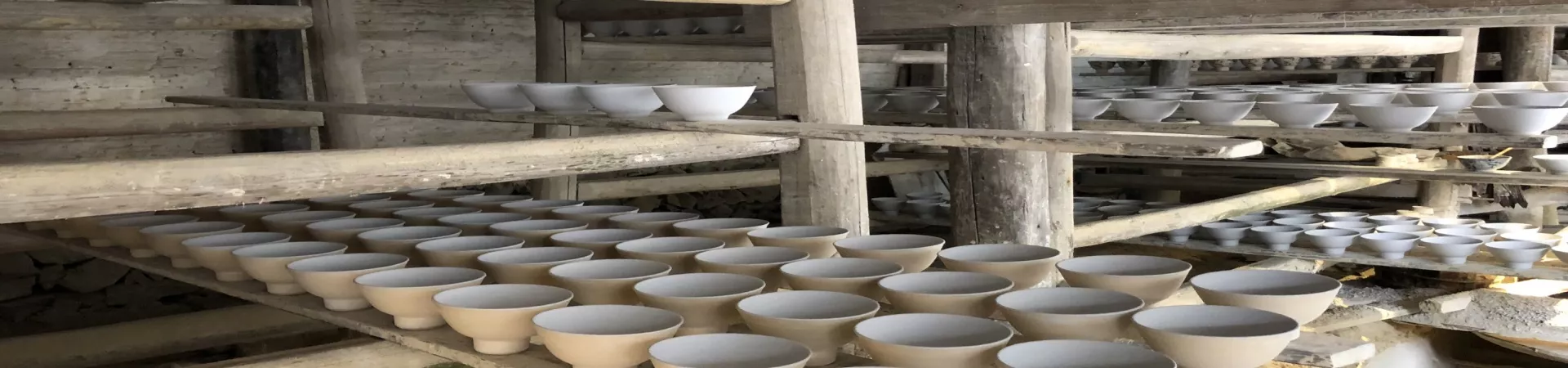
Subtitle: A Journey Through Millennia of Fire and Clay: The Definitive Guide to the Jingdezhen China Ceramics Museum
Introduction: The Soul of Porcelain Capital
Nestled within the verdant, culturally-rich Fengshushan Ceramic Cultural Exposition Zone on the west bank of the city, the Jingdezhen China Ceramics Museum stands as a sanctuary of artistic heritage. Founded in 1954 and adjacent to the historic Ancient Kiln Factory, its setting is one of serene beauty—encircled by lush hills, with the gentle murmur of streams and the fragrance of flowers permeating the fresh air. This institution is not merely a museum; it is the foundational pillar of ceramic museology in China, being the nation's first large-scale museum dedicated exclusively to the art of ceramics. For any visitor to Jingdezhen, the global epicenter of porcelain, this museum offers the essential narrative thread, connecting the city's illustrious past with its vibrant present.
A Treasury of Ceramic Mastery: The Collection
The museum's vast holdings provide a comprehensive, chronological voyage through the evolution of ceramic art, with a core focus on Jingdezhen's unparalleled contributions.
2.1 Historical Collections: From Ancient Fires to Imperial Kilns The collection begins with artifacts from the Neolithic Age, tracing the early development of pottery. It moves seamlessly through the Han and Tang dynasties, leading to the pivotal Song Dynasty, where Jingdezhen's fame began to crystallize. The heart of the historical collection showcases the exquisite output of the Yuan, Ming, and Qing imperial kilns. This is categorized for deeper appreciation: * By Decoration: Visitors can marvel at the subtle elegance of Yingqing (shadow blue) ware, the creamy whiteness of Luanbai (egg-white) glaze, the iconic cobalt blues of Qinghua (blue and white), the vibrant polychrome of Wucai, the delicate palette of Fencai (familie rose), and the profound depths of monochrome Seyou (color glaze) ceramics. * By Form: The collection encompasses the entire spectrum of ceramic forms, including functional items like bowls, plates, cups, saucers, and teapots, as well as artistic expressions such as vases, jars, and sculptural figures. * By Technique: It illustrates traditional craftsmanship methods like wheel-throwing (Labai), mold-pressing (Yinbai), sectional assembling (Xiangbai), slip-casting, and modern mechanical pressing.
2.2 Unique and Expanded Holdings Beyond mainstream Chinese ceramics, the museum boasts distinctive sections that broaden its scope: * Modern and Contemporary Jingdezhen Ceramics: This is the museum's unique pride, featuring groundbreaking works from the 19th century to the present day. It highlights the revival, innovation, and artistic experimentation that keep the city's ceramic tradition dynamically alive. * International and Regional Ceramics: A collection of foreign and domestic ceramics from outside Jingdezhen offers a comparative perspective, showcasing stylistic exchanges and influences across cultures and regions. * Supplementary Arts: The museum also houses select collections of jade, bronze, seals, and traditional Chinese paintings and calligraphy, contextualizing ceramic art within the broader framework of Chinese artistic achievement.
Practical Information for Visitors
3.1 Location & Transportation The museum is located in the Fengshushan Ceramic Cultural Exposition Zone, Hexi, Jingdezhen. The most convenient public transportation is by bus. Visitors can take bus routes 23, 901, or 902 and alight at the "Wuzhong" (Fifth Middle School) bus stop. The museum is a short walk from the stop.
3.2 Admission & Hours * Admission Fee: Free of charge. * Opening Hours: * Tuesday to Sunday: 09:00 - 17:00 (Last admission at 16:30). * Monday: Open all day (09:00 - 17:00). * Suggested Duration: A thorough visit typically requires 1 to 3 hours, depending on the level of interest and detail one wishes to explore.
The Museum Experience: More Than a Display
4.1 Architectural and Natural Harmony The museum's design and environment are integral to the visit. The architecture, while modern, often incorporates elements that echo ceramic forms and traditions. The surrounding gardens and natural landscape provide a tranquil space for reflection, allowing the beauty of the art to resonate in harmony with nature.
4.2 Educational and Cultural Significance As the premier institution of its kind, the museum serves as an active educational center. Through its meticulously curated displays, thematic exhibitions, and detailed annotations (often available in both Chinese and English), it elucidates complex techniques, historical contexts, and artistic philosophies. It is the definitive place to understand why Jingdezhen porcelain was treasured by emperors, coveted across continents via the Silk Road, and continues to inspire artists worldwide.
4.3 A Living Dialogue with History A visit here is not a passive observation of static objects. It is an engagement in a living dialogue. Placing the contemporary masterpieces alongside ancient sherds and imperial ware illustrates an unbroken lineage of innovation. The proximity to the working Ancient Kiln Factory further animates this experience, linking the silent eloquence of the museum's collection with the very real, ongoing sounds, sights, and processes of ceramic creation just next door. This unique positioning makes the Jingdezhen China Ceramics Museum not just a repository of artifacts, but the beating heart of a timeless cultural story.
Information last updated: May 5, 2023. Credits to contributors including Lao Miaozi and Wu Wan.