Fuliang Ancient City
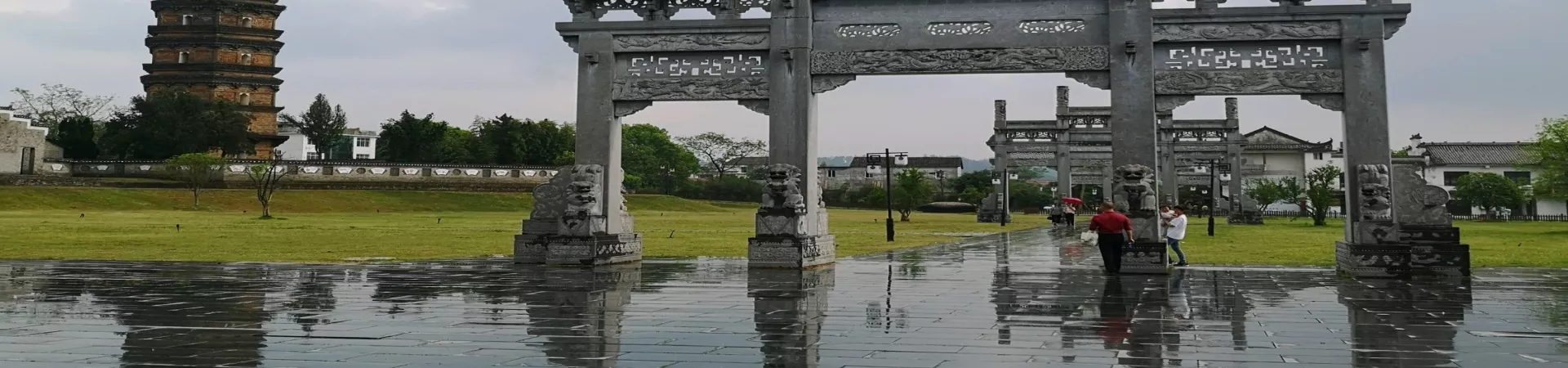
Subtitle: A Journey Through Time: Exploring the Historic Fuliang Ancient City
1. Introduction: The Cradle of Porcelain and Tea
Nestled just eight kilometers from the bustling urban center of Jingdezhen, the renowned "Porcelain Capital" of China, lies a portal to a profound historical and cultural legacy: Fuliang Ancient City. More than a mere satellite town, Fuliang is the very root from which Jingdezhen's global fame grew. For centuries, the porcelain kilns of Jingdezhen operated under the administrative jurisdiction of Fuliang County, making this ancient walled city the political and cultural heart of the region. Its story, however, extends far beyond ceramics, weaving a rich tapestry of literary acclaim, architectural ingenuity, and a deep-seated tea culture that once captivated the nation's elite. A visit here is not just a step back in time; it is an essential chapter in understanding the complete narrative of Chinese art and commerce.
2. A Walk Through Dynasties: History and Layout
2.1 Foundations and Imperial Endorsement The city's formal establishment dates back to the 12th year of the Yuanhe period during the Tang Dynasty (817 AD), marking the beginning of its continuous role as the seat of Fuliang County government. This administrative significance spanned five major dynasties—Tang, Song, Yuan, Ming, and Qing—each layer adding to its historical depth and architectural character. The city's endurance through these eras is a testament to its strategic and cultural importance in Jiangxi province.
2.2 The Unique Bagua Design One of Fuliang's most distinctive features is its urban layout, ingeniously designed to resemble the Bagua, or Eight Trigrams, an ancient Taoist symbol representing the fundamental principles of reality. This philosophical blueprint is physically manifested in the city's walls and street plan. The formidable defensive wall, stretching over 20 li (approximately 10 kilometers), once stood roughly 5.3 meters high and 3 meters wide, encircling the city in a protective embrace that followed this symbolic geometry. This design was believed to harmonize the city with cosmic forces, ensuring stability and prosperity.
3. The Soul of Fuliang: Culture, Poetry, and Commerce
3.1 The Echo of Poetry: From Bai Juyi to Su Shi Fuliang's cultural landscape is immortalized in classical Chinese poetry. The most famous allusion comes from the Tang Dynasty literary giant Bai Juyi, who in his poem "The Song of a Pipa Player" wrote, "The merchants are keen on money and careless of parting; / Last month they went to Fuliang to buy tea." This single line powerfully captures the city's historical identity as a pivotal hub in the national tea trade. The allure of Fuliang's serene landscapes and refined culture also drew a constellation of other literary and scholarly luminaries, including the master calligrapher Yan Zhenqing, the prose stylist Liu Zongyuan, the reformer and poet Wang Anshi, the multifaceted Su Shi, the calligrapher-poet Huang Tingjian, the monk-poet Foyin, the statesman Fan Zhongyan, and the poet Yang Wanli. Their visits and writings bestowed upon Fuliang an aura of intellectual and artistic prestige.
3.2 The Twin Pillars: Porcelain and Tea While Jingdezhen handled the fiery creation of porcelain, Fuliang served as the administrative and commercial engine. Taxes on ceramics and tea, collected here, were vital to the imperial treasury. The city was where merchants gathered, contracts were sealed, and tea from the surrounding lush hills was graded and traded before being shipped along ancient routes. This symbiotic relationship created a unique cultural fusion where the elegance of porcelain met the serenity of tea ceremony, defining the region's economic and social life for generations.
4. Practical Information for Your Visit
4.1 Getting There Fuliang Ancient City is conveniently accessible from multiple directions. From within Jingdezhen, visitors can take bus line 16 (branch line) from the city's Leisure Square, which goes directly to the Ancient County Government Office scenic area. For those arriving by private vehicle or from further afield, the city is well-connected: * It is located north of Jingdezhen in northeastern Jiangxi. * From the Jiujiang-Jingdezhen (Jiu-Jing) Expressway exit, follow the Jingdezhen-Fuliang highway. * From Jingdezhen Luojia Airport, take Jinling Avenue to Fuliang Avenue. * Travelers coming from Wuyuan can proceed to Jingdezhen and then connect to Fuliang Avenue. The short 8-kilometer distance from downtown Jingdezhen makes it an effortless and essential day trip.
4.2 Admission and Opening Hours * Ticket Price: The entrance fee is 50 RMB per person. * Operating Hours: The site is open daily from 8:00 AM to 5:30 PM throughout the year.
4.3 Suggested Duration To fully appreciate the ancient walls, the well-preserved Ancient County Government Office (one of the best-preserved county-level yamen in southern China), and absorb the historical atmosphere, a visit of 3 hours or more is highly recommended. This allows for a leisurely pace to explore the architectural details, museum exhibits, and contemplate the stories embedded in the old stones.