Dragon Ball Pavilion
Subtitle: The Porcelain City's Pinnacle: A Journey Through Time at Longzhu Pavilion
1. An Icon Reborn: The Architectural and Historical Significance of Longzhu Pavilion
Perched atop Zhushan Hill, on the historic site of the old "Pearl Hill," Longzhu Pavilion stands as the undisputed architectural and spiritual symbol of Jingdezhen, the centuries-old capital of porcelain. This is not merely a scenic lookout point; it is a physical chronicle of the city's glorious ceramic history, its very foundations and surroundings permeated with the legacy of imperial kilns. The structure's lineage traces the evolution of Chinese history itself: known as the Gathering Pearl Pavilion in the Tang Dynasty, the Central Standing Pavilion in the Song Dynasty, it was later renamed the Facing Heaven Pavilion and Emerald Ring Pavilion during the Ming Dynasty, and the Cultured Prosperity Pavilion in the Qing Dynasty. Following a reconstruction in the early 20th century, it finally acquired its current majestic name, "Longzhu Pavilion" or "Dragon Pearl Pavilion."
The pavilion visible today is a meticulous 1987 reconstruction, a magnificent six-story, double-eaved Ming-style palace architecture soaring 34.5 meters high with a floor space of 1,650 square meters. Its design consciously echoes the grandeur of the Ming era, serving as a direct architectural homage to its most significant historical role. For it was from the Ming Dynasty onward that this site became intrinsically linked to the imperial porcelain industry. Longzhu Pavilion served as the representative structure and administrative heart of the adjacent Imperial Vessel Factory and later the Imperial Kiln Factory. The hill and the land surrounding the pavilion are an immense archaeological treasure trove, with countless precious ceramic fragments and artifacts buried beneath—silent testaments to centuries of flawless imperial production. Today, officially recognized as the site of the Ming and Qing official kilns, the pavilion’s image is proudly employed as the official city emblem of Jingdezhen, representing its unparalleled heritage in ceramic art.
2. Treasures Within: The Imperial Collection of Longzhu Pavilion
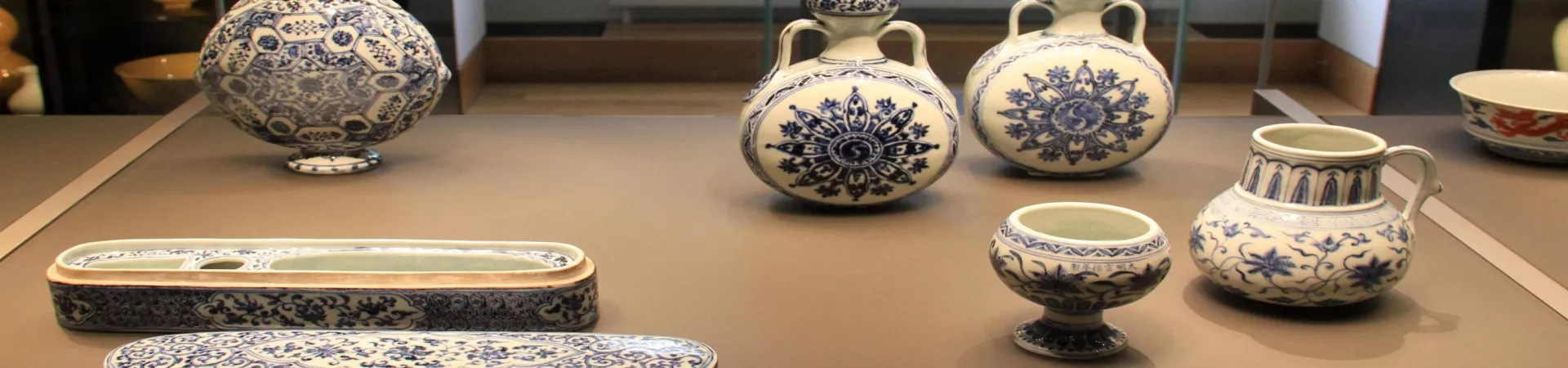
Stepping inside Longzhu Pavilion is akin to entering a sanctuary of porcelain mastery. The pavilion functions as a superb museum, housing a precious collection of official ware and historical materials directly connected to the imperial kilns it once oversaw. The exhibitions provide a tangible connection to the artistry and scale of imperial production.
2.1. Masterpieces of Form and Fire Among the many highlights, visitors can marvel at specific, awe-inspiring artifacts. One such treasure is a monumental Wan Jian (Ten Thousand Pieces) vase, adorned with exquisite underglaze blue and copper red (qinghua youlihong) decoration, showcasing the complex techniques mastered by Jingdezhen’s artisans. Another breathtaking exhibit is an enormous dragon jar from the正统 reign of the Ming Dynasty, a piece that demonstrates not only artistic skill but also the formidable technical challenge of firing large-scale imperial commissions. These objects, displayed within the pavilion that governed their creation, carry profound historical resonance.
2.2. Voices from the Earth: The Zhushan Excavations A significant portion of the pavilion’s collection originates from archaeological excavations on Zhushan Hill itself. These unearthed ceramic treasures from the Ming Dynasty official kilns include both miraculously intact pieces and informative sherds. They serve as primary historical documents, offering insights into kiln management, stylistic evolution, and the stringent quality control processes of the imperial workshop—where imperfect pieces were often deliberately shattered and buried. This direct link between the exhibit, the archaeological site, and the administrative history contained within the pavilion’s walls creates a uniquely cohesive narrative.
3. Practical Information for the Visit
3.1. Location and Access Longzhu Pavilion is located at the summit of Zhushan Hill in Jingdezhen. The most convenient public transportation access is by taking city bus routes 7 or 12 and alighting at the "Yuyao Changlang" (Imperial Kiln Long Corridor) bus stop. From there, a short and scenic walk leads to the pavilion grounds.
3.2. Opening Hours and Admission The pavilion's opening hours vary seasonally to accommodate daylight and weather conditions. * Summer Operation (June 1st - August 31st): The pavilion is open from 08:00 to 17:30 daily, with the last admission at 17:30. * Winter Operation (December 1st - February 28/29th): Hours are from 08:00 to 17:00 daily, with the last entry at 17:00. Prospective visitors are advised to allocate approximately 1 to 3 hours for a thorough exploration of the exhibits and to enjoy the panoramic views of Jingdezhen from the pavilion's upper levels.
3.3. Contact Details For any specific inquiries regarding special exhibitions, group visits, or other details, the pavilion can be contacted directly at 0798-8201378.