Zili Village Diaolou Group
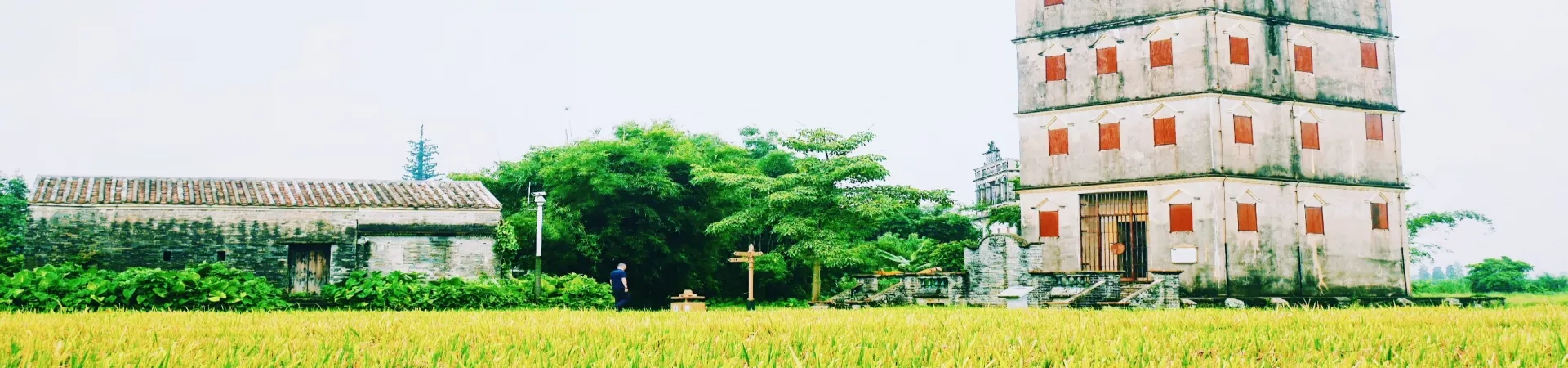
A Journey Through Time: The Diaolou Fortified Towers of Zili Village
Nestled within the city of Jiangmen in Guangdong Province, China, lies a remarkable testament to a unique fusion of history, culture, and architectural ingenuity: the Zili Village Diaolou Cluster. As the most concentrated group of structures within the famed Kaiping Diaolou and Villages—a UNESCO World Heritage Site—Zili Village offers an unparalleled window into the lives of the overseas Chinese (huaqiao) and the legacy they built back home.
The Historical Tapestry of Zili Village
Origins and Composition The village's story begins in the 37th year of the Daoguang Emperor's reign in the Qing Dynasty (1837 AD). It was formed from three natural villages inhabited by the Fang family: Anheli (commonly known as Litouzui), He'anli (Xincun), and Yong'anli (Huangniling). For generations, it was a quiet, agricultural community. However, its destiny was irrevocably changed by the waves of emigration that swept through the region in the late 19th and early 20th centuries.
The Era of Construction and Purpose The majority of the village's iconic diaolou towers were constructed throughout the 20th century, particularly during the 1920s and 1930s. Their primary purpose was born from necessity and concern. As men from Kaiping ventured abroad to seek fortune in Southeast Asia, Australasia, and the Americas, they sent hard-earned remittances back home. This newfound wealth, however, made their families targets for banditry in a politically unstable era. In response, the overseas Chinese funded the construction of these multi-storied fortified towers. They served as communal shelters—impregnable strongholds where villagers could retreat during attacks, safeguarding both lives and property. Thus, each tower stands not just as a building, but as a profound symbol of protection, familial duty, and the deep connection between the diaspora and their ancestral land.
Architectural Splendor in a Rural Landscape
A Symphony of Styles The diaolou of Zili Village are celebrated for their spectacular and eclectic architectural styles. Drawing inspiration from the lands where their patrons worked and lived, the towers seamlessly blend traditional Chinese elements with a dazzling array of foreign influences. A single structure might feature a traditional gabled roof alongside ancient Greek colonnades, medieval European castle turrets, Baroque ornamentation, and Islamic arched windows. This "huayi hebi" (combination of Chinese and Western styles) creates a visually stunning and historically unique streetscape, earning the diaolou the nickname "a gallery of vernacular architecture."
Harmony with Nature The setting of Zili Village enhances its fairy-tale quality. The diaolou and the equally elegant "julu" (residential villas) are not laid out in a rigid grid but are scattered poetically across a serene rural canvas. They rise majestically beside reflective fish ponds, tranquil lotus ponds, vibrant green rice paddies, and open grasslands. This harmonious integration of imposing, castle-like structures with gentle, pastoral scenery forms the quintessential and most photographed view of Zili Village, especially when the fields are awash with color.
The Seasonal Palette The beauty of the village is dynamic, changing with the seasons. It is arguably at its most breathtaking in early spring. From March to April, vast expanses of rapeseed flowers bloom, painting the land in a brilliant, sunny yellow that contrasts beautifully with the grey concrete of the towers. This is followed by the blossoming of peach trees from April to May, adding soft hues of pink to the composition. Visiting during these periods offers a truly magical experience.
Practical Information for Visitors
Exploring the Towers Zili Village boasts a collection of 9 diaolou and 6 julu. Currently, only two of the most famous towers are open for interior exploration: Mingshi Lou and Yunhuan Lou. Mingshi Lou is particularly renowned for its lavish interior furnishings and artifacts brought back from abroad, offering an intimate glimpse into the lifestyle of a wealthy overseas Chinese family. The remaining towers, their doors secured by large locks, maintain an air of mystery, allowing visitors to admire their splendid exteriors while imagining the stories within.
Visitation Details
- Opening Hours: 08:40 - 17:25 (daily, year-round).
- Recommended Visit Duration: A minimum of 3 hours is suggested to fully appreciate the landscape, explore the open towers, and wander through the village paths.
- Ticket Information:
- Standard Ticket: 78 RMB.
- Concession Ticket (Half-price): Applicable to minors with height between 1.2m-1.5m or aged 6-18; seniors aged 60-69 with valid ID; full-time undergraduate students and below with valid student ID.
- Free Admission: Applicable to children under 1.2m or aged 6 and below; seniors aged 70 and above with valid ID; active military personnel, disabled visitors, journalists, and tour guides with valid credentials.
- Note: The above information is for reference. Please confirm with the ticket office on the day of your visit for the most current details.
Getting There The most straightforward public transportation method is to take the Kaiping Bus No. 617 and alight at the Zili Village (Zilicun) bus stop. From there, the entrance to the village is within walking distance. For greater flexibility, hiring a taxi or a private car from Kaiping city center is also a convenient option.
Contact For any inquiries prior to your visit, you may contact the site at: 0750-2679788 or 0750-2678888.