Ma Jianglong Diaolou Group
Subtitle: A Journey Through Time: Exploring the Majianglong Diaolou Cluster in Jiangmen
1. Introduction: A Pearl Strand in a Bamboo Sea
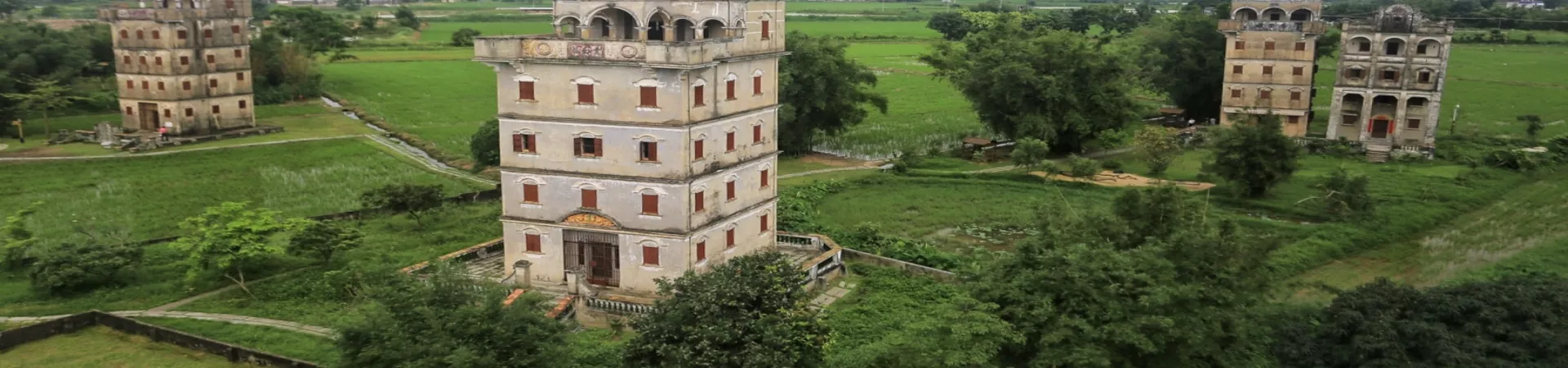
Nestled amidst ancient woods and towering bamboo groves in Kaiping, Jiangmen, the Majianglong Diaolou Cluster presents a scene of breathtaking harmony between man-made structures and the natural world. This remarkable ensemble consists of seven impeccably preserved watchtowers (Diaolou) and eight Western-style villas, arranged like a string of pearls scattered across the lush landscape. The seamless integration of these buildings with the surrounding villages and environment creates a vista so enchanting that it appears otherworldly, often leaving visitors feeling as if they have stepped into a paradise on earth. As a cornerstone of the "Kaiping Diaolou and Villages" UNESCO World Heritage Site, Majianglong offers an unparalleled glimpse into a unique chapter of architectural and social history.
2. Architectural Marvels: A Fusion of East and West
2.1. The Heart of the Cluster: Tianlu Lou The crown jewel of Majianglong is the Tianlu Lou, a quintessential example of a "Zhonglou" or communal tower. Constructed in 1925 (the 14th year of the Republic of China), this particular Diaolou stands as a powerful testament to community spirit, having been funded collectively by 29 village households. Its primary function was defensive, serving as a fortified refuge for multiple families during times of banditry and social unrest prevalent in the early 20th century. Tianlu Lou, like its counterparts, embodies the pragmatic response of the local Kaiping diaspora to security concerns.
2.2. An Artistic Legacy from the 1920s and 1930s The remaining 14 structures within the cluster were all built during the 1920s and 1930s, a period when returned overseas Chinese, particularly from North America and Southeast Asia, infused their newfound wealth and international perspectives into their hometowns. These buildings are masterclasses in eclectic architectural fusion. They seamlessly blend traditional Cantonese village design with a dazzling array of Western architectural elements and advanced construction techniques of the era.
2.3. A Symphony of Styles Walking through Majianglong is like traversing an open-air museum of global design. The facades of the Diaolou and villas feature ornate columns and pediments inspired by ancient Greek and Roman architecture. Gothic pointed arches sit alongside Baroque-style curvaceous forms and delicate floral motifs. Islamic dome influences can be spotted, and sturdy reinforced concrete—a then-modern innovation—was employed alongside traditional blue brick and grey tile. This conscious and creative amalgamation of styles resulted in structures that are not only formidable but also astonishingly beautiful, truly forming a "stunning gallery of architectural art."
3. Practical Information for Your Visit
3.1. Admission Fees * Standard Ticket: 60 RMB (Applicable year-round, Monday to Sunday). * Concession Ticket (Half-price): Available for: * Seniors aged 60-69 (with valid ID/pensioner card). * Children with height between 1.2m (exclusive) and 1.5m (inclusive). * Minors aged 6 (exclusive) to 18 (inclusive) with ID. * Full-time undergraduate students and below (with valid student ID). * Free Admission: Granted to: * Seniors aged 70 and above (with valid ID). * Children under 6 or under 1.2m in height. * Individuals with disabilities (with valid Chinese Disability Certificate). * Active-duty military personnel (with valid 2016+ edition military ID). * Accredited journalists, tour guides (with IC card and tour itinerary), and tour bus drivers (with A-class license and itinerary). * On-duty police officers. * Honorary citizens of Jiangmen/Kaiping, and holders of Kaiping Senior Citizen Privilege Cards or Military Support Cards.
3.2. Opening Hours The site is open daily from 08:50 to 17:15 throughout the year.
3.3. Getting There The most straightforward route is to take a direct coach/bus from Kaiping to Dongshan Gaoshan and alight at the "Majianglong Village Entrance" (Majianglong Cun Kou) bus stop. The Diaolou cluster is within walking distance from this stop.
3.4. Suggested Duration To fully appreciate the architecture, explore the interiors of accessible towers, wander through the bamboo forests, and soak in the panoramic views, a visit of 3 hours or more is highly recommended.
4. The Visitor Experience: Beyond the Facades
4.1. Immersion in a Living Landscape A visit to Majianglong is more than an architectural tour. The cluster is integrated within a working village, allowing visitors to observe the enduring rural life of the area. The serene atmosphere, punctuated by the rustling of bamboo and the sight of local residents, adds a profound cultural layer to the experience. The recommended walking paths lead you through this harmonious setting, offering different vantage points of the towers nestled in greenery.
4.2. Panoramic Vistas and Photographic Opportunities Climbing to the upper levels of select Diaolou (where accessible) rewards visitors with spectacular panoramic views. From these vantage points, one can truly appreciate the "pearl strand" layout of the buildings set against the rolling hills and dense bamboo sea. The contrast between the sturdy, ornate towers and the soft, natural greenery provides exceptional opportunities for photography, especially during the golden hours of early morning or late afternoon.
4.3. Understanding a Global Legacy The site serves as a tangible link to the massive Chinese diaspora of the last century. Informational plaques and museum exhibits within some buildings detail the history of emigration, the remittance of funds, and the transfer of cultural ideas that made these structures possible. It tells a story of global connectivity, resilience, and the enduring desire of overseas Chinese to contribute to and protect their ancestral homes, leaving a legacy etched in concrete, brick, and stone for future generations.