Chikan European Style Street
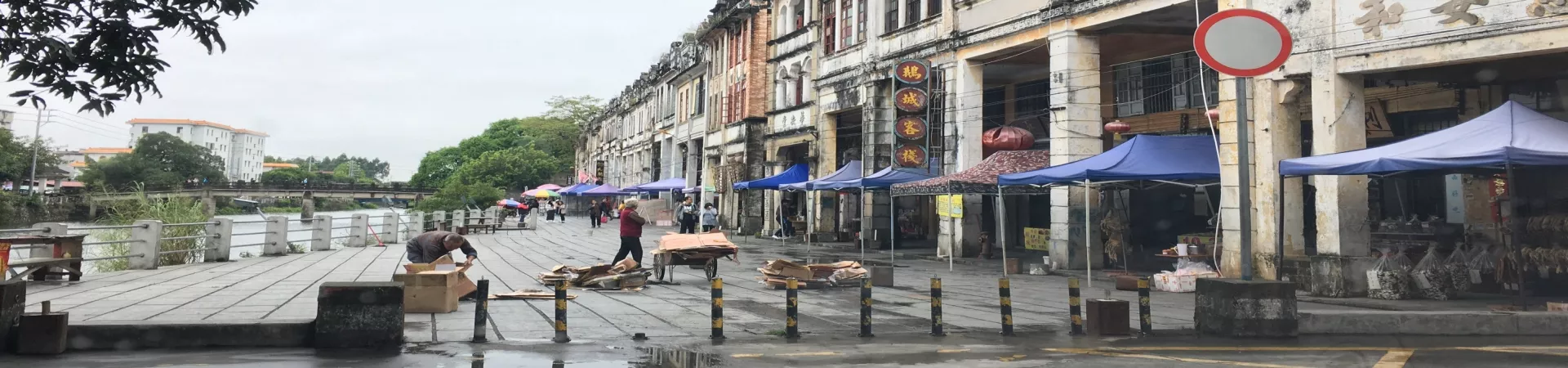
Subtitle: A Journey Through Time: Exploring the Architectural Tapestry of Chikan European Style Street
Introduction: Where East Meets West in Jiangmen
Nestled within the historic town of Chikan in Jiangmen, Guangdong Province, lies a unique architectural treasure: the Chikan European Style Street. This is not a replica or a modern theme park creation, but a genuine, living testament to a fascinating period of cultural fusion. The street serves as a captivating open-air museum, showcasing a remarkable blend of Southern Chinese Lingnan traditions and Western architectural influences, primarily from the late 19th and early 20th centuries. A stroll here is more than a simple walk; it is a visual journey through a unique chapter of history, where every building facade tells a story of exchange, adaptation, and artistic synthesis.
1. A Skyline of Synthesis: The Rooftop Panorama
The most immediate and striking feature defining the Chikan European Style Street's character is its eclectic and picturesque rooftop skyline. Moving beyond uniformity, the rooftops here engage in a silent dialogue of forms, creating a captivating silhouette against the sky.
1.1. Spires and Turrets: Reaching for the Sky Many structures are crowned with distinctively Western-inspired elements. Sharp, pointed spire-like towers and turrets are common, reminiscent of European church architecture or medieval fortifications. These vertical accents break the horizontal lines of the streets, drawing the eye upward and lending the townscape a romantic, almost storybook quality.
1.2. Vaulted Canopies and Projecting Forms Complementing the vertical spires are elegant projecting structures at the building fronts. Elaborate拱形雨篷 (gǒng xíng yǔ péng) – vaulted or arched rain canopies – jut out over sidewalks and entrances. These are not merely functional elements but significant architectural statements. Their curved forms, often supported by decorative brackets or columns, introduce a sense of grandeur and shelter, framing doorways and creating dynamic shadow patterns on the walls below throughout the day.
2. The Canvas of the Walls: A Detail-Rich Facade
While the rooftops capture the initial gaze, the true depth of the architectural fusion reveals itself upon closer inspection of the building facades. The walls are a detailed canvas where artisans employed a diverse repertoire of decorative techniques and motifs.
2.1. Western Baroque and Rococo Flourishes The influence of Western decorative styles is vividly apparent. Elements characteristic of Baroque and Rococo aesthetics can be found adorning many buildings. This includes intricate浮雕图案 (fú diāo tú àn) – relief sculptures and patterns featuring scrolls, shells, floral garlands, and flowing, asymmetrical designs. Elaborate窗洞形式 (chuāng dòng xíng shì) – window surrounds and architraves – are meticulously crafted, often with layered moldings and keystones. Delicate线脚 (xiàn jiǎo) – plasterwork cornices, string courses, and other linear moldings – trace horizontal lines across the facades, articulating the building's proportions and adding layers of visual texture.
2.2. Lingnan Life and Classical Chinese Harmony Seamlessly integrated with these Western elements are motifs deeply rooted in local culture and broader Chinese tradition. The Lingnan region's affinity for nature and symbolism is expressed through charming depictions of佳果与吉祥纹饰 (jiā guǒ yǔ jí xiáng wén shì) – auspicious fruits and lucky symbols. Carvings or reliefs of peaches (symbolizing longevity), pomegranates (wishing for many offspring), and lush bunches of lychee or other local flora celebrate regional bounty and convey blessings. Furthermore, the timeless中国古典卷草图案 (Zhōngguó gǔdiǎn juǎn cǎo tú àn) – classical Chinese scrolling vine or arabesque patterns – intertwine with other elements, representing enduring growth and natural harmony. These motifs are frequently incorporated into balcony railings, friezes, and wall panels.
3. Balconies: Ironwork Lace and Social Spaces
The balconies on these buildings are focal points of both design and implied social life. They are typically enclosed with exquisite阳台铸铁栏杆 (yángtái zhùtiě lángān) – cast-iron balcony railings. This ironwork is where the fusion becomes particularly delicate and artistic. The patterns might combine European Art Nouveau curves, geometric Art Deco designs, or simpler Western rail styles with Chinese symbolic characters or the aforementioned floral and fruit motifs. These balconies, poised between the private interior and the public street, evoke images of a bygone era where residents might have gathered to observe community life below.
4. Practical Information for Your Visit
To fully immerse yourself in the atmosphere of Chikan European Style Street, a few practical details will assist in planning your exploration.
4.1. Duration and Exploration Pace To truly appreciate the architectural details, wander the side lanes, and perhaps visit a local shop or café housed within these historic buildings, it is recommended to allocate approximately 1 to 3 hours. This allows for a leisurely pace, ample time for photography, and contemplation of the intricate designs without feeling rushed.
4.2. Accessibility and Opening Hours The street itself is an open public area, making it accessible to visitors 24 hours a day, every day of the year. The experience varies beautifully with the time of day; morning light illuminates the eastern facades, while the late afternoon sun casts long shadows that accentuate the relief work, and evening brings a different charm as lights begin to glow from within. It is advisable to note that while the exterior streetscape is always viewable, access to specific interior spaces of buildings may depend on the operating hours of the businesses or institutions housed within them.
4.3. Inquiries and Confirmation As the street is integrated into the functioning town, there is no single "entrance ticket" for the outdoor architectural viewing. However, some specific preserved buildings, museums, or exhibitions within the area might have their own entry policies. For the most current information regarding any such individual attractions, it is best to contact local tourism information. A useful contact number for general inquiries in the Jiangmen/Kaiping area is 0750-2679788.