Nanxun Ancient Town - Xiaolianzhuang
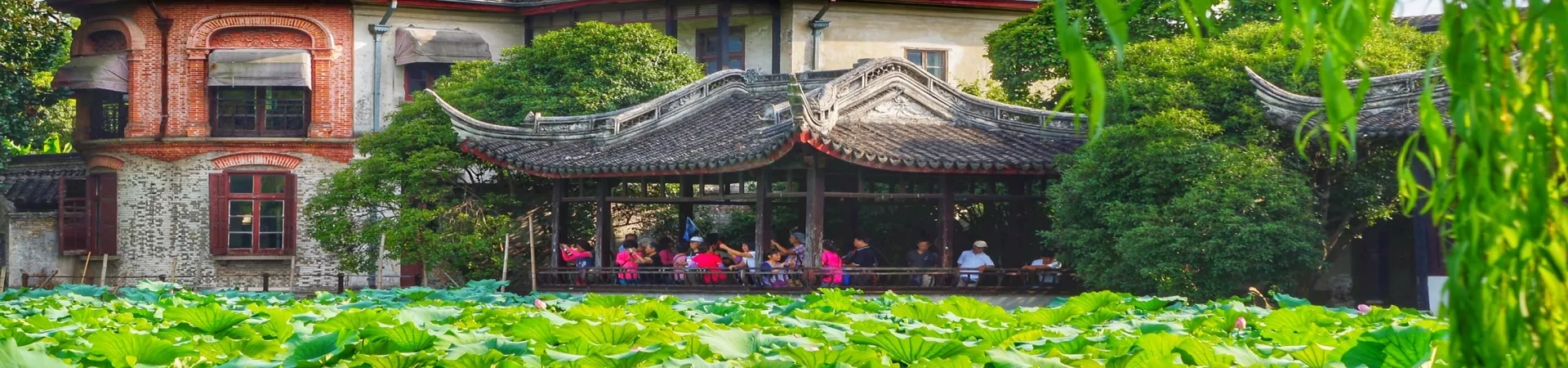
Subtitle: A Journey Through Time: Unveiling the Elegance of Xiaolianzhuang, the Lotus Manor of Nanxun
Introduction: The Legacy of a Merchant Prince
Nestled within the serene, canal-laced embrace of Nanxun Ancient Town in Huzhou, Zhejiang Province, lies Xiaolianzhuang, the Little Lotus Manor. More than just a garden, it is a profound narrative etched in stone, wood, and water—a testament to the zenith of late Qing Dynasty merchant culture and scholarly aesthetics. Often referred to as "Liu Yuan" (the Liu Garden), this estate was the private retreat of Liu Yong, the foremost among Nanxun's legendary "Four Elephants," a title denoting the town's wealthiest silk merchant magnates. As one of the Five Famous Gardens of Nanxun, Xiaolianzhuang represents the pinnacle of a unique architectural and horticultural tradition where immense commercial wealth was translated into exquisite, refined artistry.
The manor's creation was a labor of familial devotion spanning over forty years and three generations of the Liu family. This protracted period of construction allowed for an evolution in design and an infusion of meticulous care, resulting in a complex that seamlessly integrates three core functional and spiritual components: the ancestral temple, the charitable estate, and the ornamental gardens themselves. This holistic design reflects the Confucian ideals of its patrons—emphasizing family lineage, social responsibility, and harmonious communion with nature.
Architectural and Horticultural Composition: A Symphony of Spaces
The genius of Xiaolianzhuang lies in its masterful layout and the symbiotic relationship between its built structures and natural landscapes. The estate is not a single, monolithic garden but a carefully sequenced experience of varying scales and moods.
2.1 The Core Complex: Ancestral Temple and Charitable Estate At the heart of the manor stand the solemn structures of the Family Temple (Jiamiao) and the Charitable Estate (Yizhuang). The temple, dedicated to Liu family ancestors, is an architectural statement of filial piety and social standing, featuring ornate woodcarvings, symbolic motifs, and a dignified atmosphere. Adjacent to it, the charitable estate underscores the family's commitment to clan welfare and community benevolence, a common practice among successful merchant families to consolidate their social legacy. These buildings ground the estate in its socio-cultural context, reminding visitors that this beauty was built upon both commerce and Confucian duty.
2.2 The Outer Garden: Expansive Waterscapes and Poetic Ambiance The Outer Garden presents a more expansive, lyrical landscape centered around a vast, mirror-like lotus pond. This water feature is the garden's namesake and soul, especially breathtaking in summer when acres of lotus blossoms bloom in a spectacle of pink and green. A gracefully winding covered corridor skirts the pond's edge, its latticed windows framing ever-changing views like living paintings. This corridor connects a series of elegant pavilions, kiosks, and waterside terraces, such as the Lotus Pavilion, offering perfect vantage points for contemplation, poetry composition, or simply enjoying the tranquility. The design employs the classic Chinese gardening technique of "borrowed scenery," where the distant views and the sky become part of the garden's canvas.
2.3 The Inner Garden: A Miniaturized Mountainous Retreat In delightful contrast, the Inner Garden is a compact, rockery-dominated masterpiece. It is a world unto itself, featuring artificial hills crafted from prized Taihu stones—gnarled, porous rocks full of texture and mystery. A slender, zigzagging stone path leads visitors through this miniature mountainous landscape, past ancient trees and delicate plantings. The scale here is intimate, encouraging close inspection and a sense of discovery. This garden-within-a-garden exemplifies the Chinese philosophical pursuit of encapsulating the grandeur of nature within a confined space, a microcosm of the universe for private reflection.
Aesthetic Philosophy: Rivaling the Masters of Suzhou
Xiaolianzhuang is frequently compared to the renowned classical gardens of Suzhou, and for good reason. It embodies the same core principles of Chinese landscape garden design: the sophisticated interplay of concealment and revelation, balance and asymmetry, and the seamless fusion of human artistry with natural beauty. Every turn in the corridor, every window frame, and every arrangement of rocks and water is calculated to create a sequence of carefully composed scenes. The atmosphere shifts from the open, social spaces by the main pond to the private, contemplative nooks of the rockery, mirroring the dual lives of its scholar-merchant owners—outwardly engaged with the world, inwardly nurturing a refined spiritual life. The craftsmanship in the woodwork, stone carving, and calligraphic inscriptions found throughout the estate matches the high standards of its more famous Jiangnan counterparts.
Practical Information for the Visit
3.1 Location and Access Xiaolianzhuang is situated at the southern end of Nanxun Ancient Town's scenic area. The most straightforward access is via public bus; alight at the Xiaolianzhuang (Bus Stop) served by routes 162 or 165, from where the entrance is within a short walking distance.
3.2 Admission and Operating Hours In a significant benefit to visitors, admission to Xiaolianzhuang is free of charge. The estate operates on a seasonal schedule: * Spring/Summer (April 1 - October 31): Open from 08:00 to 17:30, daily. * Autumn/Winter (November 1 - March 31): Open from 08:00 to 17:00, daily.
3.3 Suggested Duration To fully appreciate the architectural details, wander the corridors, explore both the outer and inner gardens, and absorb the serene atmosphere, a visit of approximately 1.5 to 3 hours is recommended. This allows time to move beyond mere sightseeing into a more immersive experience of the space.
4. The Enduring Allure: More Than a Garden
Walking through Xiaolianzhuang today is to walk through layers of history. It is a place where the whispers of silk merchants discussing fortunes seem to mingle with the sighs of scholars inspired by the lotus. The rustle of bamboo and the play of light on the pond's surface continue the artistic dialogue begun by its creators. It stands not as a static museum piece, but as a continuing testament to a cultural ideal—where success was measured not only in silver but in the creation of enduring beauty that fostered harmony between humanity, architecture, and the natural world. Each season dresses the manor in a different guise: vibrant and lush in summer, melancholic and poetic under autumn rains, starkly elegant in winter, and rejuvenated in spring, ensuring that every visit offers a unique perspective on this timeless masterpiece of Jiangnan garden art.