Xingcheng Ancient City
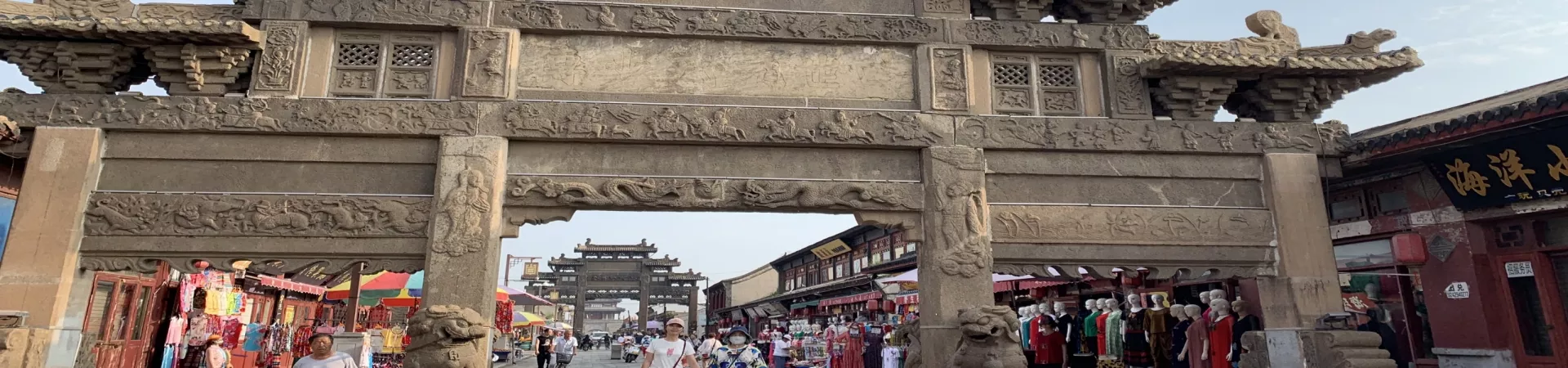
Subtitle: A Journey Through Time: Exploring the Well-Preserved Ming Dynasty Gem of Northern China
Introduction Nestled on the Liaodong Peninsula in Huludao City, Liaoning Province, Xingcheng Ancient City stands as a monumental testament to China's rich historical and architectural heritage. More than just a collection of old buildings, it is a living museum, a remarkably preserved urban artifact from the Ming Dynasty (1368-1644). Recognized as one of "China's Top Ten Ancient Cities," it holds the distinguished status of being one of the only four Ming-era walled cities in the country to survive in such complete form, and uniquely, the sole survivor built as a square defensive garrison town. For any traveler seeking an authentic encounter with imperial China's frontier defense systems, urban planning, and cultural legacy beyond the more famous southern water towns, Xingcheng offers an unparalleled and profoundly evocative experience.
1. Architectural Grandeur and Defensive Mastery The city's layout is a masterpiece of Ming military architecture. Its imposing rectangular walls, punctuated by four grand gates facing the cardinal directions—East, West, South, and North—immediately convey its historical purpose.
1.1. The Fortified Perimeter The defensive sophistication is evident in several key features. Each main gate is protected by a semicircular barbican, or "wengcheng," an outer enclosure designed to trap and confuse attacking forces. At each of the four corners of the city walls, robust artillery platforms (paotai) stand sentinel, remnants of an era when this city guarded the coastal approaches to the heartland. Walking along the broad top of the ramparts, one can envision soldiers patrolling and admire panoramic views of both the orderly ancient city within and the modern city that has grown beyond.
1.2. The Heart of the City: The Bell and Drum Tower Rising from the geometric center of the city, where the main streets from the four gates converge, is the majestic Bell and Drum Tower. This structure was the civic heartbeat of old Xingcheng, its instruments regulating daily life by marking the hours, signaling emergencies, and announcing important events. Its central location underscores the symmetrical and hierarchical design philosophy of Ming urban planning.
2. A Tapestry of Cultural and Historical Sites Within the protective embrace of the walls, Xingcheng Ancient City is a treasure trove of historical sites that cater to diverse interests, from Confucian scholarship and folk religion to military history and domestic life.
2.1. Xingcheng Confucian Temple (Wenmiao) A site of paramount cultural importance, the Xingcheng Confucian Temple is the oldest and most revered of its kind in China's three northeastern provinces (Dongbei). This serene complex, dedicated to the great philosopher Confucius, features traditional halls, ancient steles, and tranquil courtyards. It served as both a place of worship and the center of local education for centuries, offering a peaceful respite and a deep dive into the intellectual foundations of Chinese civilization.
2.2. Other Notable Landmarks Scattered throughout the city's grid-like streets are other significant attractions. The City God Temple (Chenghuang Miao) provides insight into Chinese folk religious beliefs, where the divine magistrate governed the spiritual affairs of the city. The General's Mansion offers a glimpse into the life of a high-ranking military officer stationed at this frontier post. The Zhou Family Old Residence showcases the domestic architecture and lifestyle of a prosperous local family. Furthermore, the Xingcheng Museum, housed within a historical building, systematically displays artifacts and exhibits that narrate the city's long and storied past, from its founding to its role in later historical events.
3. The Unique "Five-in-One" Landscape What truly sets Xingcheng apart in northern China's tourism landscape is its rare integration of five distinct natural and man-made elements: the City (Cheng), Springs (Quan), Mountains (Shan), Sea (Hai), and Island (Dao). The ancient walled city is the central cultural pillar. Nearby, the famous Xingcheng Hot Springs provide relaxation and therapeutic benefits. The scenic beauty of Juhua Island (Chrysanthemum Island) lies just offshore, while the coastline offers beaches and maritime activities. This combination allows visitors to craft a multifaceted itinerary encompassing history, culture, wellness, and natural scenery within a compact area, a rarity for a destination in northern China.
4. Essential Visitor Information
4.1. Admission and Fees Access to the ancient city itself, including walking on the walls and through its historic streets, is free of charge. However, entry into individual interior attractions such as the Confucian Temple, the Bell and Drum Tower, the City God Temple, the General's Mansion, and the museum requires separate admission tickets. It is highly advisable to check the latest official pricing at the ticket offices for each site, as fees are subject to change.
4.2. Opening Hours The operating hours for the city walls and major internal attractions vary seasonally: * Peak Season (April 15 - October 15): Generally 08:00 - 17:30, with last admission around 15:00. * Off-Peak Season (October 16 - April 14): Generally 08:00 - 16:00, with last admission around 14:00. Specific sites like the temples may have slightly different hours, so planning ahead is recommended.
4.3. Transportation Guide Reaching Xingcheng Ancient City is straightforward. * By Train: A very convenient option. Visitors can take a train to Xingcheng Railway Station. From the station exit, the ancient city is only about a 10-minute walk eastward. * By Local Bus: Several local bus lines serve the area. Routes Xingcheng 1, 2, 2 (Bingjia Section), 3, and 9 all stop at "Gucheng Nanguan" (Ancient City South Pass), from where the city is within easy walking distance.
4.4. Suggested Duration To fully appreciate the walls, explore several key interior sites, and wander the atmospheric streets, a visit of approximately 2 to 4 hours is ideal. This allows for a comprehensive experience without feeling rushed.