Suixi Old City Shiban Street
Subtitle: A Walk Through Time: The Ancient Flagstone Street of Suixi Old Town
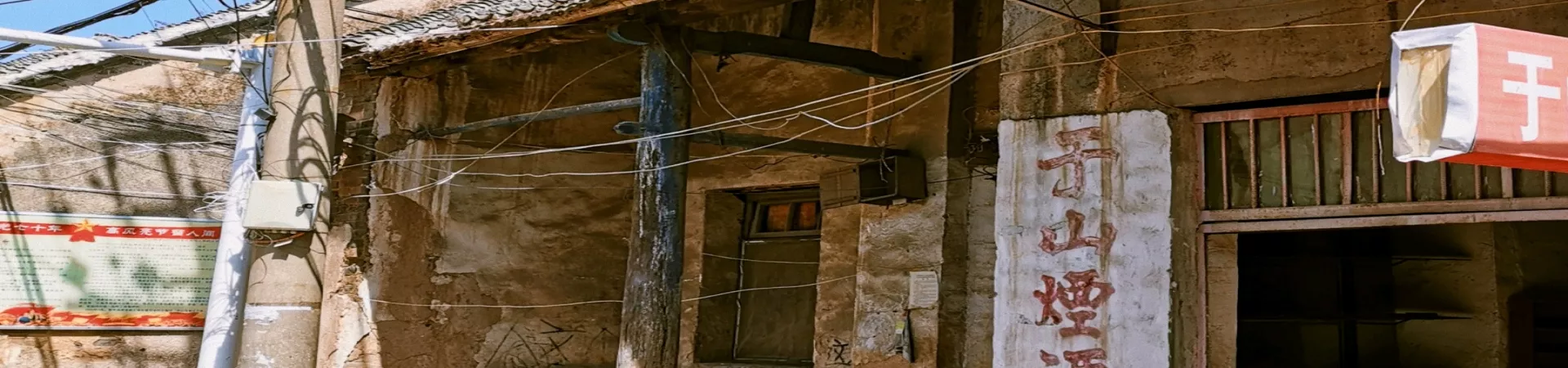
Introduction: The Living Heart of Old Suixi Stretching approximately one kilometer from the banks of the old Sui River in the east to the southern end of Guandi Temple Alley in the west, the Ancient Flagstone Street (Laocheng Shiban Jie) is the historic and cultural artery of Suixi Old Town. With a width of five meters, its surface is entirely paved with smooth, dark bluish-grey flagstones, polished by centuries of footsteps to a mirror-like sheen. Flanking this stone river are rows of well-preserved architecture showcasing the elegant and understated style of the Ming and Qing dynasties, a testament to the town's former prosperity and a status now recognized through its designation as a Major Cultural Relics Protection Unit. More than just a tourist attraction, this street is a tangible chronicle of the region's resilience, a silent narrator of wars, rebirth, and the enduring spirit of a community known historically as "Kouzi."
1. From "Kouzi" to a Walled Town: The Historical Foundations The story of the street is inextricably linked to the rise of Suixi itself. The area, colloquially known as "Kouzi" (meaning "mouth" or "estuary"), has been a significant geographical nexus since the Spring and Autumn and Warring States periods. Initially serving as the point where the Bian River flowed into the Sui River ("Bianshui Ru Sui Zhi Kou"), its strategic importance evolved during the Jin and Yuan dynasties, becoming the confluence for a smaller stream into the Sui, hence solidifying the name "Suixi Kou" – the mouth of the Sui stream. By the Ming Dynasty, this advantageous location had attracted wealthy merchants and families. In response to prevalent banditry, the residents took a decisive step towards urbanization: they dug protective moats and erected barriers around their settlements. This act of collective defense transformed the gathering of homes and shops into a fortified, nascent town, laying the very groundwork upon which the Flagstone Street would later be laid.
2. The Grand Paving: A Civic Transformation For centuries, the main thoroughfare of this burgeoning town was a source of constant inconvenience—a dirt path that turned into a cloud of dust under the sun and a treacherous quagmire with every rain. This changed dramatically in the late Qing and early Republican era, thanks to the advocacy and philanthropy of a local gentry named Zhou Junzhe. He championed and funded an ambitious project to repave the entire street with durable, locally quarried bluish flagstone (瓦子石). The scale of the endeavor was monumental, requiring the labor of over a thousand workers, hundreds of oxcarts, and tens of thousands of cubic meters of stone. After several months of intensive work, the project was complete. The new Flagstone Street was not merely an infrastructural upgrade; it was a civic revolution. It ushered in an era of cleanliness, accessibility, and pride, finally ending the cycle of mud and dust and facilitating smoother trade and daily life, which in turn fueled the street's commercial and cultural zenith.
3. Trials of the 20th Century: Scars of War and Turmoil The smooth stones of the street soon bore witness to the turbulent waves of modern Chinese history. During the War of Resistance against Japan, the street suffered deliberate burning and destruction at the hands of invading Japanese forces. A few years later, in the pivotal Huaihai Campaign of the Chinese Civil War, it endured bombing raids by Kuomintang (Nationalist) aircraft. Each time, in the aftermath of conflict, the nascent People's Government allocated funds for its repair, striving to restore its physical form and communal function. However, the street's most profound cultural wound came during the Cultural Revolution (the "ten-year turmoil"). In this period, the very soul of the old town was attacked: numerous temples, pavilions, decorative archways, and other historical structures lining the street were vandalized or demolished, and countless movable artifacts and relics were looted. This cultural devastation, coupled with the systematic relocation of party organs, schools, and businesses to a new urban district in the late 1970s, drained the street of its vitality. The Flagstone Street, once bustling with activity, fell into a prolonged state of silence and neglect, its polished stones echoing with memories of lost grandeur.
4. Preservation and Present-Day Experience The street's fate took a positive turn in the mid-1990s, when the local government initiated a dedicated program for its protection and developmental revitalization. This ongoing effort aims to carefully preserve the street's historical authenticity while making it accessible for residents and visitors alike. Today, a walk down Suixi Old Town Flagstone Street is a journey through layered history. Visitors can admire the architectural harmony of the Ming-Qing style buildings, now housing traditional shops, tea houses, and small museums. The cool, solid feel of the worn flagstones underfoot connects one directly to the past—to the merchants of the Ming era, the oxcarts of the great repaving, and the resilient townsfolk who rebuilt after repeated setbacks. The street is not a static museum piece but a slowly reawakening neighborhood, where history is embedded in every slab and doorway.
Visitor Information * Admission: Free of charge. * Opening Hours: Open access all day, every day, year-round.