Linhuan Ancient City Site
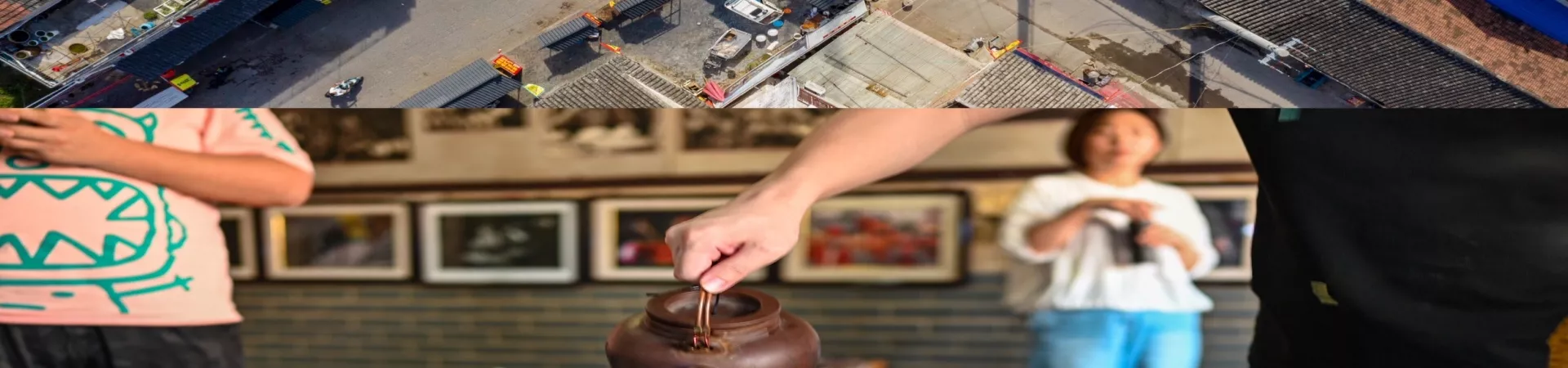
Subtitle: A Journey Through Millennia: Exploring the Ruins of Linhuan Ancient City
1. Introduction: A Tapestry of Time in the Huaihei Countryside
Nestled approximately 35 kilometers southwest of Suixi County, and about 40 kilometers from the city of Huaihei in Anhui Province, lies the Linhuan Ancient City site. This is not merely a collection of ruins but a profound palimpsest of Chinese history, where layers of time—from Neolithic settlements to revolutionary modern eras—are silently interred within its earthen ramparts. For the discerning visitor, Linhuan offers a uniquely unfiltered and poignant encounter with China's past, presenting not only architectural remnants like ancient walls, temples, and old streets but also a stark, ongoing narrative of preservation, decay, and the complex relationship between cultural heritage and contemporary life. A visit here is less about witnessing perfectly restored monuments and more about feeling the weight of centuries and understanding the fragile thread that connects them to the present.
2. Historical Significance: From Ancient Origins to Modern Crossroads
2.1. Deep Roots: The Neolithic Beginnings The story of Linhuan begins not with bricks and mortar, but in the distant haze of prehistory. Archaeological evidence suggests that the area's cultural history stretches back an astonishing 4000 years to the late Neolithic period. This deep timeline establishes Linhuan as a site of continuous human habitation and significance long before it took the form of a walled city, hinting at its enduring strategic and cultural importance within the Huai River basin.
2.2. Layers of Legacy: Architectural and Cultural Landmarks Scattered across the site are physical testimonies to its historical journey. The most prominent feature is the surviving sections of the ancient city wall, an imposing earthwork that once defined the city's boundaries. Within and around this perimeter, key landmarks anchor different historical periods: * Wenchang Palace and City God Temple: These structures speak to the traditional spiritual and scholarly life of the city, dedicated to the deity of literature and the guardian of the city, respectively. * Tombs and Dwellings of Notable Figures: The tomb of Jian Shu, a revered wise minister of the Spring and Autumn period, and the old residence of Ji Kang, a famous philosopher, musician, and poet from the Seven Sages of the Bamboo Grove during the Three Kingdoms era, connect the site to iconic personalities in Chinese philosophy and culture. * The Traditional Old Street and Ancient Teahouses: These elements preserve the ambiance of daily life in old Linhuan, with the characteristic teahouses offering a living cultural practice amidst the historical setting. * The Former Headquarters of the General Front Committee of the Huaihai Campaign: This site introduces a crucial modern historical layer, marking Linhuan's role as a strategic command center during one of the decisive campaigns of the Chinese Civil War (1948-1949).
3. The Present State: A Landscape of Contrast and Challenge
3.1. Visible History and Fading Memory A walk along the existing ramparts, particularly near the eastern gate where preservation is notably poorer, reveals the site's vulnerable state. The landscape itself tells a story of neglect and the slow erosion of memory. In a wheat field south of the wall, a stone tablet stands as a silent witness. Its inscription, now blurred and faint, requires careful scrutiny to reveal that it was erected in July 1986 when the Linhuan Ancient City site was designated a Provincial-Level Key Cultural Relics Protection Unit. This fading marker symbolizes the fragile official recognition of its importance.
3.2. The Earthen Walls: A Site of Contested Practices The most striking and somber aspect of contemporary Linhuan is the condition of its iconic city walls. The view from atop these earthworks is dominated not by ancient battlements, but by a vast expanse of graves. On a mere hundred-meter stretch, one can count nearly a hundred burial mounds of varying sizes, predominantly dating from the 1980s. This practice represents a profound and ongoing challenge.
3.2.1. The Conflict Between Custom and Policy Despite government efforts in recent decades to promote cremation in rural areas, the local custom of earth burial persists. The ancient walls, seen as auspicious or simply convenient land, have become an active cemetery. As one local account starkly puts it, "in some places, graves are buried two or three layers deep." This creates a direct and physical conflict: the cultural heritage of the community as a whole is being physically undermined by the deeply held burial traditions of its members.
3.2.2. The Cycle of Environmental Degradation This practice accelerates the walls' physical decay. The constant disturbance for new burials and the maintenance of grave sites have drastically reduced the vegetative cover on the ramparts. The topsoil, now exposed and unstable, falls victim to the elements. Relentless wind erosion and rainwater scouring are actively washing the ancient earthworks away, leaving them in a precarious state of collapse. The walls face a dual assault: from the pressures of modern funerary practices and from the natural forces those practices unleash.
4. The Visitor's Experience: Reflection and Responsibility
Exploring Linhuan is an immersive, thought-provoking experience that defies typical heritage tourism. There are few manicured paths or explanatory plaques. Instead, visitors navigate a landscape where history is raw, contested, and visibly disappearing. The journey past Ji Kang's symbolic residence, through the lively old street teahouses, up onto the grave-studded walls, and finally to the Huaihai Campaign headquarters, is a chronological and emotional traversal through China's narrative.
The site demands observation and reflection. It presents an authentic, unresolved dialogue between past and present, between preservation and practice, and between collective memory and individual ritual. The sight of the crumbling walls, simultaneously ancient fortification and modern cemetery, prompts crucial questions about heritage stewardship, community values, and the sustainable future of such non-renewable cultural resources. Linhuan does not offer easy answers, but it provides an unforgettable, poignant landscape in which to contemplate the enduring echoes of history and the complex realities of safeguarding them.