Tuanshan Village
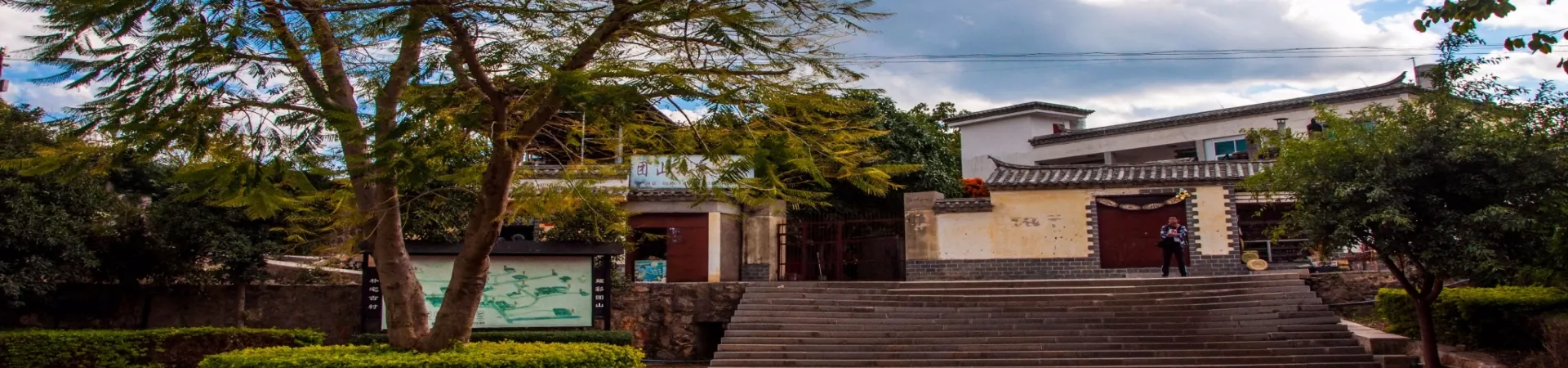
Subtitle: A Living Museum of Han Architecture in Yunnan's Historic Landscape
1. Introduction: A Journey into Preserved Time
Nestled within the lush, rolling landscapes of Honghe Prefecture in Yunnan Province, China, the village of Tuan Shan stands as a remarkably preserved portal into the past. More than just a collection of old buildings, it is a living, breathing community where history is etched into every wall and courtyard. While its earliest roots trace back to settlements of the Yi people, Tuanshan is celebrated today as a stunning and intact example of late Qing Dynasty and early Republican-era Han Chinese residential architecture. Its significance has been recognized globally, earning it a place as a key component of the UNESCO World Heritage Site "Cultural Landscape of Honghe Hani Rice Terraces," showcasing a different, yet equally profound, cultural strand within the region. A visit here is not merely sightseeing; it is an immersive experience in architectural harmony, artistic craftsmanship, and the enduring spirit of a communal homeland.
2. Architectural Philosophy and Layout
2.1. Orientation and Fundamental Structure The architectural identity of Tuan Shan is immediately defined by its unified and philosophically resonant layout. Contrary to the varied orientations found in many ancient villages, every significant dwelling in Tuanshan adheres to a strict sitting-west-facing-east orientation. This alignment is deeply symbolic, representing the reverence for the east, the direction of the rising sun and associated with vitality and good fortune. The external aesthetic is one of elegant simplicity and harmony with nature: grey clay-tiled roofs cascade gently, while the walls are whitewashed with lime, creating a bright, clean facade. These white walls are typically bordered at the base with a skirting of blue bricks, adding a touch of structural definition and durability while complementing the color palette of the sky and tiles.
2.2. The Central Role of the Tianjing (Sky Well) At the heart of every major compound lies its spiritual and functional core: the Tianjing, or Sky Well. This open central courtyard is far more than an empty space; it is the lungs and the living room of the house. It provides essential light and ventilation to the surrounding rooms, collects precious rainwater in accordance with traditional belief, and serves as the focal point for family gatherings, ceremonies, and daily life. All major rooms face inward towards this courtyard, emphasizing introspection, family cohesion, and privacy from the outside world. The design creates a microcosm of the universe within the home, connecting the household with the heavens above.
2.3. Sequential Spatial Experience and Entry The approach to a Tuan Shan residence is deliberately designed to create a sense of anticipation and privacy. The main gate is almost never placed on the central axis facing the courtyard. Instead, it is discreetly positioned to one side of the main building structure. Upon entering, one does not step directly into the main courtyard but is guided through a series of shaped passageways and transitional spaces. These may be narrow lanes, angled corridors, or screened entryways. This architectural narrative builds suspense, shields the inner life of the family from immediate view, and finally culminates in the revealing and often breathtaking vista of the main courtyard, making the arrival a moment of discovery.
3. Artistic Embellishment and Craftsmanship
The true grandeur of Tuan Shan's architecture is revealed in the exquisite details that adorn its interiors. The compact and comfortable layout of the compounds provides a perfect canvas for an explosion of artistic expression, transforming homes into galleries of fine art.
3.1. The Mastery of Woodcarving Tuan Shan is particularly famed for the exceptionally fine woodcarvings that grace its buildings. These are not merely decorative; they are narratives in timber. Artisans employed deep, openwork, and relief carving techniques on beams (liang), column brackets (dougong), window lattices (chuangling), and door panels. The motifs are rich and symbolic: bats for good fortune, deer for prosperity, peaches for longevity, intricate floral patterns representing the seasons, and scenes from classical literature or folklore. Each carving tells a story, conveys a blessing, or embodies a Confucian ideal, showcasing the owner's cultural refinement and social status.
3.2. The Integration of Calligraphy and Painting Color paintings and calligraphic works are integral components of the architectural decoration, seamlessly blending with the wood and masonry. Friezes under the eaves, panels on doorheads, and walls within the hallways are adorned with vibrant paintings of landscapes, flowers, and birds. Equally important are the poetic couplets (duilian) and inscribed plaques (bian'e), often placed prominently on pillars and above main halls. These works, executed in beautiful calligraphy, contain scholarly allusions, moral admonitions, or poetic descriptions of the family's aspirations. Together, the paintings and calligraphy elevate the space from a dwelling to a cultivated scholarly environment, reflecting the "literati culture" that was highly valued by the merchant and gentry families who built these homes.
4. Practical Information for Visitors
4.1. Preservation and Living Heritage Tuan Shan is not a deserted museum piece. It is a living village where descendants of the original families often still reside. The village currently preserves 21 traditional Han-style residential buildings and ancient structures in outstanding condition. Each of these historically significant buildings has been catalogued and is marked with a modern door number, symbolizing the blend of past and present. This ongoing habitation adds an invaluable layer of authenticity to the visit, as the architecture continues to serve its original purpose as a shared homeland for numerous households.
4.2. Admission and Opening Hours To maintain and preserve this unique heritage, the village charges an admission fee. * General Admission Ticket: 33 RMB (per person). * Ticket Validity: This price is generally applicable throughout the year, from January 1st to December 31st, Monday through Sunday. * Operating Hours: The village is open to visitors daily from 8:00 AM to 6:00 PM. It is advisable to allocate sufficient time to explore the lanes and compounds at a leisurely pace.
4.3. Suggested Duration and Contact * Suggested Visit Duration: To fully appreciate the architectural details, explore several different compounds, and absorb the atmosphere of the village, a minimum of 3 hours is recommended. Half a day allows for a more comprehensive and unhurried experience. * Contact Information: For any specific inquiries prior to your visit, you may contact the relevant management office via telephone at 0873-7703189 or 0873-7703059.