Bishezhai Station
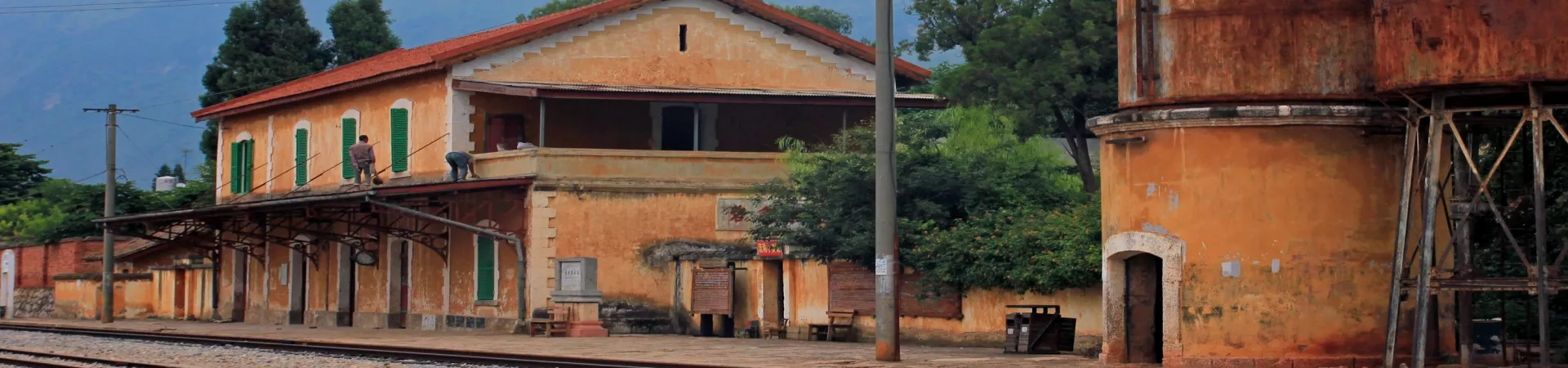
Subtitle: A Journey Through Time: Exploring Bisezhai Station, the Historic French-Inspired Railway Jewel of Honghe, Yunnan
Introduction: Where History and Architecture Converge
Nestled within the scenic landscapes of Honghe, Yunnan, lies Bisezhai Station, a silent yet eloquent testament to a pivotal era in China's modern history. Far more than a mere stop along a railway, this station is a portal to the early 20th century, embodying a unique cultural fusion and a dramatic narrative of international ambition. Originally bearing the unassuming name "壁虱寨" (Bìshīzhài), its transformation into a crucial railway hub catalyzed its rebirth into the "Bisezhai" known today. As one of China's oldest railway stations and a nationally protected cultural relic, it offers visitors an unparalleled opportunity to walk through a living museum, where the distinct yellow walls and green shutters of French colonial architecture stand in serene contrast to the red soil of Yunnan, creating a scene reminiscent of an unexpected European village nestled in the Southwest Chinese highlands.
1. A Historical Crossroads: The Birth and Significance of the Station
1.1. The Yunnan-Vietnam Railway and Strategic Importance The story of Bisezhai is inextricably linked to the monumental Yunnan-Vietnam Railway, a daring engineering feat completed in 1910 by French colonial interests. Designed to connect Kunming with the port of Haiphong in Vietnam, this railway was a artery of trade, politics, and cultural exchange. Bisezhai Station, constructed in 1909, quickly evolved from a simple stop into the de facto central hub and interchange for the entire line. Its strategic location made it a bustling center of activity, where goods, passengers, and ideas from across Southeast Asia and beyond converged. This era cemented its place in local lore, famously giving rise to two of the "Eighteen Oddities of Yunnan": "The train is slower than the car" and "The railway goes abroad, not to other parts of China." These sayings poignantly capture the station's unique, externally-focused role during that period, highlighting both the engineering challenges of the mountainous terrain and the geopolitical reality of its international connection.
1.2. From "壁虱寨" to a Protected National Treasure The station's journey from a local village to a national monument is a narrative of preservation and recognition. Its original name, often humorously translated, faded into history as its importance grew. Recognized for its profound historical value and architectural uniqueness, Bisezhai Station was designated a National Key Cultural Relics Protection Unit. This status ensures the protection of its physical structure and its legacy, safeguarding it as an irreplaceable piece of China's industrial and architectural heritage for future generations.
2. Architectural Splendor: A French Village in Yunnan
2.1. Distinctive French Colonial Design Upon arrival, visitors are immediately struck by the station's architectural character. The ensemble of buildings showcases a classic, albeit adapted, French colonial style. The signature features include: * Vibrant Color Palette: Walls painted in warm, buttery yellow accentuated by forest green window shutters and doors, creating a picturesque and photogenic facade. * Structural Elements: Sloping tile roofs, arched doorways and windows, and sturdy masonry construction speak to the European design principles of the time. * Layout and Ambiance: The arrangement of the station buildings, the water tower, and other ancillary structures around the railway tracks mimics the layout of a small French town square, contributing to the site's unique, transplanted European ambiance amidst the Chinese countryside.
2.2. The Station Complex and Key Structures Exploring the site reveals more than just the main station building. The complex includes several well-preserved structures that formed a self-sufficient hub: * The Main Station Building: The heart of the complex, featuring a ticket office, waiting area, and station master's office, all retaining period details. * The French-style Water Tower: An essential facility for steam locomotives, its design is purely functional yet aesthetically consistent with the station's theme. * Warehouses and Staff Housing: These surrounding buildings complete the scene, offering a fuller picture of the daily operations and life at this remote but vital junction.
3. The Visitor Experience: Practical Information and Immersive Exploration
3.1. Planning Your Visit: Hours, Fees, and Access Bisezhai Station is committed to being accessible to all who wish to connect with its history. * Admission: Entry to the station and its grounds is completely free of charge. * Opening Hours: The site is open to visitors 24 hours a day, every day of the year. This allows for flexibility in planning, whether under the bright daytime sun or in the softer light of dawn or dusk, which is particularly atmospheric for photography. * Suggested Duration: A thorough exploration of the station buildings, surrounding structures, and railway tracks typically requires 1 to 2 hours. Visitors are encouraged to take their time, absorbing the details and the serene, almost timeless, atmosphere.
3.2. Walking the Tracks of History The experience is profoundly immersive. Visitors can: * Stroll along the original, now silent, railway tracks, imagining the steam and sound of arriving trains. * Examine the French-engineered switches and signaling equipment still in place. * Stand on the platform and look out across the landscape, contemplating the station's role as a gateway to the world for early 20th-century Yunnan. * Capture the striking visual contrast between the architecture and the natural environment, a favorite subject for photographers and history enthusiasts alike.
The preservation of Bisezhai Station offers a tangible, silent narrative of cultural intersection, colonial ambition, and technological endeavor. It remains a powerful symbol of Yunnan's complex history, inviting quiet reflection on the flows of global connectivity that shaped, and continue to shape, this diverse region.