Sun Bin Tourist City
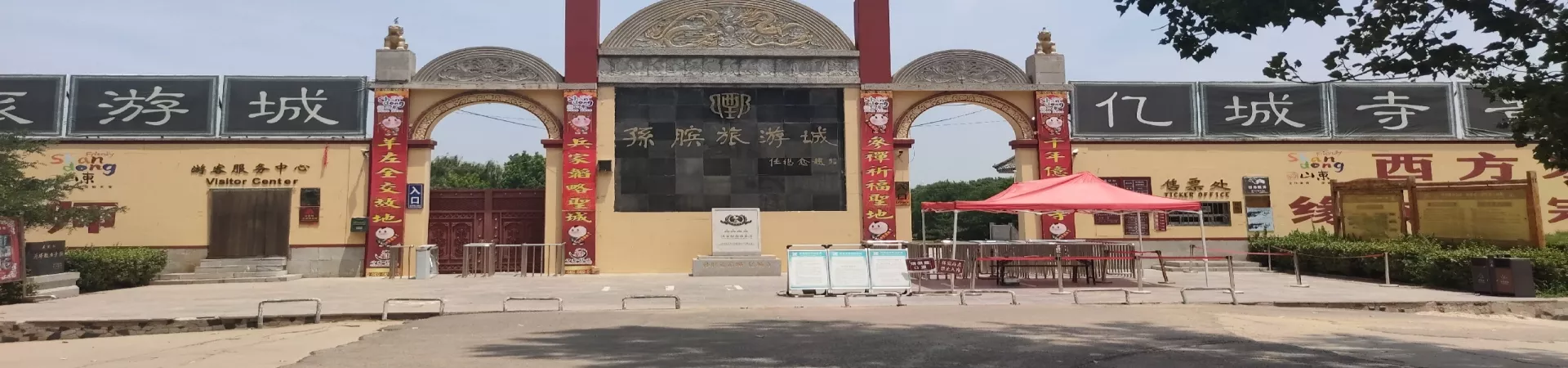
Subtitle: Exploring the Legacy of a Military Genius: A Comprehensive Guide to Sun Bin Tourist City, Heze
Introduction: The Enduring Legend of Sun Bin
Nestled within Heze City in Shandong Province, the Sun Bin Tourist City is far more than a typical scenic spot; it is a vast cultural park dedicated to commemorating one of ancient China's most brilliant military strategists, Sun Bin. A key figure from the Warring States period, Sun Bin is revered not merely as a historical general but as a profound thinker whose philosophies transcended the battlefield. His seminal work, Sun Bin's Art of War, is globally acknowledged as a canonical text on military strategy. The principles encapsulated within—encompassing warfare philosophy, strategic planning, tactical maneuvers, and army management—have found profound applications extending into modern politics, economics, and competitive business practices, securing its status as a precious treasure of human intellectual heritage. The site immortalizes his most celebrated military victories, the Battles of Guiling and Maling, which are studied as masterclasses in tactical deception and remain cornerstone case studies in Chinese military history. Furthermore, the dramatic and cunning tale of "Sun Bin Outwitting Pang Juan" is deeply woven into the fabric of Chinese folklore, a story known to every household, making a visit here a journey into both documented history and living legend.
1. Layout and Key Areas of the Tourist City
The Sun Bin Tourist City is thoughtfully organized into three distinct thematic zones, allowing visitors to explore different facets of history, spirituality, and natural beauty within a single, expansive complex.
1.1. The Western Sun Bin Memorial Area This zone forms the historical and cultural heart of the park, directly honoring the legacy of its namesake. * Sun Bin Memorial Hall: The centerpiece of this area, this hall serves as a comprehensive museum. It likely houses historical artifacts, detailed exhibits on Sun Bin's life and campaigns, and in-depth explanations of his strategic doctrines, offering visitors a scholarly deep dive into his contributions. * The Nine-Palace Eight-Diagram Maze (Jiugong Bagua Zhen): This attraction is a physical embodiment of Sun Bin's strategic genius. Based on ancient Chinese metaphysical阵法 (battle formations), it provides an interactive and challenging experience, allowing visitors to metaphorically "navigate" the complexities of traditional military tactics. * Bin Gong Lake: A serene body of water adding aesthetic tranquility to the memorial area, offering picturesque views and a space for reflection. * Yang Zuo Tomb: This site commemorates the legendary friendship between Yang Zuo and the scholar Left Boyi, representing themes of loyalty and sacrifice that resonate with the era's values. * Geda Temple: A historical temple site within the memorial zone, adding a layer of local religious and architectural history to the environment.
1.2. The Eastern Buddhist Culture Area Contrasting with the military theme, this expansive zone offers a spiritual and architectural retreat, showcasing impressive traditional Buddhist temple complexes. * Main Structures: The area features a complete sequence of classic Buddhist temple architecture. Visitors can progress through the Mountain Gate, Release-Life Pond, Hall of the Heavenly Kings, Yuantong Hall, Medicine Buddha Hall, and the grand Mahavira Hall (Daxiong Baodian). The presence of a Lecture Hall, Dining Hall (Zhaitang), and over 500 auxiliary rooms and side chambers indicates the scale and functional capacity of this religious complex, designed for worship, teaching, and monastic life.
1.3. The Northwestern Garden and Leisure Area This section provides a lush, natural counterbalance to the historical and religious zones, focusing on horticultural beauty and leisurely strolls. * Botanical Collection: The area has been extensively landscaped with more than 20,000 plants and trees representing over one hundred different species. It is designed as a peaceful sanctuary for visitors to enjoy nature, seasonal blooms, and shaded walks.
1.4. Additional Infrastructure The site is supported by significant architectural works that enhance its grandeur and accessibility, including the Yuanrong Bridge, three city gates, and the Yuanrong Square, which likely serves as a central gathering space.
2. Practical Visitor Information
2.1. Ticket Pricing The general admission fee is set at 20 RMB. The park offers a considerate discount policy: * Half-price Ticket (10 RMB): Available to holders of a valid student ID, disability certificate, senior citizen card (likely for those between 60-69), and children with a height between 1.2 and 1.4 meters. * Free Admission: Granted to active-duty military personnel (with valid ID), holders of a veteran retirement certificate, seniors aged 70 and above, and children under 1.2 meters in height.
2.2. Operating Hours The Sun Bin Tourist City is open year-round. * Hours: 08:30 – 17:30 daily. * Days: Open every day of the week, Monday through Sunday. * Period: This schedule applies throughout the year, from January 1st to December 31st.
A visit to the Sun Bin Tourist City is thus a multifaceted experience. It begins with an engagement with the profound strategic mind of a legendary figure, continues through the serene and majestic spaces of Buddhist devotion, and culminates in the restorative calm of classical Chinese gardens. It successfully bridges the gap between historical education, cultural appreciation, and recreational tourism, making it a unique and enriching destination within Shandong Province. The site does not simply display history; it invites visitors to walk through its landscaped narratives, understand the philosophical underpinnings of an ancient genius, and find moments of peace amidst its diverse architectural and natural settings.