Baishi Fang
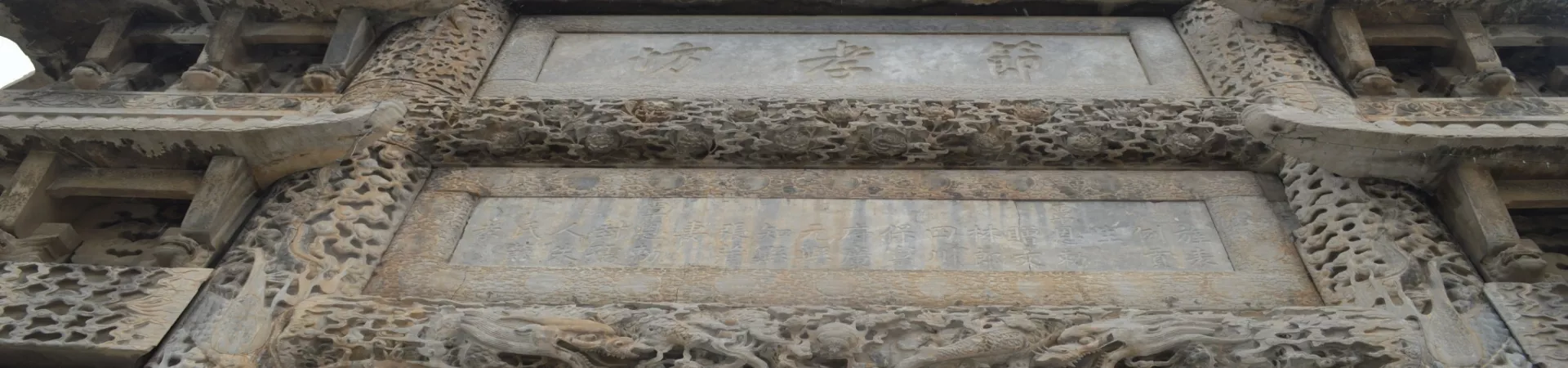
Subtitle: A Journey Through Time: Unveiling the Grandeur of Heze's Hundred Lions Archway
Introduction: A Stone Symphony in Northern China
Nestled within the ancient city of Heze in southwestern Shandong Province, the Hundred Lions Archway (Bai Shi Fang) stands not merely as a static monument, but as a profound narrative carved in stone. This architectural masterpiece, a quintessential example of the ornate "pailou" (memorial archway) tradition from the Qing Dynasty, transcends its physical form to become a portal into China's rich cultural, artistic, and social history. More than just an arch, it is a symphony of symbolism, a testament to unparalleled craftsmanship, and a poignant story of familial devotion and imperial recognition, silently awaiting the discerning visitor to decipher its intricate tales.
1. Historical Context and Symbolic Significance
1.1. Origin and Purpose: An Imperial Decree in Stone The Hundred Lions Archway was erected in 1778 during the reign of the Qianlong Emperor, a peak period for Chinese art and architecture. Its construction was authorized by a direct imperial decree, serving as a posthumous honor for the esteemed Madame Zhang, wife of the high-ranking official Kong Yuansun. In the rigidly hierarchical society of feudal China, such an archway was among the highest civic honors attainable, symbolizing supreme virtue, loyalty, and familial piety. It publicly celebrated the moral character and social contributions of the Zhang and Kong families, embedding their legacy permanently into the urban fabric of Heze.
1.2. Architectural Typology: The "Pailou" as Cultural Artifact Belonging to the category of "decorative archways" or "memorial gateways," the Bai Shi Fang is a stellar representative of the four-pillared, three-bayed style. These structures were never merely decorative; they functioned as spatial markers, denoting important districts, commemorating virtuous individuals, or signifying auspicious sites. This archway, therefore, originally framed a significant thoroughfare, guiding both physical passage and moral contemplation for those who passed beneath its beams.
2. An Anatomy of Exquisite Craftsmanship
2.1. The Lions: Guardians in Miniature The archway's most famous feature is, unsurprisingly, its legion of lions. Contrary to the implied exact number, the term "hundred" is used in the classical sense to denote multitude. In reality, over a hundred individually carved lions adorn the structure, each one a unique masterpiece. They are depicted in a breathtaking array of poses—playing with intricately carved brocade balls, nurturing cubs, crouching in vigilance, or tumbling in playful groups. No two are identical; their expressions range from fierce majesty to tender affection, showcasing the sculptors' deep understanding of both anatomy and emotion. These lions are not just ornaments; they are potent symbols of power, protection, prosperity, and the auspicious guardianship of the family's honor.
2.2. Beyond the Lions: A Panorama of Symbolic Motifs While the lions captivate, the entire surface of the archway is a dense tapestry of symbolic reliefs. Intertwining dragons, representing imperial authority and cosmic power, coil around pillars. Mythical phoenixes, symbols of grace and renewal, balance the dragon's yang energy. Clouds of fortune, blooming peonies (emblems of wealth and honor), and other flora and fauna create a harmonious vision of the cosmos and an idealized natural world. Every element, from the largest dragon to the smallest floral scroll, carries specific auspicious meanings, reflecting a worldview where art was inseparable from philosophy and desire for blessings.
2.3. Structural and Artistic Techniques The archway is constructed from locally quarried, high-quality blue-green stone, chosen for its durability and fine grain, allowing for exquisite detail. The carving techniques employed represent the zenith of Qing stone masonry, combining deep relief, openwork piercing, and delicate shallow carving. The most astonishing feat is the multi-layered, three-dimensional carving where elements like chains or ball-in-mouth ornaments are fashioned from a single block of stone, demonstrating technical bravura that still inspires awe today.
3. Experiencing the Hundred Lions Archway
3.1. Location and Accessibility The archway is located in Danian County, Heze City. Heze is well-connected by rail and road to major hubs like Jinan and Zhengzhou. Visitors can typically reach the site via local taxi or bus services from downtown Heze. Its placement in a public square makes it an accessible and integral part of the community's daily life.
3.2. Practical Visitor Information * Opening Hours: The site is accessible to the public 24 hours a day, every day of the year. Being an outdoor monument, it can be viewed at any time. However, daylight hours are naturally recommended for fully appreciating the depth and detail of the carvings. * Best Time to Visit: Early morning or late afternoon light provides optimal conditions for photography, as the angled sunlight accentuates the textures and depths of the carvings, bringing the stone figures to life with dramatic shadows. * How to Approach Viewing: To truly engage with the archway, visitors are advised to practice slow, circumambulatory observation. Start from a distance to appreciate its overall majesty and symmetry. Then, move closer, spending time at each bay, pillar, and crossbeam. Discover the narratives in each panel—scenes from folklore, historical episodes, or symbolic tableaus. The joy lies in the discovery of new details with every shift in perspective.
4. Cultural Legacy and Contemporary Relevance
4.1. A Microcosm of Qing Aesthetics The Bai Shi Fang is an open-air textbook of mid-Qing artistic sensibilities. Its preference for dense ornamentation, narrative complexity, and technical display reflects the period's confidence and prosperity. It stands as a crucial artifact for understanding the secular art, social values, and material culture of 18th-century China outside the imperial courts.
4.2. Preservation and Status Recognized as a National Key Cultural Relics Protection Unit, the archway is under stringent state protection. While centuries of exposure have left traces of weathering, ongoing conservation efforts aim to stabilize the structure and preserve its magnificent details for future generations. It is not just a local treasure of Heze but a priceless component of China's shared cultural heritage.
4.3. A Bridge Between Past and Present For the modern visitor, the Hundred Lions Archway offers a moment of profound connection. It challenges the contemporary fast-paced gaze, inviting one to slow down and "read" the stone. It speaks of universal themes—honor, memory, artistic pursuit, and the human desire to leave a mark of beauty and virtue. In its silent, stony eloquence, it bridges centuries, allowing today's traveler to stand in the shadow of history and witness the enduring power of human creativity and devotion.