Guifengta
Subtitle: A Journey Through Time: Unveiling the Mystique of Heyuan's Guifeng Pagoda
1. Introduction: A Sentinel Over the Converging Rivers Rising solemnly from the summit of Guifeng Mountain in Heyuan City, Guangdong Province, the Guifeng Pagoda commands a breathtaking vantage point where the Dong River and the Xinfeng River merge. Its name, directly translating to "Turtle Peak Pagoda," is derived from its hilltop perch. More than just a geographical marker, the pagoda is deeply woven into the local cultural fabric through a poignant legend. It is said that in ancient times, the people of Heyuan suffered ceaselessly from devastating floods. A traveling deity, moved by their plight, took pity and cast a giant turtle into the confluence of the two rivers. This turtle transformed into Guifeng Mountain, and upon its back, the pagoda was erected to subdue the water demons and bring peace. Since then, according to lore, the land has been blessed with tranquility and safety. This narrative underscores the pagoda's perceived role as a sacred guardian, a symbolism that has endured for centuries alongside its physical structure.
2. Historical Significance and Architectural Grandeur 2.1 A Legacy from the Southern Song Dynasty The Guifeng Pagoda's history is as solid as its bricks. Its construction began in the second year of the Shaoxing era of the Southern Song Dynasty (1132 AD), making it a venerable relic over 890 years old. Originally functioning as a Buddhist pagoda, it has long been celebrated as the premier attraction among the traditional "Eight Scenic Spots of Heyuan" and is honored with the title "First Pagoda of the Dong River." Recognizing its immense historical and cultural value, it was among the first group of structures designated as a Key Protected Cultural Relic by Guangdong Province.
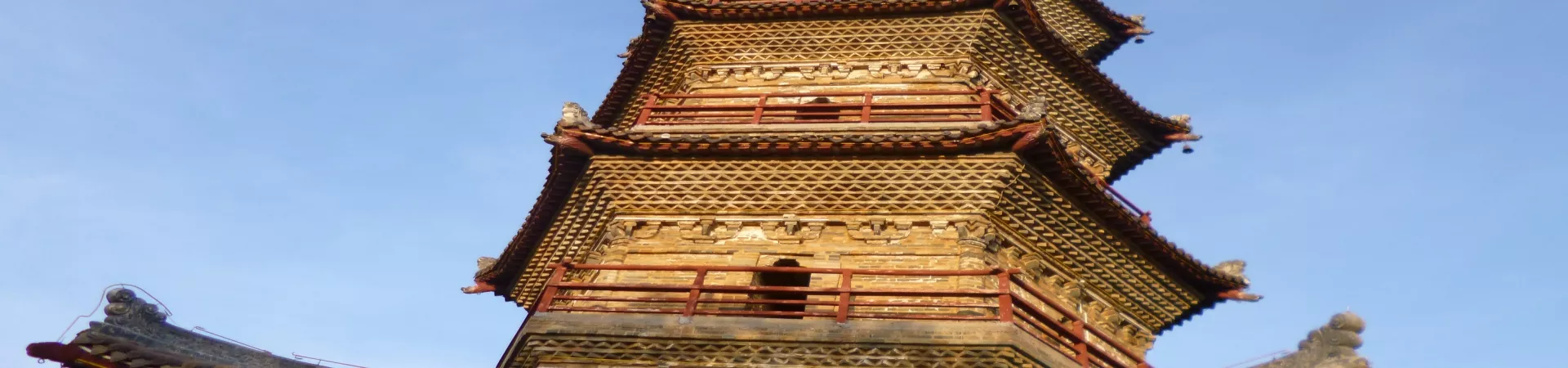
2.2 Structural Design and Layout The pagoda is a masterpiece of ancient Chinese brickwork architecture. Its plan is hexagonal, with the first level measuring 4.8 meters in outer side length and 1.6 meters in inner side length, featuring remarkably thick walls of 3.3 meters. It stands at an imposing total height of 42.6 meters. The main entrance faces east, adhering to traditional principles. A fascinating aspect of its design is the discrepancy between its external appearance and internal structure: while it presents seven stories to the outside world, inside it contains fourteen levels. This is achieved through a clever arrangement of "one bright, one dark" floors stacked alternately, creating an interior rhythm likened to bamboo joints, rising and tapering gracefully towards the summit.
2.3 Architectural Details and Features Each level was originally fitted with fir wood flooring covered by square bricks. The dark (concealed) floors typically feature two doorways piercing the walls (for vertical passage) and four niches for Buddhist statues. The bright (visible) floors offer one door leading to the staircase for ascent and five doorways opening onto the exterior encircling veranda. Visitors can spiral up the internal staircase to reach the topmost platform. Constructed primarily from blue bricks, the pagoda is a classic example of a Song Dynasty-style brick tower imitating wooden pavilion architecture. Its bracketing system is distinctive: the projecting eaves and the verandas ("pingsuo") are supported by corbelling layers of specially shaped "dog-tooth" bricks, resulting in eaves that are notably wider and more substantial than those found on many other pagodas. The verandas are equipped with wooden railings. Each of the six corners on every floor is reinforced with an corner pillar, linked together by horizontal architraves, creating a robust and aesthetically pleasing framework. Following restoration, the roof eaves are now covered with grey glazed tiles, complete with tile ends and drip tiles, and from the corner beams, bronze bells hang, their chimes perhaps echoing the ancient prayers for peace.
3. Preservation and the Marks of Time The journey of the Guifeng Pagoda through nearly nine centuries has not been without toll. The relentless forces of nature and the passage of time left significant scars before conservation efforts intervened. The original pinnacle of the pagoda was lost. Its base platform was buried under accumulated silt and earth. The elegant eaves and the surrounding verandas suffered partial collapse, and the roofing tiles were entirely gone. Inside, the wooden floorboards that once defined each of its fourteen levels were almost completely decayed. These signs of decay stand as silent witnesses to its age and the enduring challenge of preserving ancient masonry against the elements. Current restoration work aims to stabilize the structure while respecting its historical authenticity.
4. Practical Visitor Information For travelers planning a visit to this historical monument, the following details are essential. The pagoda is generally accessible to visitors between 09:00 and 17:00 daily, throughout the year. A modest admission fee is charged, typically around 5 RMB, which contributes to the site's maintenance and preservation. Most visitors find that a thorough exploration of the pagoda and its immediate surroundings, including time to appreciate the panoramic views of the river confluence, takes approximately 1 to 3 hours. It is advisable to wear comfortable shoes suitable for climbing the ancient staircase to fully experience the ascent through this vertical slice of Chinese history.