Dapi Mountain
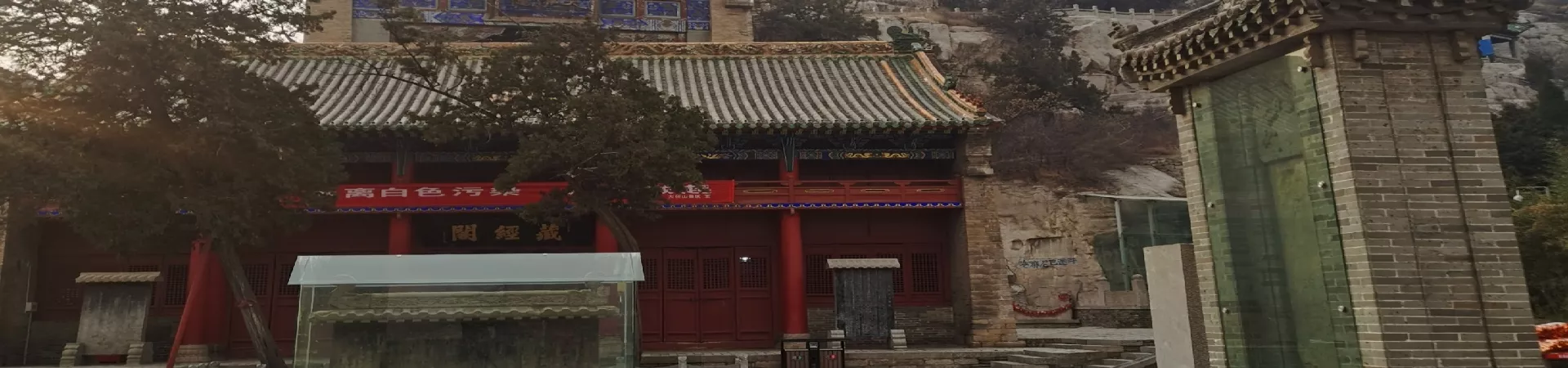
Subtitle: A Journey Through Time: Exploring the Sacred Peaks and Ancient Wonders of Dapi Mountain
Introduction: Where History Meets Natural Splendor
Nestled in the ancient city of Hebi, in China's Henan province, Dapi Mountain (Dàpī Shān) stands not as a towering, rugged peak, but as a profound cultural and spiritual monument rising from the vast Central Plains. With an altitude of just 135 meters, its significance is measured not in meters, but in millennia. For over 1,600 years, this solitary hill has been a sacred center, a unique fusion of Buddhist, Taoist, and Confucian traditions, seamlessly integrated into its geological landscape. More than just a scenic spot, Dapi Mountain is an open-air museum of religious art, ancient architecture, and philosophical thought, offering visitors a serene yet profound journey through the layers of Chinese history and spiritual practice.
1. A Tapestry of Faiths: The Religious and Cultural Heartland
The true majesty of Dapi Mountain lies in its extraordinary concentration of temples, grottoes, and inscriptions, representing a rare harmonious coexistence of China's three major teachings.
1.1. The Grand Buddha of the Northern Wei: A Stone Colossus The undisputed centerpiece is the magnificent Dapi Mountain Grand Buddha (Lóu gé 大佛). Carved into the cliff face during the Northern Wei Dynasty (386-535 AD), this is one of the earliest and largest sitting stone Buddha statues in China, and the finest of its kind north of the Yellow River. Towering at over 22 meters, the Maitreya Buddha is housed within a majestic seven-story wooden pavilion that protects it from the elements. The statue's serene expression, graceful lines, and majestic presence are a testament to the peak of early Chinese Buddhist sculpture. The act of viewing the Buddha involves an ascending path through the pavilion, creating a moving spiritual experience that culminates in a face-to-face encounter with this ancient masterpiece.
1.2. Taoist Sanctuaries and Imperial Connections Scattered across the mountain's slopes are revered Taoist temples, with the Tianning Temple being particularly noteworthy. This complex is deeply connected to the mystical founder of Taoism, Laozi. It is said that the famous philosopher passed through this area, leaving an aura of sanctity. The temple later gained imperial prestige during the Ming Dynasty, receiving official recognition and patronage. Another significant site is the Bixia Temple, dedicated to the Taoist goddess Bixia Yuanjun. These tranquil courtyards, with their ancient cypress trees and traditional architecture, offer a space for contemplation and reflect Taoism's pursuit of harmony with nature.
1.3. Confucian Influence and Scholarly Legacy The mountain also bears the marks of Confucianism through numerous stone inscriptions, steles, and poems left by visiting scholars, officials, and literati throughout the centuries. These inscriptions are not mere graffiti; they are philosophical reflections, historical records, and artistic calligraphy etched in stone. They transform the mountain's natural rocks into pages of a stone book, documenting the thoughts and aesthetic appreciation of generations of China's educated elite, who came here to draw inspiration.
2. Architectural and Artistic Heritage Beyond the Buddha
Beyond the individual statues and temples, Dapi Mountain's built environment tells its own story.
2.1. The Unique Mountain-Top Temple Complex The layout of the structures on Dapi Mountain is a classic example of adaptive Chinese sacred architecture. Temples and pavilions are not built on flattened ground but are ingeniously constructed to follow the mountain's contours, using the natural rock formations as foundations, walls, and even part of the interior spaces. This creates a dynamic and immersive landscape where architecture and nature are inseparable. Winding paths and staircases connect the various sites, encouraging a pilgrimage-like exploration.
2.2. A Treasure Trove of Stone Inscriptions The mountain is a veritable forest of steles. With over 300 identified stone inscriptions spanning from the Northern Wei to the Qing dynasties, it is a paramount site for epigraphic study. The styles range from formal clerical script to flowing cursive, providing a panoramic view of the evolution of Chinese calligraphy. These stones serve as direct historical documents, offering insights into local events, religious donations, and the personal sentiments of visitors from distant ages.
3. The Natural Landscape: Geology and Panoramic Vistas
While culture dominates, the natural setting is integral to the experience.
3.1. A Geological Anomaly on the Plains Dapi Mountain's very existence is geologically notable. It rises abruptly from the flat alluvial plains of the Yellow River basin, a solitary limestone outcrop that has resisted erosion. This striking topography is why it was originally named "Da Pi" (Great Solitary Mountain). Its isolated presence made it a natural landmark and a symbolic "pillar of the heavens" in ancient cosmology.
3.2. Scenic Lookouts and Seasonal Beauty The climb, though not strenuous, rewards visitors with sweeping panoramic views of the modern city of Hebi and the endless plains beyond. The mountain's own micro-environment features ancient, gnarled trees clinging to rocks, adding to the sense of timelessness. Each season dresses the mountain differently: vibrant greens in spring, lush foliage in summer, golden and red hues in autumn, and a stark, serene beauty when dusted with winter snow.
4. Practical Guide for the Modern Visitor
A visit to Dapi Mountain is a step back in time, but requires some modern planning.
4.1. Planning Your Visit The site is accessible year-round, but spring (April-May) and autumn (September-October) offer the most pleasant weather. Allocate at least 3-4 hours for a thorough exploration. Comfortable walking shoes are essential due to the stone steps and uneven paths. A local guide or an audio guide app can greatly enhance understanding of the rich historical context.
4.2. Navigating the Site The main route typically starts from the southern entrance, leading visitors past key Taoist temples before the ascent towards the Grand Buddha complex. The path is well-signposted in both Chinese and English. Take time to explore the lesser-known side paths, which often lead to quiet grottoes or hidden inscriptions.
4.3. Cultural Etiquette and Preservation As an active religious site and a protected national treasure, visitors are encouraged to observe respectful behavior. Maintain a quiet demeanor within temple halls, avoid touching the ancient sculptures and inscriptions (as oils from skin can cause damage), and follow all posted guidelines. Photography is generally permitted outdoors, but flash photography may be prohibited inside certain shrines.
Dapi Mountain ultimately offers a quiet refuge from the modern world. It is a place where one can walk in the footsteps of monks, emperors, and poets, touch stone carved by devout hands over a millennium ago, and feel the enduring spiritual energy that has made this modest mountain a giant in China's cultural history.