Land of Idyllic Beauty
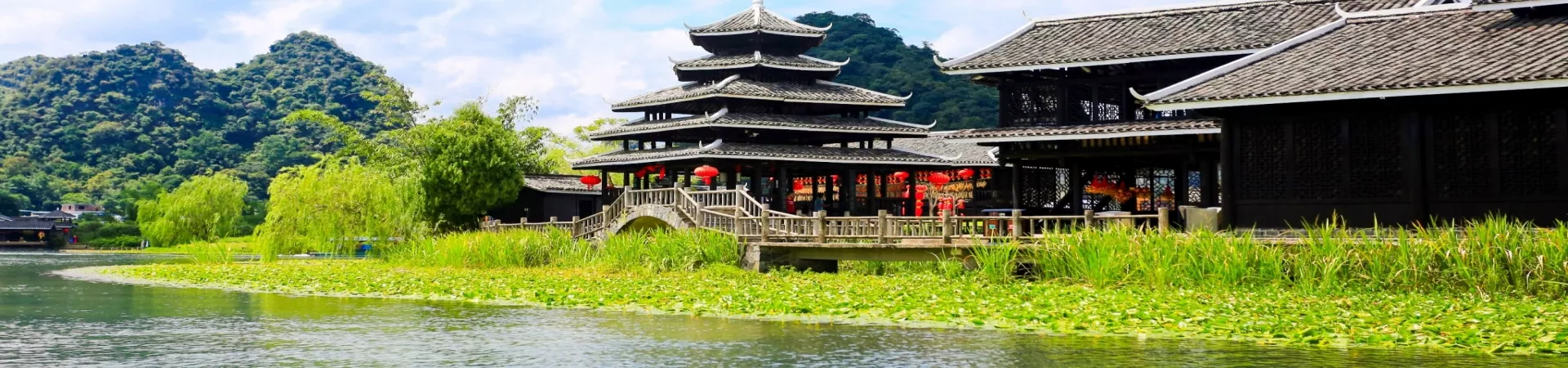
A Traveler's Guide to Guilin's Shangri-La Park: A Man-Made Paradise of Rivers and Minority Culture
Nestled within the iconic karst landscape of Yangshuo County, Guilin's Shangri-La Park (世外桃源) offers visitors a curated, yet deeply evocative, journey into the poetic ideal of a Chinese pastoral utopia. Unlike a traditional natural landmark, this scenic area is a masterfully constructed cultural landscape, designed to harmonize with its surroundings and immerse guests in the region's serene beauty and rich ethnic heritage. It serves as a perfect introduction to the aesthetics and traditions of Guangxi, compactly presenting elements that define the broader region.
Getting There and Essential Information
- Location: Yangshuo County, Guilin, Guangxi Zhuang Autonomous Region, China.
- Transportation: The most straightforward access is from Yangshuo Town. Visitors can take a local tourist shuttle bus or a taxi from Yangshuo Bus Station directly to the park entrance.
- Opening Hours: The park is open daily from 09:00 to 17:30 throughout the year.
- Admission Fees:
- Standard Ticket: Approximately 60 RMB.
- Discounted Ticket (50% off): Available for children over 1.2 meters tall, minors aged 6-18, full-time students (undergraduate and below), residents of Guilin (including its 12 counties), and seniors aged 70 and above nationwide. Valid identification is required.
- Free Admission: Granted to children under 1.2 meters (inclusive), active-duty military personnel, and disabled visitors upon presentation of valid certificates.
- Important Note: All discounted and free tickets must be procured at the park's own ticket office with physical documentation. Ticket prices are subject to change, and it is always advisable to verify the latest information through official channels before your visit.
- Suggested Duration: A comprehensive visit typically takes between 1 to 3 hours, allowing time for both the boat tour and leisurely exploration on foot.
- Contact: For inquiries, you may call 0758-5383004 or 0758-5383001.
The Core Experience: A Serene Boat Journey
The quintessential Shangri-La Park experience begins on the water. Visitors board quiet, wooden boats that glide gently across the calm, mirror-like surface of Yanzi Lake (燕子湖, Swallow Lake). This tranquil voyage is the park's centerpiece, designed to frame picturesque views and create a sense of peaceful detachment from the outside world.
Highlights Along the Waterway: * The Lotus Pond: The journey often starts or passes by expansive ponds adorned with lotus plants. In summer, the blooming flowers create a stunning palette of pink and green against the water. * Ancient Water Wheels: Functional and decorative water wheels (水转筒车) dot the shoreline, their slow, rhythmic turning a symbol of traditional agricultural life and adding a timeless, pastoral charm to the scenery. * Architectural Landmarks: From the boat, you will have excellent views of iconic structures like the sturdy, roofed Fengyu Bridge (风雨桥, Wind and Rain Bridge) and the distinctive Tonggu Lou (铜鼓楼, Copper Drum Tower), both exemplars of local Dong and Zhuang minority architectural ingenuity. * Cultural Performances: As your boat approaches certain sections of the shore, you might be greeted by vibrant performances. Dancers in colorful traditional attire of various local ethnic groups perform folk dances, their melodies and movements echoing across the water, offering a lively glimpse into the region's cultural tapestry.
Exploring on Foot: The Folk Village Complex
Disembarking from the boat, the exploration continues on land through a carefully arranged folk village. This area allows for a closer, more interactive encounter with the cultural heritage of northern Guangxi.
A Showcase of Ethnic Architecture and Craftsmanship: The village features a collection of traditional dwellings representing several of Guangxi's ethnic minorities, such as the Zhuang, Yao, Miao, and Dong. Walking among these structures provides insight into different building styles, uses of materials, and communal layouts.
Demonstrations of Traditional Arts: More than just static displays, the village often hosts live demonstrations of ancient crafts that were vital to these communities. Visitors can observe and sometimes interact with artisans practicing: * Ancient Brewing Techniques: Discover the traditional methods of fermenting local rice wines. * Handmade Papermaking: Witness the intricate process of creating paper from natural fibers, a craft with centuries of history in the region. * Traditional Printing: See examples of old woodblock or other early printing methods used for textiles or texts.
These demonstrations offer a tangible connection to the historical daily life and ingenuity of the region's indigenous peoples.
Seasonal Splendor: The Blossoming Peach Forest
For visitors with a particular love for photography or those seeking the most visually enchanting time to visit, early spring (typically February to March) presents a spectacular bonus. The park's peach forest bursts into a cloud of delicate pink and white blossoms. The phenomenon of "落英缤纷" (falling petals lying in colorful profusion) can be witnessed, with petals gently drifting in the breeze and carpeting the paths and water's edge. This transforms the already picturesque park into a scene straight out of a classical Chinese painting, providing unforgettable photographic opportunities and a profound sense of natural beauty.
In essence, Guilin's Shangri-La Park is a thoughtfully designed cultural and scenic synthesis. It efficiently packages the essence of the region's landscape aesthetics, architectural heritage, and minority traditions into an accessible and engaging format. While it is a constructed environment, its success lies in its respectful integration with the natural backdrop and its dedicated presentation of authentic cultural elements, making it a worthwhile and enriching stop on any Guilin itinerary.