Shishi Sacred Heart Cathedral
Subtitle: A Gothic Masterpiece in the Heart of Guangzhou
1. Introduction: A Stone Sanctuary in the Old City Nestled amidst the bustling, narrow streets of Guangzhou's historic Yide Road area, the Sacred Heart Cathedral, commonly known as the "Stone House" (Shishi), stands as a breathtaking anomaly. This is not merely a church; it is a monumental piece of architectural and historical theater. As the most magnificent and distinctive cathedral of the Catholic Guangzhou Diocese, it represents one of the most splendid surviving examples of twin-spired Gothic architecture in China and holds the distinction of being the largest stone-structured Catholic building in Southeast Asia. For visitors, it offers a profound journey into a unique moment where European Gothic vision met exceptional Chinese craftsmanship, resulting in a spiritual landmark of unparalleled grandeur.
2. Architectural Grandeur and Historical Significance 2.1. A Fusion of French Design and Chinese Craftsmanship The cathedral's story begins in 1863, with its consecration in 1888 marking over two decades of meticulous labor. The design was conceived by French architects, yet its realization was entrusted entirely to local Chinese stonemasons and craftsmen. This collaboration is the cornerstone of its uniqueness. Using massive granite blocks quarried from the nearby hills of Kowloon, these skilled artisans brought a European Gothic blueprint to life, creating one of only four all-stone Gothic cathedral buildings in the world. This rare status often earns it comparisons to its famous contemporary, the Notre-Dame de Paris, making it a site of global architectural significance.
2.2. Exterior: Soaring Spires and Gothic Majesty Approaching the cathedral, visitors are immediately struck by its vertical dominance. The twin spires, rising 58.5 meters into the sky, are punctuated by delicate pinnacles and crockets, creating a lace-like effect against the stone. The façade is a textbook example of Gothic principles, featuring a central rose window, three ornate portals adorned with statues (though some were damaged historically), and countless pointed arches. Every element is designed to draw the eye heavenward, a physical manifestation of spiritual aspiration.
3. The Interior: An Atmosphere of Awe and Devotion 3.1. Structural Symphony and Spatial Dynamics Stepping inside is a transformative experience. The interior is a vast, open nave, 35 meters wide and 78.69 meters long, capable of accommodating nearly 3,000 worshippers. Its most striking feature is the forest of ten colossal stone pillars on each side. These pillars support the rib-vaulted ceiling through sharply pointed arches. This "acute arc" design is not merely decorative; it creates a powerful sensation of upward thrust, making the entire space feel as if it is dynamically rising and expanding. The ceiling itself is constructed to be higher in the center and lower on the sides, producing a rhythmic, undulating effect that intensifies the solemn and sacred atmosphere.
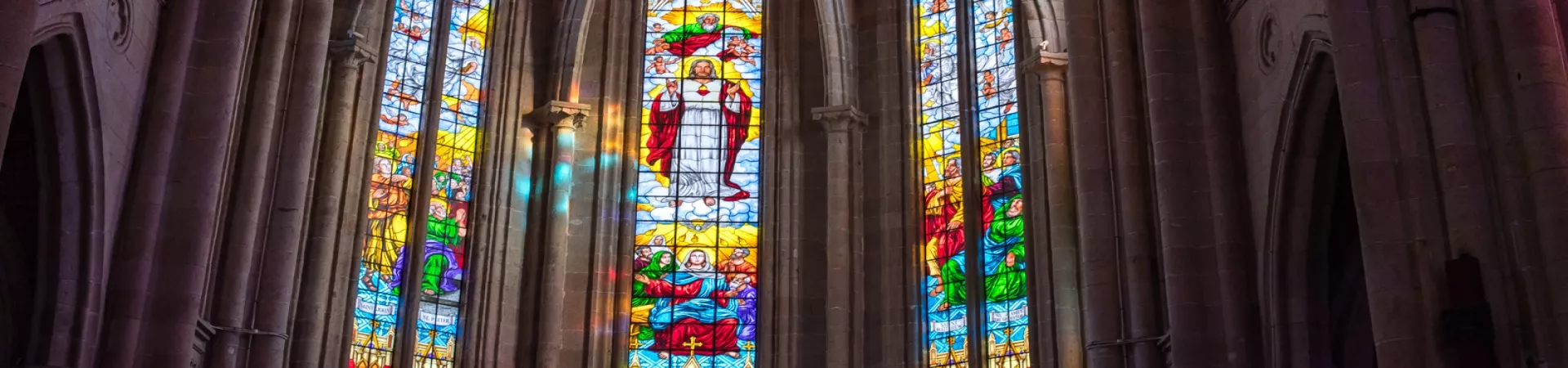
3.2. The Magic of Light: Stained Glass Narratives The ethereal quality of the interior is profoundly shaped by light filtering through the stained-glass windows. These are not just colored panes; they are narrative canvases. The lancet windows lining the walls and the magnificent rose window above the main entrance depict vivid scenes from the Bible, telling stories of creation, redemption, and saintly lives. When sunlight streams through, it transforms the granite interior into a kaleidoscope of radiant colors—deep blues, ruby reds, and golden yellows—painting the stone columns and floor with moving patterns of holy light. This interplay of light and narrative was intended to educate and inspire the faithful, making the scriptures visually accessible.
4. Practical Information for Visitors 4.1. Location and Transportation The cathedral is located at 56 Yide Road, Yuexiu District. The most straightforward way to reach it is by public bus. Alight at the Yide Zhong Station, served by routes 4, 8, 61, 86, and 823. The area is a dense commercial zone known for dried seafood and festive goods, so the cathedral emerges as a serene sanctuary amidst vibrant local commerce.
4.2. Visiting Hours and Admission Admission to the Sacred Heart Cathedral is free of charge. However, careful attention must be paid to its opening schedule, as it is an active place of worship. * Opening Hours: * Tuesday to Friday: 9:00 - 11:30 (morning session); 14:30 - 17:00 (afternoon session). Last entry is at 11:30 and 17:00 respectively. * Mondays: The cathedral is closed to the public for maintenance. * Saturdays and Sundays: Opening hours for visitors may vary based on liturgical services and events. It is highly advisable to verify the specific times for the weekend you plan to visit, as access might be restricted before, during, or after masses.
4.3. Etiquette and Tips for Your Visit A visit requires respect for its primary function as a holy site. Visitors are expected to dress modestly; avoid sleeveless tops, short skirts, or shorts. Silence and respectful behavior are mandatory inside the nave. Photography is usually permitted, but always without flash and in a discreet manner that does not disturb worshippers or ongoing services. The surrounding area offers interesting contrasts, with the peaceful cathedral grounds standing next to the lively wholesale markets, allowing for a diverse cultural experience in a single trip. Allocating 1 to 3 hours is recommended to fully appreciate the architecture, the interior details, and the tranquil ambiance.