Huangpu Military Academy Site Memorial Hall
Subtitle: A Journey Through History: Exploring the Whampoa Military Academy Museum
1. Introduction: The Cradle of Modern Chinese Military Leadership
Nestled on Changzhou Island in Guangzhou, the Whampoa Military Academy旧址纪念馆 (Whampoa Military Academy Museum) stands as a profound testament to a pivotal era in modern Chinese history. Founded in 1924 by Dr. Sun Yat-sen during the fragile yet fervent period of the First United Front between the Kuomintang (KMT) and the Chinese Communist Party (CCP), the academy was formally known as the Republic of China Military Academy. Its primary mission was to cultivate a new generation of military officers to unify the nation and strengthen its defense. In its short but immensely influential lifespan on this site, the academy earned its legendary reputation as the "Cradle of Chinese Military Talents," producing a remarkable roster of commanders and strategists who would later play decisive roles on both sides of the Chinese Civil War and in the subsequent War of Resistance against Japan. Visiting this museum is not merely a tour of historical buildings; it is an immersion into the complex narratives of revolution, cooperation, conflict, and the forging of modern China.
2. Historical Significance and Legacy
2.1 Foundation and the Spirit of Cooperation The establishment of the Whampoa Military Academy was a direct response to the political and military fragmentation plaguing China in the early 20th century. Dr. Sun Yat-sen, with crucial assistance from the Soviet Union and the CCP, envisioned a professional, ideologically driven officer corps. The academy's first chancellor was Chiang Kai-shek, and Zhou Enlai served as the head of its political department, symbolizing the unique KMT-CCP collaboration. The rigorous training emphasized not only military tactics and discipline but also political education, instilling a sense of national purpose and revolutionary spirit in its cadets.
2.2 The Changzhou Island Era and Relocation The academy operated on Changzhou Island for seven pivotal terms, from 1924 to 1930. During this time, it graduated thousands of officers who immediately saw action in the Northern Expedition, the campaign to unify China under the Nationalist government. In 1930, the academy was relocated to Nanjing, and later moved to Chengdu during the Sino-Japanese War, continuing its mission in various forms. The original campus on Changzhou Island met a tragic end in 1938 when it was largely destroyed by bombing raids conducted by Japanese aircraft, leaving the site in ruins.
3. Exploring the Museum Site and Key Monuments
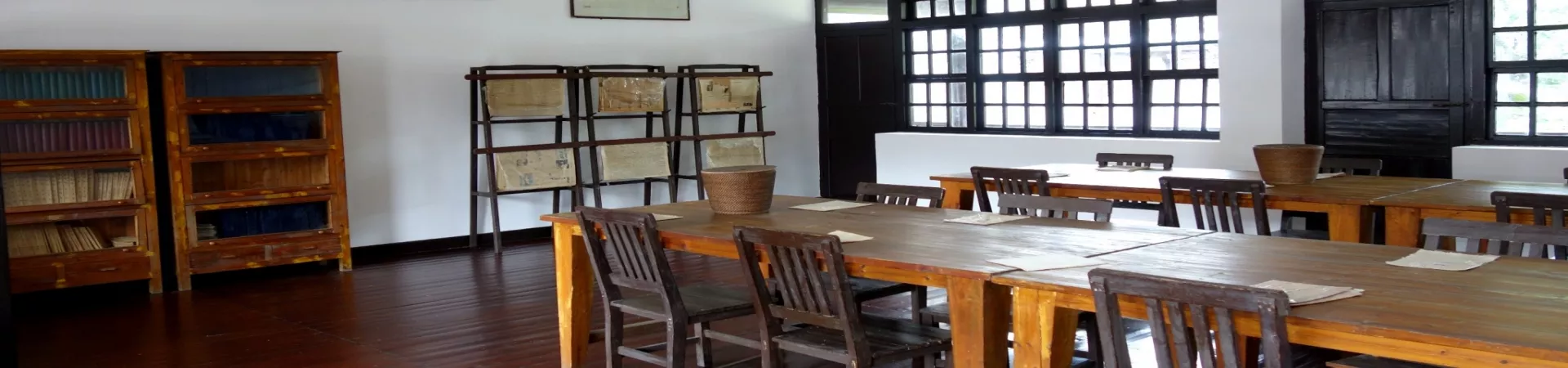
The present-day museum is a reconstruction and preservation project that faithfully recreates the architectural style of the Republican era. The serene campus allows visitors to walk through history, with several key sites forming the core of the visit.
3.1 The Academy Headquarters (校本部) The reconstructed headquarters building is the centerpiece of the museum. Inside, extensive exhibitions are spread across multiple halls, featuring historical photographs, documents, personal effects of notable figures, weapons, and detailed explanations in both Chinese and English. The displays chronicle the academy's founding, its daily life, major campaigns like the Eastern Expeditions, and the biographies of its most famous alumni from across the political spectrum.
3.2 Dr. Sun Yat-sen's Former Residence (中山故居) This relatively modest dwelling is where Dr. Sun Yat-sen lived during his frequent stays to oversee the academy. Preserved with period furniture and personal items, it offers an intimate glimpse into the life of the founding father of modern China and his deep connection to the Whampoa project.
3.3 Memorials and Military Structures Scattered across the grounds are poignant reminders of the academy's martial sacrifices and achievements. * Eastern Expedition Martyrs' Cemetery (东征烈士墓园): A solemn park-like area dedicated to the soldiers and officers who fell during the campaigns to consolidate revolutionary control around Guangdong. Its memorial arch and tombstone evoke deep respect. * Northern Expedition Monument (北伐纪念碑): This towering stone monument commemorates the Whampoa cadets who sacrificed their lives in the ambitious Northern Expedition, a crucial step toward national unification. * Dapodi Fort (大坡地炮台): Part of the island's earlier and later defensive systems, this fortification overlooking the Pearl River illustrates the strategic military importance of Changzhou Island long before and after the academy's tenure.
4. Practical Visitor Information
4.1 Planning Your Visit * Opening Hours: The museum is open from 09:00 to 17:00, Tuesday through Sunday, with last admission at 16:30. It is closed every Monday for maintenance. * Admission: Entry to the museum is completely free of charge, making it an accessible destination for all visitors. * Suggested Duration: To thoroughly explore the exhibitions, buildings, and outdoor memorials at a comfortable pace, a visit of approximately 1 to 3 hours is recommended.
4.2 Services and Transportation * Guided Tours: To enhance understanding, the museum offers scheduled Mandarin讲解 (guided commentary sessions) at 10:00, 11:00, 13:00, 14:00, and 15:00 daily. Inquiring at the entrance upon arrival is advisable to confirm times and availability. * Getting There: The most straightforward public transportation route is to take Guangzhou bus number 430 and alight at the "黄埔军校总站" (Whampoa Military Academy Terminal) bus stop. From there, the museum entrance is within a short walking distance. * Contact: For any inquiries prior to your visit, you can contact the museum administration at 020-82201082 or 020-82201583.
(Information last updated: August 15, 2023)