Mingyue Gorge
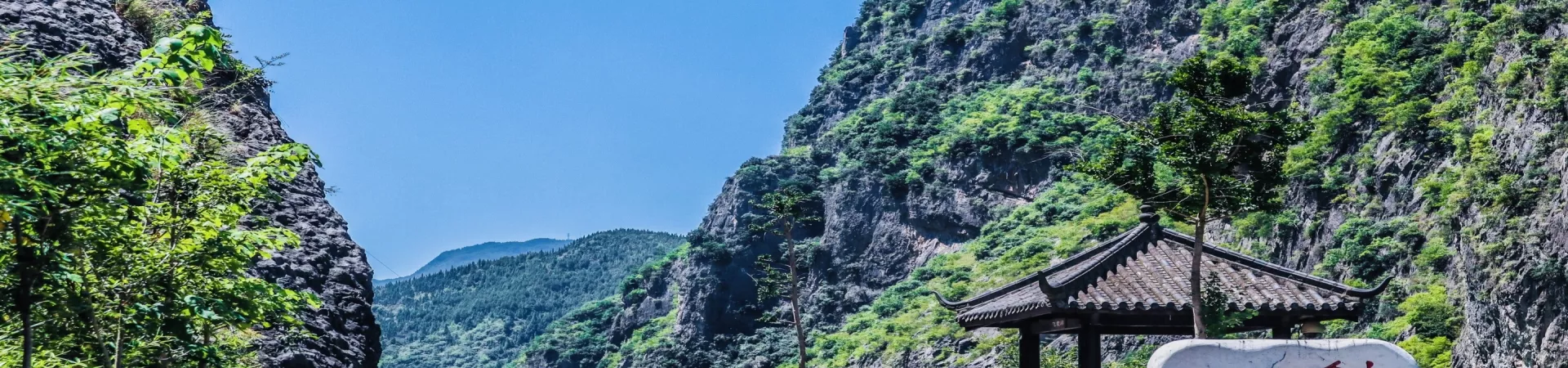
Subtitle: A Journey Through Millennia: Exploring Guangyuan's Ancient Gateway at Mingyue Gorge
1. Introduction: The Strategic Gateway of Sichuan
Nestled in the northern reaches of Sichuan Province, at the fascinating confluence of Sichuan, Shaanxi, and Gansu provinces, lies the historic city of Guangyuan. For over 2,300 years, this region has served as the critical northern gateway and strategic throat of Sichuan, earning titles such as "The Northern Fortress of Shu," "Sichuan's Northern Portal," and the "Golden Triangle of Ba and Shu." Within this deeply significant area, cradled by the Jialing River, rests the magnificent Mingyue Gorge, a site where breathtaking natural beauty converges with layers of profound historical and cultural narrative. More than just a scenic canyon, Mingyue Gorge stands as a monumental testament to human ingenuity and a living museum of Chinese transportation history.
2. Historical and Cultural Significance
2.1. Origins and the Imperial Name The gorge's history is encapsulated in its original name: Chaotian Gorge, named after the nearby Chaotian Town. The name "Chaotian," meaning "to pay homage to the emperor," originates from a pivotal moment in the Tang Dynasty. During the An Lushan Rebellion in the 8th century, Emperor Xuanzong fled south to Chengdu. It is said that local officials received and paid homage to the emperor at this very location, forever etching the act of imperial reverence into the gorge's identity.
2.2. A Corridor of Civilizations Mingyue Gorge's true significance lies in its role as an indispensable corridor. For centuries, it was the most formidable and vital passage along the ancient Shu Road, the network of paths connecting the Sichuan Basin with the Central Plains. Its cliffs bear silent witness to the footsteps of soldiers, merchants, scholars, and migrants whose journeys shaped the cultural and economic exchanges between diverse regions of China.
3. The Living Museum of Transportation
This gorge offers a uniquely tangible journey through the evolution of travel, famously showcasing "the parallel display of six roads from different eras." This extraordinary feature is the core of Mingyue Gorge's allure.
3.1. The Ancient Plank Road Carved precariously into the face of the limestone cliffs are the remnants of the ancient plank road. These wooden pathways, supported by wooden beams inserted into holes chiseled into the rock, represent the engineering marvel of the Qin and Han dynasties. Walking alongside (or on reconstructed sections) of this road allows visitors to physically connect with the perilous journeys of ancient travelers.
3.2. The Jialing River Waterway Below the cliffs flows the Jialing River, a natural highway used for millennia. Before modern roads, boats and rafts were the primary means for transporting goods and people through this rugged terrain, battling the river's currents to navigate the gorge.
3.3. The Post Road Following the line of the ancient paths, a later-era flagstone road was built. This road served for centuries as the main overland route for couriers, officials, and caravans, its worn stones echoing with history.
3.4. The Baoji-Chengdu Railway A dramatic contrast is provided by the Baoji-Chengdu Railway, completed in the 1950s. Its tracks run through multiple tunnels and over bridges within the gorge, representing a leap forward in modern engineering and the age of steam and steel that connected Sichuan to the national network.
3.5. The G108 National Highway Carved higher on the canyon wall is the modern G108 National Highway. This two-lane road, with its own tunnels and overhangs, symbolizes the automotive age and brought new mobility to the region in the 20th century.
3.6. The G5 Beijing-Kunming Expressway The most recent layer is the G5 Expressway, a vital modern artery. Its massive bridges span the gorge high above the river, its tunnels piercing through the mountainsides, representing the current era of high-speed connectivity. Seeing all these routes together in one vertical cross-section is a breathtaking visual lesson in technological and social progress.
4. Practical Visitor Information
4.1. Location and Access Mingyue Gorge is located within the administrative area of Guangyuan City, Sichuan Province. It is approximately 30 kilometers north of Guangyuan's city center and about 15 kilometers from the town of Chaotian. The site is accessible by car or tourist bus via the G108 highway or the G5 expressway (exiting at the Chaotian interchange).
4.2. Admission and Operating Hours The gorge operates as a formal scenic area. The standard admission fee is 70 RMB per person. It is open year-round, but operating hours vary slightly by season: * Summer Schedule (May 1st - October 31st): 08:30 - 18:00, with last entry at 18:00. * Winter Schedule (November 1st - April 30th): 08:30 - 17:30, with last entry at 17:30. It is advisable to allocate at least 2-3 hours for a comprehensive visit to walk the paths and appreciate the various historical sites and viewpoints.
4.3. Key Features and Activities Visitors can walk along the renovated sections of the ancient plank road, offering dizzying views of the river below and the modern roads opposite. The onsite museum provides deeper context on the history of the Shu Roads and the gorge's archaeology. Scenic boat rides on the Jialing River are sometimes available, providing a unique perspective of the towering cliffs and the layers of roads from the water level. The entire environment, with its sheer cliffs, lush vegetation, and the powerful river, is a photographer's paradise.
4.4. Contact Information For specific inquiries regarding accessibility, group visits, or boat tour availability, the scenic area management can be contacted at: 0839-8624777 or 0839-8624780.