Xiaoxi Ancient Town
Subtitle: A Journey Through Time in Sichuan's Hidden Water Town
Introduction: Stepping into a Living Chronicle
Nestled in the northeastern part of Guang'an District, approximately 74 kilometers from the city center and bordering Qu County of Dazhou, Xiaoxi Ancient Town emerges not as a mere destination, but as a profound sensory and temporal experience. For travelers weary of the monotonous symphony of modern urban life—the grid-like forests of skyscrapers, the ubiquitous tiles and awnings, the constant hum of machinery and traffic—the sudden encounter with Xiaoxi is nothing short of a revelation. Known historically as the "Tang-Song Town," its foundations were laid in the late Ming and early Qing dynasties. What makes Xiaoxi exceptionally captivating is its architectural tapestry, woven over different eras into a complex, seemingly haphazard, yet uniquely harmonious whole. With a total built-up area of 100,000 square meters, the town is a sprawling, open-air museum where history feels palpably alive.
The Architectural Tapestry: Streets That Tell Stories
The town's remarkably well-preserved layout is centered around three distinct streets: the Old Street, the New Street, and the Half-Side Street, each contributing to the town's singular aesthetic.
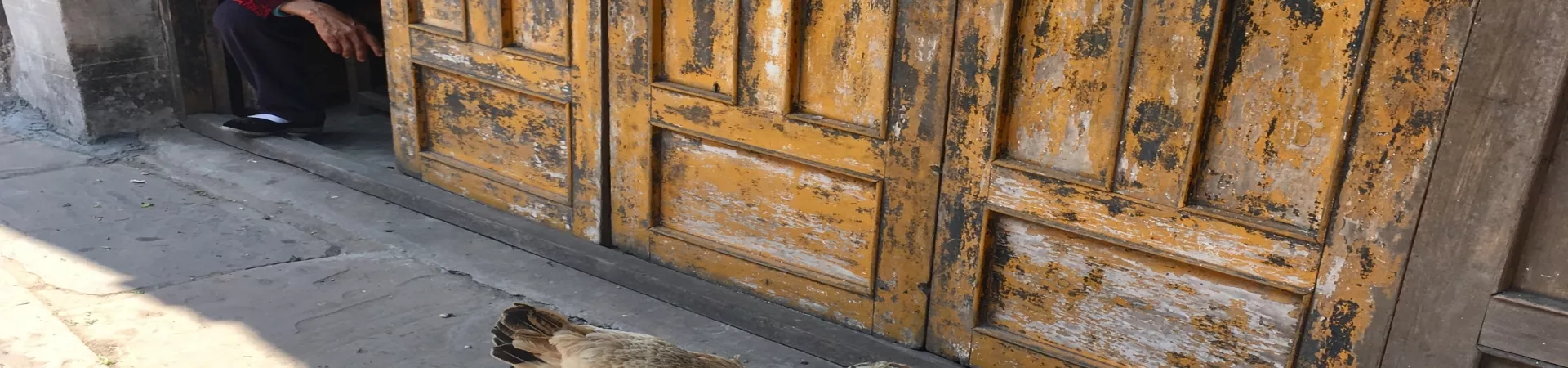
1. The Old Street (Laojie): The Historic Artery The heart and soul of Xiaoxi is its Old Street, originally constructed during the late Ming and early Qing periods. Historically named "Longfeng Zhou" (Dragon and Phoenix Prefecture) and affectionately called "Xiaojiaxi Tide" by locals, this street is the town's main thoroughfare and its architectural centerpiece. Walking its length is akin to traversing a living timeline. The buildings here showcase a fusion of styles accumulated over centuries. Elaborately carved wooden eaves, weathered stone foundations, traditional shop-front signs, and serene courtyards hidden behind unassuming facades create an environment of layered history. The absence of rigid uniformity is its defining charm; each structure, with its own era's signature, contributes to a picturesque and "delightfully disordered" streetscape.
2. Integration with Nature: A Harmonious Quadrangle The approach to Xiaoxi, along winding yet placid rural roads, sets the stage for its core philosophy: harmony. The town does not impose itself upon the landscape but exists in a delicate, conscious integration with it. This is perfectly encapsulated in the seamless fusion of mountain, water, town, and temple. Lush, rolling hills form a gentle, protective embrace around the settlement. A network of quiet streams and canals—the very "Xi" (brook) that gives the town its name—threads through and alongside the streets, their reflective surfaces doubling the beauty of the ancient roofs. Nestled within this setting are historic temples, their presence adding a layer of spiritual tranquility to the scenic composition. This symbiotic relationship creates a landscape painting come to life, where human habitation enhances rather than dominates the natural beauty.
3. The New Street & Half-Side Street: Contrast and Continuity Flanking the historic core, the New Street and the Half-Side Street offer fascinating counterpoints. The New Street, while "newer" in relative terms, still carries the weight of tradition, often featuring architecture from the late Qing and Republican periods, showcasing the town's continuous evolution. The Half-Side Street, with its unique structural layout, presents a more intimate scale. Its design, possibly adapted to the natural contours of the land or the flow of water, highlights the pragmatic and adaptive ingenuity of its builders. Together, these areas illustrate how the community grew and adapted while maintaining its essential character.
Practical Information for the Visitor
Visiting Hours The town is accessible to visitors 24 hours a day, every day of the year. This open schedule allows for diverse experiences: the soft morning light bathing the old tiles, the lively hum of daytime activity, or the deeply atmospheric quiet of the ancient streets under evening lantern light. Each moment offers a different perspective on the town's enduring charm.
Admission Fee A significant aspect of Xiaoxi's appeal is its accessibility: admission to the town is completely free. This policy encourages exploration and serendipitous discovery, allowing travelers to wander at their own pace, delve into quiet alleys, and engage with local life without barrier. Visitors are free to immerse themselves in the historic ambiance, making it an invaluable destination for culture enthusiasts and casual wanderers alike.
The Immersive Experience: Beyond Architecture A visit to Xiaoxi is ultimately about immersion. It is in the tactile sensation of smooth, worn stone steps underfoot; the sound of water gently flowing beside a centuries-old wall; the glimpse of daily life unfolding in courtyards and family-run shops. The town resists the feel of a staged exhibit. Instead, it operates on its own rhythm, inviting guests to temporarily sync with it. It’s a place where one can sit by the water, observe the skillful craftsmanship on a wooden balcony, or simply enjoy the profound quiet that is so scarce in the modern world, all within a setting where the past feels intimately present.