Shenlong Mountain Ba Ren Ancient Castle
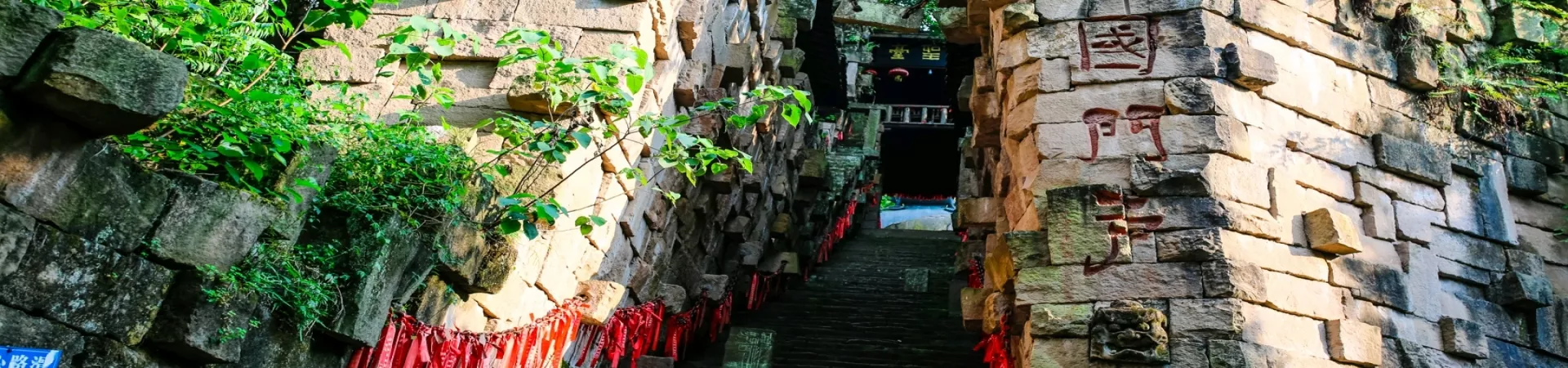
Subtitle: Exploring the Ancient Ba Fortress: A Journey Through Time on Shenlong Mountain
1. Introduction to Shenlong Mountain Ba People Stone Fortress
Nestled on the outskirts of Guang'an city in Sichuan Province, the Shenlong Mountain Ba People Stone Fortress stands as a silent, stoic sentinel overlooking the modern urban landscape. This remarkable heritage site, encompassing over 200 hectares and rising 81 meters as the highest point in the urban area, is a mere 1.5 kilometers from the city center, offering a striking juxtaposition of ancient history against a contemporary backdrop. The mountain itself, from which the fortress derives its name, resembles a coiled dragon poised for flight, its terrain characterized by sudden, precipitous slopes and a蜿蜒 (winding) ridge. This dramatic topography was not merely scenic but strategically paramount, forming the foundation of what was once a crucial stronghold of the ancient Ba Kingdom. More than just a collection of stone structures, the fortress is a profound cultural landscape, where millennia of military strategy, spiritual belief, and astronomical observation converge.
2. Historical Significance and Strategic Geography
2.1. A Pivotal Stronghold of the Ancient Ba Kingdom The historical importance of Shenlong Mountain is deeply rooted in its geographic position during the era of the Ba Kingdom (circa 11th century – 316 BCE). It served as a vital conduit and defensive bulwark on the path between the Ba territories and the powerful states of Qin and Shu. Its strategic role is historically described as "pointing east to Jingchu, guarding the southern capital, connecting west to Shuhan, and gazing north to Sanqin." This made it one of the most important gateways into the Ba Kingdom, controlling north-south passages and扼守 (holding) the east-west throat. The easily defensible, difficult-to-attack position, combined with what was considered auspicious feng shui, made it a coveted prize and a perpetually contested site throughout ancient conflicts. The core of the present-day site, the Nifeng Ancient Fortress and the Longze Temple, originated as this very military要塞 (fortress), a testament to the Ba people's engineering and defensive prowess.
2.2. Architectural Layout and Cultural Layers The restored fortress complex is architecturally organized into three main sections: the Dragon Gate Pass (Longmen Guan), the Earthen Boat Lake (Tuzhou Hu), and the Dragon Platform (Long Tai). This physical structure is interwoven with three rich layers of cultural history: * Ba Culture: The soul of the fortress. This encompasses the military history, daily life, and unique traditions of the ancient Ba people, whose identity is physically embodied in the very stone of the constructions. * Longze Temple Religious Culture: Introducing a spiritual dimension, this temple culture represents the Buddhist or Taoist practices that later took root within the fortress grounds, adding a layer of contemplative peace to the site's martial character. * 28 Lunar Mansions Astrological Culture: Reflecting a sophisticated understanding of the cosmos, this element indicates that the site's construction or layout might have been aligned with celestial patterns, used for calendrical, navigational, or ritual purposes.
The exact founding date of the original fortress is lost to time. Centuries of warfare and natural decay left the castle in ruins. The current Nifeng City is a meticulous restoration and reconstruction based on archaeological evidence and historical records of the original Ba Kingdom foundations, allowing visitors to walk through a faithfully recreated chapter of history.
3. Unique Architectural Marvel: The Stone Fortress
3.1. "A Stone City Built with Stone upon Stone" The most awe-inspiring aspect of the Shenlong Mountain site is its quintessential architecture, succinctly described as "a stone city built with stone upon stone." This defining characteristic has also earned it the evocative moniker "the Eastern Troy." The entire fortress is an immense feat of dry-stone masonry, constructed from tens of thousands of multi-ton stone blocks, quarried, shaped, and assembled without modern machinery. The visual impact is one of raw power and enduring resilience:雄浑 (massive and vigorous) architectural forms and刚直 (stern and straight) lines stand in stark, majestic relief against the mountain skyline. It is recognized as the only extant architectural relic of Ba culture on such a scale in China.
3.2. A Masterpiece of Landscape Architecture Beyond its historical and military value, the Ba People Stone Fortress is celebrated as a masterpiece within the realm of Chinese landscape architecture. The integration of the colossal, man-made stone structures with the natural, dragon-like contours of Shenlong Mountain creates a harmonious yet dramatic山水园林 (mountain-water landscape garden). The combination of厚重的文化底蕴 (profound cultural heritage),宏大的建设规模 (grand construction scale), and精湛的建造工艺 (exquisite building craftsmanship) results in a site that is considered unique and peerless in China—a cultural treasure seamlessly embedded within a breathtaking natural setting.
4. Practical Visitor Information
For travelers planning a visit to this unparalleled site, the following practical details are essential: * Ticket Information: Admission to the Shenlong Mountain Ba People Stone Fortress is priced at 24 RMB per person. * Opening Hours: The site is open to visitors daily from 7:00 AM to 6:00 PM throughout the year (January 1st to December 31st, Monday through Sunday). * Contact Details: For any inquiries prior to your visit, you may contact the site administration at 0826-2888999.
A visit to the Shenlong Mountain Ba People Stone Fortress is more than a scenic outing; it is an immersive passage into the heart of an ancient civilization. It is an opportunity to touch the stones placed by Ba builders, to contemplate the strategic visions of ancient generals, and to feel the enduring presence of history etched into the very landscape of Guang'an.