Baozhensai Tourist Area
Subtitle: A Journey Through Time: Exploring the Architectural Marvel and Natural Wonders of Baozhensai
1. Introduction to the Baozhensai Scenic Area
Nestled within the lush landscapes of Guang'an City in Sichuan Province, the Baozhensai Scenic Area offers a unique blend of historical intrigue, architectural brilliance, and natural beauty. Located approximately 28 kilometers from Wusheng County, the area is easily accessible via Provincial Highway 304, with a drive time of around 25 minutes. This integrated destination comprises three distinct sites: the core Baozhensai Fortress, the Shengli Tianqiao (Natural Bridge), and the Wanshan 7002 Well. Each component tells a different story, collectively presenting a rich tapestry of early 20th-century Chinese history, ingenious folk construction, and geological wonder. The area serves as a captivating destination for history buffs, architecture enthusiasts, and nature lovers alike, promising an immersive experience into a lesser-known chapter of Sichuan's heritage.
2. The Crown Jewel: Baozhensai Fortress
2.1. Historical Origins and Purpose The heart of the scenic area is the formidable Baozhensai Fortress. Its construction began in the autumn of 1911 (the third year of the Qing Dynasty's Xuantong era) in Fangjiagou Village, Baozhensai Township. Initiated by the wealthy local Duan family, its primary purpose was defensive. Built during a period of significant social upheaval and regional instability, the fortress was designed as a self-sufficient, fully enclosed complex to protect the clan from the ravages of war and banditry. It stands as a physical manifestation of the era's turbulence and the pragmatic measures taken by local gentry for survival and security.
2.2. Architectural Layout and Features Sprawling over an area of more than 26,000 square meters, the fortress is a masterpiece of vernacular military-residential architecture. Cleverly built on a hillside to enhance its defensibility, it exhibits a unique fusion of architectural styles. The primary structure follows the "Tuan Cheng" (enclosed city) design typical of southern Fujian province, while also incorporating elegant features reminiscent of Jiangnan (regions south of the Yangtze River) residential aesthetics.
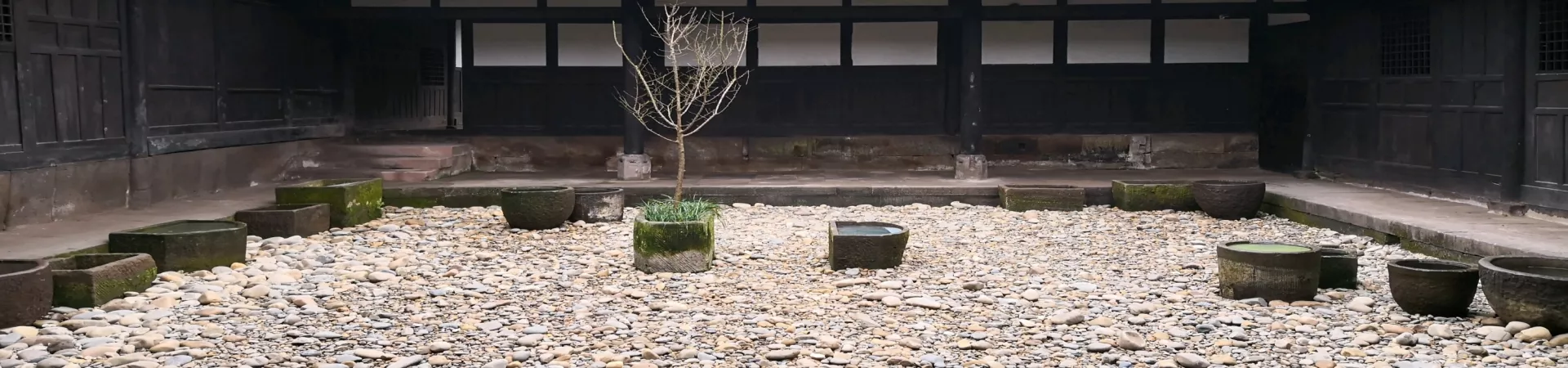
The layout is exceptionally intricate and well-ordered. The complex is divided into two main sections, constructed in two phases over 40 years: the initial "Main Fortress" and the later "Rear Fortress." Within its walls, the fortress contains over 108 doorways and 8 interior courtyards (天井), which provided light, ventilation, and a sense of communal space. The defining defensive structure is its imposing perimeter wall. Stretching approximately 560 meters in length, the wall stands 6.5 meters high with a thickness varying between 0.4 and 1.5 meters, creating a formidable barrier against intruders. The internal living quarters, ancestral halls, storage areas, and watchtowers are arranged in a labyrinthine yet logical pattern, showcasing ingenious use of space and strategic planning for long-term habitation under siege conditions.
3. The Natural Companion: Shengli Tianqiao (Victory Natural Bridge)
While the Baozhensai Fortress is a man-made stronghold, the Shengli Tianqiao represents the awe-inspiring power of nature. This natural bridge, or karst arch, is a significant geological formation within the scenic area. Formed over millennia through the erosive forces of water on limestone, it creates a majestic stone archway spanning a river or a ravine. Visiting the Tianqiao provides a striking contrast to the fortress. It invites contemplation on the different scales of creation—human ingenuity versus geological time. The site offers picturesque views and opportunities for photography, presenting a serene and powerful natural monument that complements the historical narrative of the main fortress.
4. The Modern Marvel: Wanshan 7002 Well
Adding a more contemporary layer to the area's story is the Wanshan 7002 Well. This site likely refers to a significant industrial or hydrological project, possibly related to petroleum exploration or water resource development in the modern era (the numerical designation often points to a drilling project from the latter half of the 20th century). Its inclusion in the scenic area highlights the region's ongoing relationship with its natural resources, bridging the historical past with the technological endeavors of the more recent past. It serves as a point of interest showcasing 20th-century engineering and its impact on the local landscape and community.
5. Practical Visitor Information
5.1. Ticket Information The Baozhensai Scenic Area operates on a tiered ticketing system: * Full Ticket: 25 RMB per person. * Group Discount (20% off): Available for groups of 20 people or more. * Concession Ticket (50% off): Offered to full-time students (with valid ID), active-duty military personnel, individuals with disabilities, children between 1.2 and 1.5 meters in height, and seniors aged 60 to 70. * Free Admission: Granted to children under 1.2 meters tall and seniors aged 70 and above. * Special Seasonal Promotion: Notably, from June 1st to August 31st, the scenic area implements a special free admission policy for visitors whose registered household origin (籍贯) is in Guangdong or Zhejiang provinces.
5.2. Opening Hours The scenic area is open daily from 09:00 to 18:00. The last admission is at 17:20. These hours are consistent throughout the year (January 1st to December 31st, Monday through Sunday).
5.3. Contact Details For inquiries, visitors can contact the administration at: 0826-6492303.
5.4. Transportation Guide Reaching Baozhensai is feasible both by private car and public transport.
By Private Car: The most convenient route from Chongqing is to take the Yu-He Expressway, exiting at Heyang. From there, proceed onto National Highway 212 (the Chongqing-Nanfang Road) towards Wanshan. At Wanshan, turn left onto the road to Baozhensai (approximately a 6-kilometer drive). The total journey from Chongqing typically takes around 2 hours.
By Public Bus: There are two main options for bus travel.
- Option 1: Take a long-distance bus from Chongqing to Wusheng County. From Wusheng bus station, transfer to a local bus heading directly to Baozhensai Fortress. For the return journey in the afternoon, it is recommended to take a bus from Baozhensai to Wanshan, where you can catch a long-distance bus to Chongqing (services from Nanchong or Liemian to Chongqing pass through). Alternatively, shared private cars from Wanshan to Chongqing are available, with fares around 40 RMB per person, usually terminating at locations like Shapingba or Longtousi in Chongqing.
- Option 2: Take a long-distance bus from Chongqing heading to Liemian, disembark at Wanshan, and then transfer to local transport to Baozhensai. For the return, travel back to Wusheng in the afternoon to catch a bus back to Chongqing.