Ruijin Yeping Red Tourism Scenic Area
Subtitle: A Journey Through the Cradle of the Chinese Soviet Republic
1. Introduction to Yeping Revolutionary Scenic Area
Nestled in Yeping Village, Yeping Township, approximately five kilometers from the urban center of Ruijin City in Jiangxi Province, lies the Yeping Revolutionary Scenic Area. This site stands as one of the most impeccably preserved clusters of revolutionary historical sites in all of China. Encompassing 23 revolutionary旧址 (old sites) and commemorative structures, of which 16 are designated as National Key Cultural Relics Protection Units, Yeping is not merely a collection of buildings; it is a profound testament to a pivotal chapter in modern Chinese history. It is revered as the birthplace of the Chinese Soviet Republic, the first national red political power, and served as the inaugural base in Ruijin for both the Central Bureau of the Soviet Areas and the provisional central government. This hallowed ground was where titans of the Chinese revolution, including Mao Zedong, Zhou Enlai, Zhu De, Ren Bishi, and Wang Jiaxiang, lived, worked, and strategized. It was here, amidst the struggle, that the respectful appellation "Chairman Mao" first resonated. Recognized as a National Patriotic Education Demonstration Base and a classic Red Tourism destination, Yeping offers visitors an unparalleled, immersive journey into the origins of a revolutionary state.
2. The Historical Heart: Cradle of the Chinese Soviet Republic
2.1. The Birth of a Nation: Site of the Provisional Central Government The paramount historical significance of Yeping crystallizes in its role as the founding site of the Chinese Soviet Republic. Following the First National Congress of the Chinese Soviet, held in November 1931, the provisional central government was formally established. The simple yet solemn assembly hall and the surrounding administrative offices bear witness to this momentous event. Visitors walking through these spaces can almost sense the weight of the decisions made here—the drafting of initial laws, land policies, and economic decrees that aimed to govern the vast Soviet areas. This was the practical, on-ground experiment in state-building led by the Communist Party of China, years before the founding of the People's Republic.
2.2. The Revolutionary Leadership at Home and Work Scattered throughout the scenic area are the former residences and offices of the revolutionary leaders. These are not grand edifices but modest, often rustic dwellings—farmhouses and ancestral temples adapted for use. The personal quarters of Mao Zedong, Zhou Enlai, and Zhu De reveal a life of extreme simplicity, austerity, and shared purpose. Artifacts on display, from worn-out quilts and simple writing tools to military maps, tell a powerful story of dedication and resilience. It was within this environment of collective hardship and revolutionary fervor that the core leadership lived, debated policy, and directed military campaigns against the encirclements of the Kuomintang forces.
3. Architectural and Cultural Landscape: Preserving the Revolutionary Spirit
3.1. The Architectural Ensemble: A Fusion of Function and Symbolism The architectural landscape of Yeping is a unique blend of traditional Jiangxi vernacular structures—notably the distinctive fengshui woods and grey-brick Hakka houses—and buildings repurposed for revolutionary administration. Key sites include the Site of the First National Congress of the Chinese Soviet Republic, a former ancestral temple transformed into a congress hall; the Former Sites of the Central Executive Committee, the People's Commissariat, and the Military Commission; and the Printing House and the Central Government Bank. Each structure, preserved in its near-original state, serves as a tangible link to the past, illustrating the logistical and administrative challenges of running a government in a rural, war-torn environment.
3.2. Monuments and Memorials: Commemorating Sacrifice Interspersed among the historical buildings are several poignant memorials. The most prominent is the Red Army Martyrs Memorial Tower, an obelisk erected to honor the countless soldiers who sacrificed their lives for the Soviet cause. The Memorial to the Fallen in the "Extermination" Campaigns stands as a somber reminder of the fierce struggles. These monuments, often inscribed with calligraphy by the leaders themselves, are focal points for reflection, transforming the area from a purely historical site into a space of enduring memory and reverence.
4. The Visitor Experience: Education and Reflection
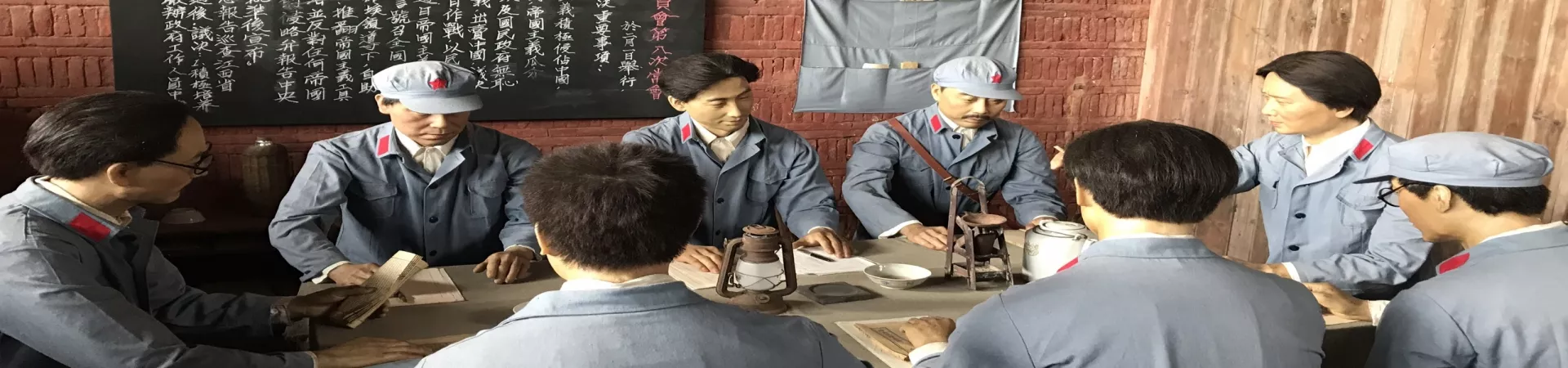
4.1. An Immersive Historical Pathway The scenic area is designed as a cohesive open-air museum. Well-marked pathways guide visitors chronologically and thematically through the complex. Informative plaques in both Chinese and English provide context, while many rooms feature lifelike wax figures or detailed exhibitions of historical documents, clothing, and weaponry. This careful curation helps animate the spaces, allowing visitors to visualize the bustling activity that once filled these now-quiet courtyards and halls.
4.2. The Living Legacy: "Chairman Mao" and Patriotic Education Yeping actively fulfills its role as a National Patriotic Education Demonstration Base. For domestic visitors, especially student groups, Party members, and military personnel, a visit here is a pilgrimage to the roots of the Party and the state. The story of how the title "Chairman Mao" originated and gained currency within these very walls is a highlight, personalizing the grand narrative of history. The site educates by fostering a direct, emotional connection to the ideals, struggles, and unity of the revolutionary generation.
4.3. Integration with Ruijin's Red Tourism Network As a cornerstone of Ruijin's "Red Capital" identity, Yeping is intrinsically linked to other nearby revolutionary sites like the Shawo Village and the Second Congress site. A visit to Yeping provides the essential prologue to understanding the broader narrative of the Jiangxi Soviet period. Its preservation and presentation make it an indispensable destination for anyone seeking to comprehend the historical journey that shaped modern China, offering a profound, grounded perspective on the revolution's formative years.