Ruijin Hongjing
Subtitle: The Story of a Well: A Journey to Ruijin's Red Well, the Heart of China's Revolutionary Legacy
Introduction: More Than Just a Landmark
Nestled within the historic city of Ruijin in Ganzhou, Jiangxi Province, lies a site of profound symbolic power: the Red Well (Hong Jing). To the casual observer, it is a simple, stone-lined well. Yet, this unassuming spot is a cornerstone of modern Chinese history and a poignant monument to the relationship between a revolutionary leader and the common people. A visit here is not merely a tourist stop; it is an immersion into a pivotal chapter of the 20th century, where a single act of digging a well came to represent an entire ethos of service, struggle, and hope. The Red Well area serves as the centerpiece of the Ruijin Revolutionary Sites, often called the "Red Capital," where the Chinese Soviet Republic, the early precursor to the People's Republic, was founded.
The Historical Context: Ruijin as the Red Capital
The Birth of the Chinese Soviet Republic In the early 1930s, during the arduous years of the Chinese Communist Revolution, Ruijin was chosen as the capital of the Chinese Soviet Republic (1931-1934). This makeshift "state within a state" became the experimental ground for policies, military strategy, and governance under the leadership of figures like Mao Zedong. It was a period of intense hardship, blockaded by opposing forces and struggling with resource scarcity, yet it was also a time of idealism and grassroots mobilization.
Life in Sha Village and the Water Crisis Adjacent to the government headquarters in Ruijin was Sha Village (Shazhouba), where many of the local Hakka people lived. The village suffered from a severe lack of clean drinking water. The only available water sources were muddy ponds, which led to widespread illness and constant hardship. The plight of the villagers was a microcosm of the challenges faced by the populace the revolution sought to serve—a daily struggle for a most basic human need.
The Story of the Well: An Act of Leadership and Unity
Mao Zedong's Initiative Upon learning of the villagers' suffering, Mao Zedong, then the Chairman of the Chinese Soviet Republic, took direct action. In the autumn of 1933, he personally led a team of soldiers and local officials to survey the land around Sha Village. He identified a spot where groundwater was likely and, crucially, mobilized resources and manpower to dig a proper well.
A Community Effort The digging was not a top-down order executed in isolation. Soldiers, government workers, and the villagers of Sha worked side-by-side. This collective labor transformed the task from a public works project into a powerful act of solidarity. It physically embodied the revolutionary principle of "serving the people." Within a short period, they struck clear, sweet water, solving a fundamental problem that had plagued the community for generations.
The Inscription and the Legacy To express their eternal gratitude, the villagers of Sha placed a stone slab beside the well. On it, they carved the now-iconic phrase: "Eat water, don't forget who dug the well. We miss Chairman Mao, our great savior" (吃水不忘挖井人,时刻想念毛主席). This inscription, heartfelt and direct, cemented the well's status as a national symbol. The "well-digger" became a metaphor for the revolutionary who labors for the people's welfare, and "not forgetting the well-digger" became an enduring admonition to remember one's roots and benefactors.
Visiting the Red Well Site Today
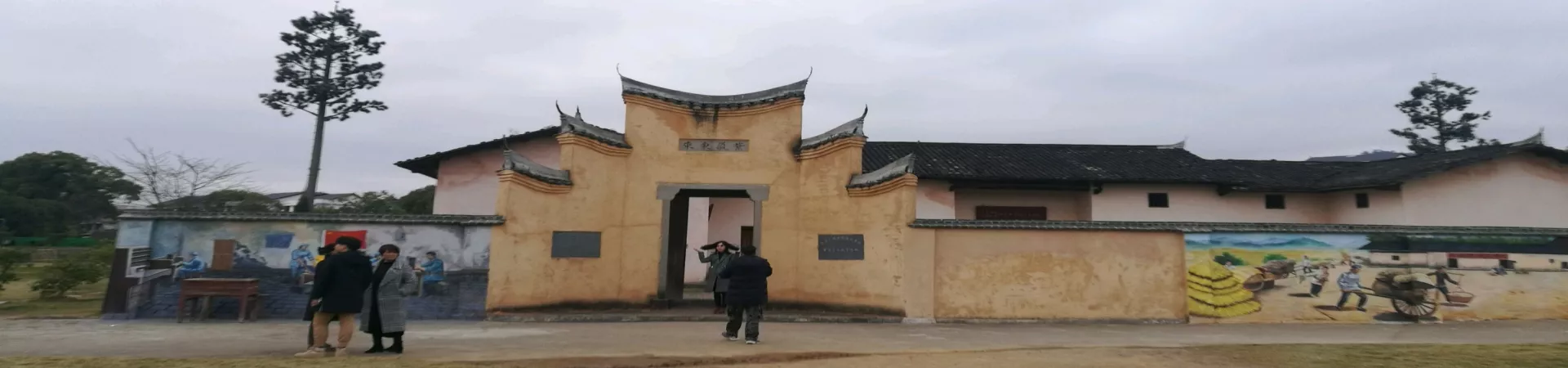
The Preserved Historical Scene The site has been meticulously preserved as part of the Ruijin Scenic Area. Visitors walk into a tranquil compound that captures the atmosphere of the 1930s. The centerpiece is, of course, the well itself—a round opening lined with stones, with a traditional wooden winch and bucket above it. Visitors are often invited to draw water from it, a tangible connection to the past. Beside it stands the original inscribed stone slab, now protected behind glass, its characters a silent, powerful testament.
The Surrounding Exhibitions and Landscapes The Memorial Hall and Cultural Displays A small but informative memorial hall near the well uses photographs, documents, and dioramas to contextualize the story. It details the history of the Chinese Soviet Republic, the daily life in Sha Village, and the technical and social process of well-digging at the time. Exhibits often include personal accounts from descendants of the original villagers, adding a human dimension to the historical narrative.
The Expanded Revolutionary Site Complex The Red Well is typically visited as part of a broader tour of Ruijin's revolutionary heritage. Nearby sites include the former residences of Mao Zedong, Zhu De, and other leaders, the site of the First National Congress of the Chinese Soviet, and the Red Army Square. Walking between these sites, one gains a comprehensive understanding of the scale and challenges of this early revolutionary base.
Practical Information for the Visit
Location and Access The Red Well is located in the Shazhouba area of Ruijin City, Ganzhou, Jiangxi Province. Ruijin is accessible by high-speed rail and long-distance bus from major cities like Nanchang and Ganzhou. From Ruijin's city center, the site is a short taxi or bus ride away, with clear signage directing visitors to the revolutionary memorial park.
Opening Hours and Contact The site is open to the public year-round. The operating hours are from 08:00 to 17:30, Monday through Sunday. It is advisable to allocate at least 1-2 hours for a thorough visit to the Red Well and its immediate surroundings. For the most current information, particularly regarding group visits or special arrangements, you may contact the site at 0797-2347897.
Reflection: The Enduring Metaphor Standing by the Red Well, one contemplates the layers of meaning it holds. It is a relic of history, a memorial to a leader, and a celebration of community action. Its story transcends its specific time and place, offering a universal parable about addressing fundamental human needs, the dignity of labor, and the enduring bond between leaders and the led. The clear water that still rests in the well continues to reflect not just the sky above, but a foundational story of a nation's journey.