Guanxi Walled Village
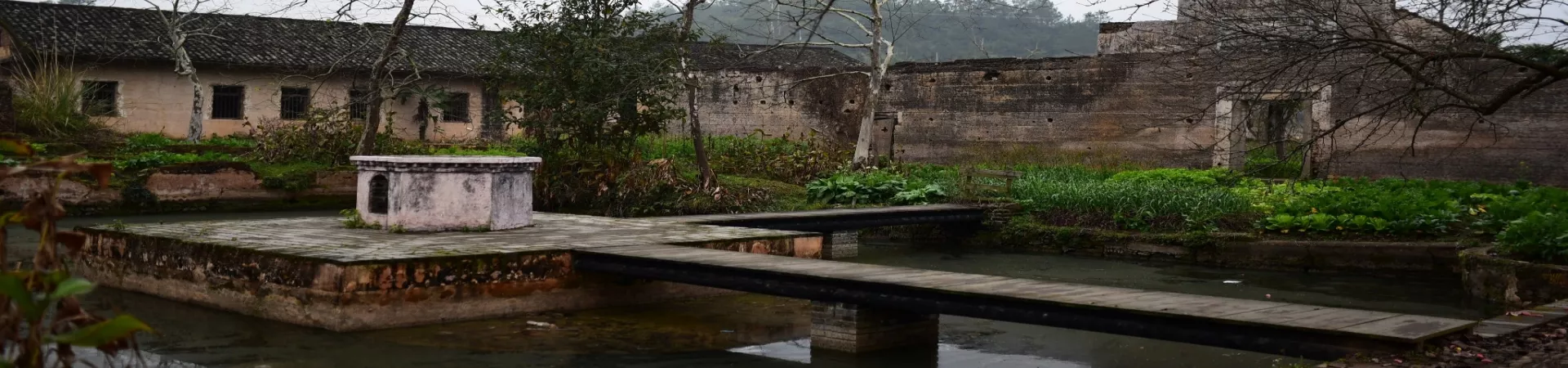
Subtitle: A Journey Through Time: Unveiling the Grandeur of Jiangxi's Hakka Walled Village
Introduction: Stepping into a Living Fortress
Nestled in the tranquil countryside of Guanxi Town, Longnan County, Ganzhou City, lies a monumental testament to Hakka ingenuity, resilience, and clan culture—the Guanxi New Walled Village (关西新围). Far more than a simple tourist attraction, it is a sprawling, stone-and-earth chronicle of a bygone era, often hailed as the "Eastern Ancient Roman Castle" and the "Most Magnificent Hakka Walled Village in China." For any traveler seeking to understand the soul of the Hakka people, a visit here is not merely a sightseeing stop but an immersive voyage into the heart of a communal fortress designed for defense, harmony, and self-sufficiency.
1. Historical Tapestry: The Vision of a Merchant Prince
The story of Guanxi New Walled Village is inextricably linked to one man: Xu Mingjun (徐名钧), a prosperous Hakka merchant who made his fortune in the timber trade during the Qing Dynasty. Driven by a desire to provide ultimate security and a permanent, dignified homestead for his extensive clan, he embarked on an ambitious construction project in 1798. The endeavor was staggering in scale, consuming nearly three decades (29 years to be precise), vast financial resources, and the labor of countless artisans. Completed in 1827, the result was not just a large house but an entire microcosm—a fortified enclave that could withstand external threats while fostering a rich, internally focused communal life for the Xu family lineage.
2. Architectural Marvel: Decoding the Fortified Design
The genius of the Guanxi New Walled Village lies in its seamless blend of formidable defensive architecture with elegant, scholar-official aesthetics and practical living spaces.
2.1. The Impressive Outer Shell: Walls and Watchtowers The first sight that greets visitors is the imposing rectangular perimeter wall, standing approximately 9 meters tall and stretching over 280 meters in length. Constructed from a robust mixture of rammed earth, stone, and brick, these walls were designed to be virtually impregnable. The four corners are crowned with towering, two-story watchtowers, offering 360-degree surveillance. Arrow slits and gun ports punctuate the walls, silent reminders of the need for constant vigilance in a historically turbulent region. The main gate itself is a masterpiece of defensive planning, featuring thick iron-clad doors, a heavy wooden drawbridge (now fixed), and murder holes above—a final line of defense against any who might breach the outer entrance.
2.2. The Inner Sanctum: Symmetry, Ancestry, and Daily Life Passing through the main gate reveals a world of order and tradition. The core layout follows a strict axial symmetry, centered around a series of ancestral halls that form the spiritual and social heart of the complex. The primary structures are arranged in a concentric "国"-character pattern, emphasizing the importance of the central lineage.
- Ancestral Halls (祠堂): These are the most sacred spaces within the walled village. Ornately carved wooden screens, intricate roof beams, and ancestral tablets speak to the deep Confucian values of filial piety and reverence for forebears. Here, major family ceremonies, worship rituals, and important clan decisions took place.
- Residential Quarters: Flanking the central axis are rows upon rows of living quarters—over 100 rooms in total. These rooms, though modest in individual size, are part of a highly organized grid, housing different branches of the extended Xu family. The architecture ensures excellent ventilation and lighting, with courtyards and "patios" (天井) channeling rainwater and symbolizing the connection between heaven and earth.
- Public and Functional Facilities: The village was a model of self-containment. It featured its own well, grain storage warehouses, a livestock pen, a private school (私塾) for educating the clan's children, and even a stage for opera performances. This design allowed the community to thrive for extended periods without needing to venture outside the safety of the walls.
3. Practical Information for Your Visit
To ensure a smooth and enriching experience, please note the following practical details. Please be aware that prices and hours are subject to change; it is always advisable to verify the latest information before your visit.
3.1. Admission and Fees * Standard Admission Ticket: The general admission fee is approximately 70 RMB per person. * Discounted Tickets: Discounts are often available for students, seniors, and children. It is recommended to inquire at the ticket office with valid identification. * Online Booking: Travelers may find discounted tickets on various online travel platforms. For instance, in the past, platforms like Mafengwo have offered tickets at around 43.2 RMB. Always check reputable sites for current promotions. * Parking: A parking area is available near the site for a fee, typically around 10 RMB per vehicle.
3.2. Operating Hours The site is generally open daily from 8:30 AM to 5:00 PM, with last admission at 5:00 PM. It remains open throughout the year, including weekends and public holidays, though hours may occasionally adjust for maintenance or special events.
3.3. Contact Information For the most current information, you can contact the site directly at: 0797-3530965.
4. Experiencing the Walled Village: Tips for Travelers
To fully appreciate Guanxi New Walled Village, move beyond passive observation. Imagine the daily rhythms of life within these walls centuries ago—the children studying in the school, the clamor of the courtyard during festivals, the watchful eyes of sentries in the towers. Pay close attention to the exquisite details: the wood carvings depicting auspicious symbols, the clever drainage systems, the strategic layout that prioritized both security and social cohesion. Engaging a local guide (often available at the entrance) is highly worthwhile, as they can bring the history and hidden stories of each courtyard and artifact to life, explaining the profound cultural significance behind the architecture. Combine your visit with other nearby Hakka attractions, such as the older Guanxi Old Walled Village, to gain a deeper, comparative understanding of the evolution of Hakka tulou and walled village architecture in southern Jiangxi.