Huang Feihong Memorial Hall
Subtitle: A Journey into the Legacy of a Kung Fu Legend
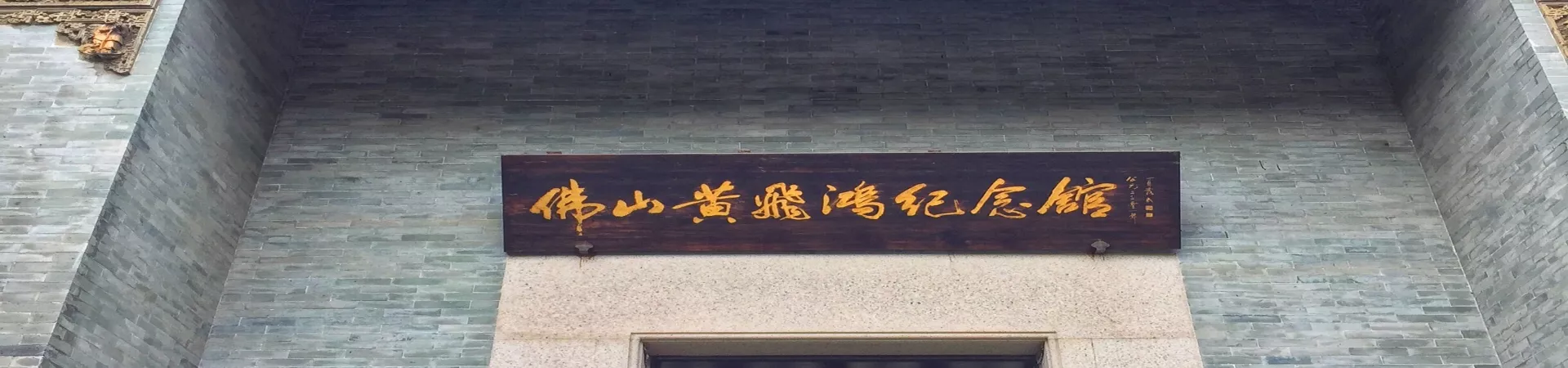
1. Introduction: The Architectural Gateway to a Legend Nestled within the historic Foshan Ancestral Temple complex, the Wong Fei-hung Memorial Hall stands as a dedicated portal to the life, philosophy, and enduring cultural impact of one of China's most iconic martial artists and folk heroes. Housed within a meticulously designed two-story structure, the memorial is itself a piece of heritage. Its architecture is a faithful replica of a Qing Dynasty-style building, characterized by its distinctive grey brick walls and the unique "wok ear" gables (huò'ěr), a classic architectural feature of the Lingnan region symbolizing status and good fortune. This deliberate design choice immediately transports visitors from modern Foshan into the historical context of Wong Fei-hung's era, setting the stage for an immersive exploration.
2. Exploring the Memorial Hall: Layout and Key Sections The memorial hall follows a traditional two-hall, three-bay layout, offering a logical and engaging flow for visitors. Its interior is thoughtfully divided into several thematic zones, each dedicated to a different facet of the Wong Fei-hung phenomenon.
2.1. The Exhibition Galleries: Chronicle of a Hero's Life The core of the experience lies in the comprehensive exhibition galleries. These spaces move beyond mere biography to present a multi-dimensional portrait of the man. * The Historical Wong Fei-hung: This section delves into the verified facts of his life. Born in Foshan in 1847, Wong Fei-hung was a master of Hung Ga Kuen, a physician skilled in Dit Da (traditional bone-setting), and the operator of the renowned Po Chi Lam clinic. Exhibits detail his roles as a martial artist, healer, and moral leader in his community, highlighting his commitment to righteousness (yì), benevolence (rén), and his famous refusal to teach martial arts to foreigners—a point often debated and explored. * The Cultural Icon: Seventy Years of Artistic Interpretation: Perhaps the most fascinating section showcases Wong Fei-hung's transformation from a historical figure into a global cultural symbol. It comprehensively charts over 70 years of artistic works inspired by him, including early newspaper serials, over 100 Hong Kong films (where he was famously portrayed by actor Kwan Tak-hing), television series, novels, and comic books. This display brilliantly illustrates how his legend was shaped, amplified, and reinvented by popular culture throughout the 20th and 21st centuries. * The Precious Collection: Integrated throughout the galleries are over a thousand precious cultural relics. These include traditional martial arts weapons (such as the tiger fork and long staff associated with him), ancient medical tools from Dit Da practice, historical photographs of Foshan, and personal artifacts connected to the Wong family or the Hung Ga tradition. These items provide tangible connections to the past and the material culture of his world.
2.2. The Martial Arts Arena: Witnessing the Living Tradition Adjacent to the exhibition spaces, the memorial hall brings the legacy to life through dynamic demonstrations. * The Performance Courtyard (演武天井): This open-air courtyard serves as a vibrant stage for regular live martial arts performances. Visitors can witness authentic Hung Ga Kuen routines, lion dances, and other traditional skills. The powerful, rhythmic movements and acrobatics offer a direct sensory link to the martial arts heritage that Wong Fei-hung embodied. * The Training Hall (演武厅): This space, often used for practice and smaller demonstrations, gives insight into the training environment of a traditional kung fu school. It may display training dummies, weapons racks, and other equipment, emphasizing the discipline and dedication required in the martial path.
2.3. The Audiovisual Theater: The Legend on Screen The memorial's影视厅 (Audio-Visual Hall) provides a complementary experience. Here, visitors can sit back and watch curated documentaries, classic film clips from the extensive Wong Fei-hung movie catalogue, and interviews with historians, martial arts masters, and cultural scholars. This multimedia approach helps synthesize the information from the exhibitions and performances, offering narrative depth and emotional resonance.
3. Practical Visitor Information 3.1. Location and Access The Wong Fei-hung Memorial Hall is an integral part of the Foshan Ancestral Temple Museum complex, located in the heart of Foshan's Chancheng District. The most convenient access is by public bus; numerous routes (including 101, 105, 116, 117) stop at the "Zumiao A Station" (祖庙A站). From the bus stop, the entrance to the Ancestral Temple complex is a short walk away.
3.2. Admission and Opening Hours Admission to the memorial hall is included in the single ticket for the Foshan Ancestral Temple Museum. There is no separate fee. The complex is open daily from 8:30 AM to 6:00 PM throughout the year. Visitors should allocate approximately 1 to 3 hours to fully appreciate the memorial hall without rushing, considering the depth of exhibits and the timing of live performances.
3.3. Planning Your Visit * Timing: To enhance your experience, try to inquire about the schedule for the martial arts and lion dance performances upon arrival, as these are highlights not to be missed. * Context: Understanding that the memorial sits within the larger Ancestral Temple—a site dedicated to the Northern God and a center of local craft and history—allows for a richer, full-day cultural excursion. * Contact: For specific inquiries, the museum can be reached at +86 757 82286913.
The Wong Fei-hung Memorial Hall successfully operates on two levels: as a respectful museum documenting a local hero and as a vibrant cultural center celebrating a myth that transcended its origins. It invites visitors to navigate the intriguing space where verifiable history meets powerful legend, all within the authentic atmosphere of a Qing-era architectural setting.