Boundary Monument No.5 in the Great Qing Dynasty
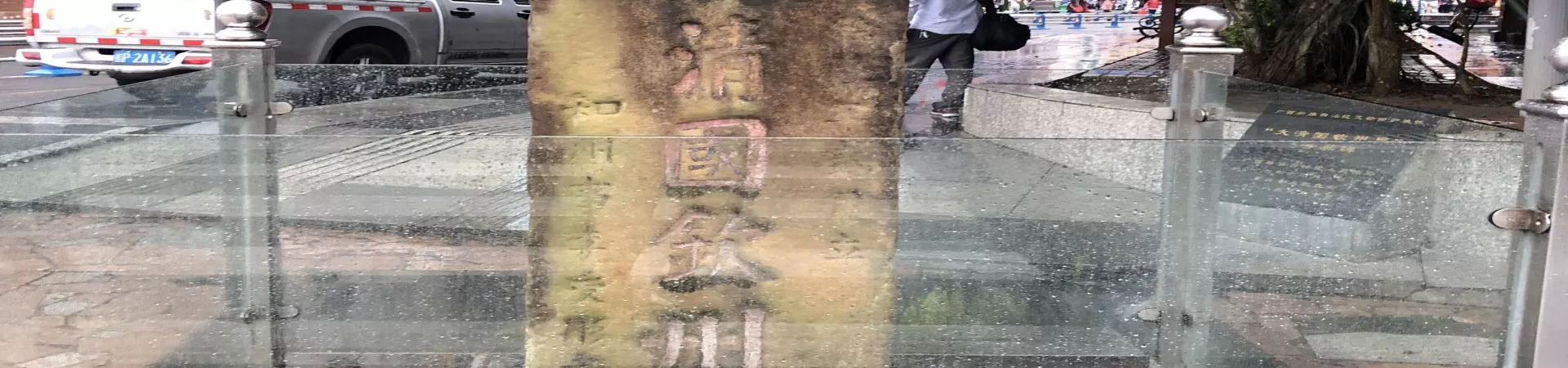
Subtitle: A Silent Sentinel of History: Exploring the Great Qing Dynasty Boundary Marker No. 5 in Fangchenggang
Introduction: A Stone Whispering Centuries Nestled within the dynamic port city of Fangchenggang in southern Guangxi, China, lies an unassuming yet profoundly significant historical artifact: the Great Qing Dynasty Boundary Marker No. 5. More than just a stone pillar, this weathered stele is a tangible portal to a pivotal era in Sino-Vietnamese relations and a silent witness to the shifting tides of history along the South China Sea coast. Erected over 130 years ago, it stands as a poignant monument to the complexities of empire, diplomacy, and the enduring importance of defined borders.
Historical Context & Significance
The Era of Delimitation: Late 19th Century Sino-Vietnamese Borders The late 19th century was a period of intense imperial negotiation and territorial demarcation. Following the Treaty of Tientsin (1885) and the subsequent Convention Relative to the Delimitation of the Frontier Between China and Tonkin (1887), joint commissions were established to survey and physically mark the land and maritime boundaries between the Qing Dynasty and French Indochina (which included present-day northern Vietnam). This process was part of a larger, often tense, geopolitical struggle involving European colonial powers and a weakening Qing empire striving to assert its sovereignty.
The Inscription: A Moment Frozen in Time The marker itself bears the physical imprint of this historical moment. It was erected on the 14th of April, 1890 (recorded as the second month of the thirteenth year of the Guangxu Emperor's reign), under the authority of Li Shoutong, the Magistrate of Qinzhou. This specific date and official attribution are crucial, as they anchor the stone firmly within the formal bureaucratic and diplomatic procedures of the Qing court. The act of placing this boundary marker was a definitive, on-the-ground assertion of territorial limits as agreed upon through treaty, making it an official state document carved in stone.
The Marker's Journey Through Time
From Imperial Edict to Modern Relic For over a century, Boundary Marker No. 5 has endured the elements, political upheavals, and the dramatic transformation of its surroundings. It has silently observed the region's evolution from a remote frontier zone to a bustling international trade gateway. Its survival makes it a rare and authentic physical link to the pre-modern cartographic efforts of the Qing Dynasty. The marker's very presence invites reflection on the continuity and change in how borders are perceived, from rigid imperial lines to modern concepts of sovereign territory within a globalized world.
A Symbol in the Landscape Positioned near the coast, the marker also hints at the maritime dimensions of the historical boundary agreements. It serves as a reference point for understanding the historical scope of China's southern coastal frontiers. Today, it transcends its original purely administrative function, becoming a symbol of historical legacy and a point of cultural interest amidst Fangchenggang's natural and economic landscape.
Practical Visitor Information
Location & Accessibility The Great Qing Dynasty Boundary Marker No. 5 is located within the Fangchenggang area, a city renowned for its deep-water ports and coastal scenery. Visitors can typically access the site as part of a broader tour of the city's historical and scenic spots. While specific directional details are best obtained locally upon arrival, the site is generally reachable by taxi or local tour services from downtown Fangchenggang.
Visiting Details at a Glance * Admission Fee: There is no charge for admission to view the boundary marker. It is a public historical site. * Opening Hours: The site is accessible to visitors 24 hours a day, throughout the year. It is open daily from January 1st to December 31st. * Suggested Duration: A visit to the marker itself is relatively brief. Most visitors spend under one hour here to observe the stele, read any informational plaques, and contemplate its significance. It is often combined with visits to nearby beaches, the port area, or other cultural sites to form a fuller half-day or day trip itinerary.
Engaging with the Site
What to Observe When visiting, focus on the details of the stele. Look for the engraved inscriptions that likely denote its number ("五号" for No. 5) and other official characters from the Guangxu period. Observe the material, the wear patterns from over a century of exposure, and its placement within the contemporary setting. This physical observation connects you directly to the hands that placed it there in 1890.
Reflective Tourism A visit to Boundary Marker No. 5 is less about grandeur and more about contemplation. It is an opportunity to ponder the fluidity of history, the artistry of ancient stone carving, and the quiet persistence of monuments that outlive the empires that built them. It stands not as a celebration of empire, but as a sober reminder of the perpetual human endeavor to define space, identity, and territory. In a region now defined by cross-border trade and cooperation, this old marker tells a foundational story of how the modern map began to take shape.