Ezhou Museum
Subtitle: A Journey Through Millennia: The Ezhou Museum as Guardian of History and Culture
I. Introduction: The Pillar of Cultural Heritage in Ezhou
Established over four decades ago, the Ezhou Museum stands as a government-founded, comprehensive local museum, serving as a cornerstone of cultural preservation and education in the Hubei region. Far more than a simple repository of artifacts, it operates as a dynamic institution with a multifaceted mission. Its responsibilities are vast, encompassing critical archaeological fieldwork—such as surveys, exploration, and excavations linked to urban construction projects—alongside the core duties of collecting, preserving, researching, and displaying cultural relics. Furthermore, the museum plays an authoritative role in managing all officially designated cultural heritage sites across the city. As a distinctive window into Ezhou's socialist spiritual civilization and an integral component of the nation's scientific and cultural endeavors, the museum is a vital force in implementing China's Law on the Protection of Cultural Relics and related regulations. Under the sustained guidance of successive municipal committees, governments, and cultural administrative departments, and with consistent support from provincial heritage authorities, the museum has seen substantial growth in its facilities, professional staff, and the overall scope of its work, solidifying its position as the primary guardian of the region's historical narrative.
II. Archaeological Discoveries and Protected Heritage Sites
The diligent efforts of the museum's archaeological and research teams have profoundly enriched the understanding of Ezhou's past. Their work has led to the identification and documentation of numerous significant sites throughout the city. To date, these include 54 ancient cultural ruins, 8 ancient architectural structures, 6 stone carvings and steles, 7 revolutionary sites, and 5 modern memorial buildings, in addition to extensive ancient tombs and burial areas.
Among these discoveries, a total of 108 sites have been officially classified and announced as protected cultural heritage units by the State Council, and provincial and municipal governments. This impressive list comprises 1 site under national-level protection, 10 under provincial-level protection, and 97 under municipal-level protection. This dense concentration of protected sites underscores Ezhou's profound historical layers.
III. Highlights of the Museum's Collection
The museum's permanent collection, exceeding 20,000 individual items and sets, is the fruit of these decades of archaeological labor and curated acquisition. The collection is systematically graded, holding 56 sets of National Grade-One artifacts (the highest classification), 277 sets of Grade-Two artifacts, and 2,331 sets of Grade-Three artifacts. This remarkable quantity and quality place Ezhou Museum's holdings among the most significant in the province, earning the city the esteemed reputation of a "Major City of Cultural Relics" within Hubei.
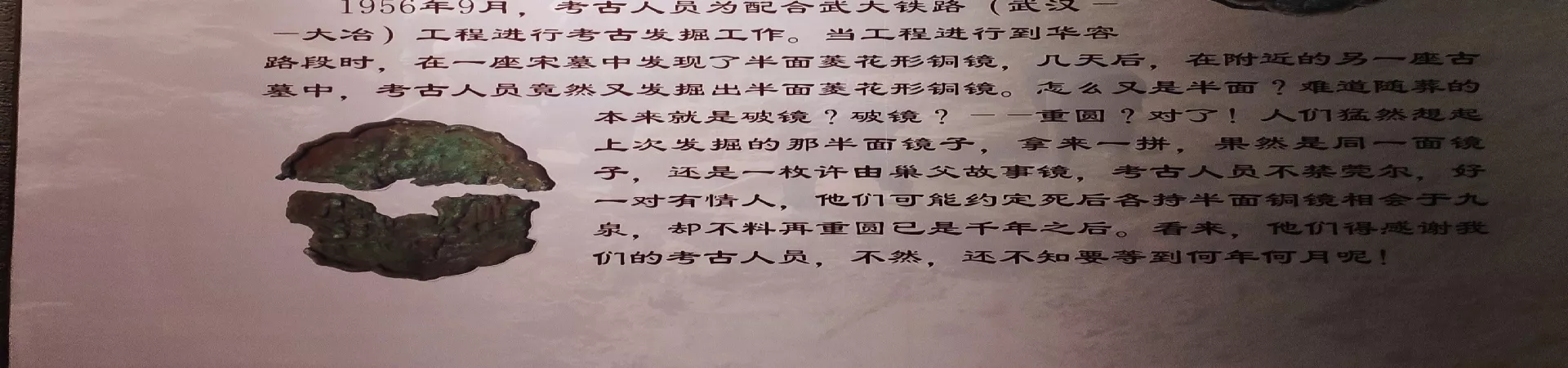
The collection is particularly renowned for two specialized areas: * Ancient Bronze Mirrors: The museum's most celebrated treasure is its assemblage of over 500 ancient bronze mirrors, primarily excavated from local tombs. This extraordinary collection, rare in both its scale and artistic quality, has garnered international acclaim and rightfully bestowed upon Ezhou the evocative title "Hometown of Bronze Mirrors." * Celadon of the Six Dynasties: Another strength of the collection is its exquisite celadon porcelain from the Six Dynasties period (220–589 AD). These artifacts, characterized by their elegant forms and distinctive grey-green glazes, offer invaluable insights into the material culture, craftsmanship, and aesthetic tastes of this important era in Chinese history.
IV. Notable Cultural Sites Under the Museum's Purview
The museum's oversight extends beyond its walls to key heritage sites scattered across Ezhou. Some of the most influential and visited include: * Yiting Ming Cliff Inscriptions: A precious example of ancient calligraphy carved into a natural rock face. * Tomb of Martyr Peng Chufan: A memorial site dedicated to a local revolutionary figure. * Site of the King Wu City: The ruins of an ancient city, offering a tangible link to the region's early urban development. * Guanyin Pavilion (Goddess of Mercy Pavilion): A historic religious structure, often associated with local folklore and spiritual practices. * Former Headquarters of He Long's Army: A significant site related to the modern revolutionary history of China. * Yuliang Tower: A historical tower named after a famous official from the Eastern Jin Dynasty. * Wenxing Pagoda (Literary Star Pagoda): A traditional pagoda, historically believed to enhance the local scholarly fortunes. * City God Temple (Chenghuang Miao): A temple dedicated to the protective deity of the city, a common feature in traditional Chinese urban centers.
V. Practical Information for Visitors
- Opening Hours:
- Tuesday to Sunday: 09:00 - 17:00 (Last admission at 16:00).
- Monday: Closed (all day).
- These hours apply throughout the year.
- Admission: For detailed and current information regarding ticket prices, special exhibitions, or free admission days, it is recommended to contact the museum directly prior to your visit.
- Contact:
- Telephone: +86-711-3223467; +86-711-3257887.
Information last updated: January 8, 2023. Credit for updates is extended to contributor Haxixi.