Dongying Sun Wuci Temple
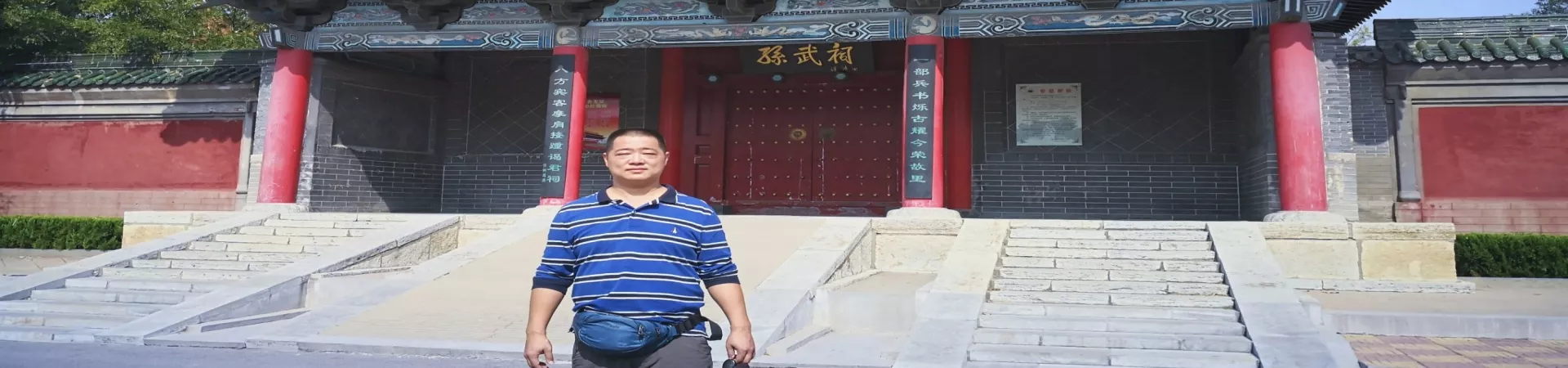
Subtitle: A Journey into Ancient Strategy and Architectural Harmony
1. Introduction to Sun Wu Ancestral Temple Nestled within the city of Dongying, in China's Shandong province, lies a cultural gem dedicated to one of history's most profound military minds—the Sun Wu Ancestral Temple. This architectural complex is not merely a museum or a monument; it is a serene and powerful homage to Sun Tzu (Sun Wu), the legendary strategist and philosopher whose treatise, The Art of War, has transcended centuries and continents, influencing fields far beyond the battlefield. The temple offers visitors a unique opportunity to step away from the modern bustle and immerse themselves in an environment where ancient wisdom, classical Chinese architecture, and historical reverence converge. It serves as a crucial cultural node in Dongying, a city more commonly associated with the petroleum industry, providing a deep and contrasting narrative of intellectual heritage and artistic achievement.
2. Architectural Grandeur and Design Philosophy 2.1. A Song Dynasty Revival The most immediate and striking feature of the Sun Wu Ancestral Temple is its magnificent architecture. The entire complex is designed in the elegant and refined style of the Song Dynasty (960-1279 AD), an era renowned for its cultural flourishing and advancements in aesthetics, philosophy, and the arts. This conscious architectural choice connects the visitor directly to a period of great intellectual pursuit, contextually framing Sun Tzu's legacy within a golden age of Chinese civilization. The structures are not original Song relics but are masterful replicas, built with meticulous attention to historical detail and traditional craftsmanship.
2.2. Key Architectural Elements The temple's design is a visual symphony of classical elements: * Grey Bricks and Azure Tiles: The exterior walls, constructed from solemn grey bricks, provide a grounded and sturdy base, symbolizing strength and permanence. These are crowned by roofs layered with glazed azure tiles, which gleam under the sunlight, creating a striking contrast and representing the heavens and high-minded thought. * Soaring Eaves and Upturned Corners: The roofs are characterized by their gracefully "flying" eaves and upturned corners. This distinctive feature, beyond its breathtaking beauty, is a hallmark of traditional Chinese timber-frame architecture, designed to direct rainwater away from the structure while giving the buildings a light, aspiring quality, as if reaching for the sky. * Ornate Caisson Ceilings and Beams: Inside the main halls, visitors' gazes are drawn upward to the intricately painted and carved caisson ceilings (zaojing). These often feature geometric patterns, floral motifs, or symbolic depictions. The beams and brackets are adorned with colorful paintings (caihui), showcasing mythological scenes, natural landscapes, or patterns that ward off evil. This lavish interior decoration reflects a high artistic standard ("elegant taste") and was historically reserved for buildings of great importance.
2.3. Spatial Layout: Symmetry and Harmony The temple's layout is a profound embodiment of traditional Chinese spatial philosophy. It seamlessly combines the axial symmetry typical of monumental ancient architecture with the intimate, enclosed feel of a courtyard residence (siheyuan). * Axial Symmetry: The major halls and gates are arranged along a central north-south axis, a design principle that conveys order, balance, and hierarchical significance. This axis guides the visitor on a deliberate journey through the complex, with each structure along the path holding specific importance. * Courtyard Composition: The buildings are organized around a series of tranquil, open courtyards. This layout creates a rhythmic alternation between expansive open spaces and defined architectural volumes. The courtyards serve as places for contemplation, light, and circulation, allowing the grandeur of the buildings to be fully appreciated from multiple vantage points. The overall effect is one of "grandeur and magnificence"—a feeling of awe at the scale and precision, coupled with a sense of peaceful harmony and intellectual clarity.
3. The Historical and Cultural Core: Sun Tzu's Legacy 3.1. The Man and The Masterpiece While the architecture provides the vessel, the essence of the temple is the life and work of Sun Wu. Born in the late Spring and Autumn period, his strategic genius was crystallized in The Art of War (Sunzi Bingfa). This text, composed of 13 chapters, moves far beyond mere military tactics to explore fundamental principles of conflict management, leadership, and adaptive thinking. Its teachings on knowing oneself and one's opponent, the strategic use of terrain, and the supreme goal of winning without fighting have made it a timeless guide.
3.2. Exhibits and Interpretive Content Within the beautifully appointed halls, the temple houses a range of exhibits that bring Sun Tzu's world to life: * Historical Relics and Artifacts: Displays may include ancient weaponry, archaeological finds from the Qi state (Sun Tzu's home region), and historical documents that set the context for his life. * Illustrated Interpretations of The Art of War: Walls are often lined with paintings, calligraphic scrolls, or stone carvings that visually depict the classic stratagems and quotes from the book, such as "All warfare is based on deception" or "The supreme art of war is to subdue the enemy without fighting." * Theoretical Exploration: Deeper exhibits delve into the philosophical underpinnings of Sun Tzu's thought, his influence on subsequent Chinese military history, and his impact on global business, law, and sports strategies in the modern era.
4. Practical Visitor Information To ensure a smooth and enriching visit, please note the following essential details: * Opening Hours: The Sun Wu Ancestral Temple is open to the public daily from 8:00 AM to 6:00 PM. The last admission is at 6:00 PM. These hours are consistent throughout the year, from January 1st to December 31st. It is advisable to allocate at least 1.5 to 2.5 hours for a thorough exploration of the grounds and exhibits. * Location and Access: The temple is situated within Dongying city proper. Visitors can reach it via taxi, ride-hailing services, or public bus routes that service the area. Its central location makes it a convenient cultural stop. * Visitor Experience: The harmonious layout invites a leisurely walk. The courtyards offer peaceful spots for reflection. Visitors are encouraged to observe the architectural details closely, from the roof ornaments to the painted beams, and to engage with the exhibits to fully grasp the depth of Sun Tzu's enduring legacy. The atmosphere is one of quiet reverence, perfect for those seeking a moment of historical and intellectual connection.