Longjiang Park
Subtitle: A Tapestry of Nature, Culture, and Leisure in Chuxiong's Urban Oasis
Introduction: The Evolving Landscape of Chuxiong
Nestled along the vital corridor between Kunming and Xiaguan in western Yunnan, the city of Chuxiong stands as the vibrant capital of the Chuxiong Yi Autonomous Prefecture. Historical records, such as the Chronicles of Chuxiong Prefecture from the Longqing era, speak of eight famed scenic spots that once graced the city, including "Lotus Pond under the Moon" and "Southern Mountain Wild Goose Pagoda." While the passage of time has rendered some of these sights mere memories, the city's heart has found a new focal point for recreation and beauty: Longjiang Park. This modern oasis, beloved by locals and visitors alike, offers a concentrated experience of the region's natural charm, cultural heritage, and community spirit.
Section 1: From Riverbed to Recreational Haven
1.1 Origins and Development Longjiang Park is a relatively recent addition to Chuxiong's urban fabric, its construction beginning only in 1981. Its story, however, is intertwined with the natural history of the area. The park occupies the former course of the Longchuan River, a site historically known as "Horseshoe Bend" due to its distinct shape. Following the river's diversion, this 17-acre tract of land was thoughtfully transformed into the comprehensive public park seen today.
1.2 Layout and Design Philosophy Despite its limited acreage, the park's design is a masterclass in harmonious and varied planning. It seamlessly integrates serene classical gardens with lively recreational facilities, creating distinct zones that cater to different moods and interests. The layout ensures that moments of tranquil contemplation are never far from opportunities for family fun and social engagement, all within a beautifully maintained environment.
Section 2: Exploring the Park's Diverse Zones
2.1 The North: Tranquility and Culture The northern section of the park is dedicated to quiet refinement and cultural enrichment. * The Plum Garden: A compact yet exquisite area featuring traditional winding corridors and pavilions nestled among plum trees. This serene space regularly hosts exhibitions of flowers, cultural relics, calligraphy, and paintings, offering a quiet retreat for art and nature lovers. * The Children's Playground: Located within a stone archway, this dedicated area provides a safe and fun space for younger visitors to play and explore.
2.2 The East and Southeast: Leisure and Activity This quadrant buzzes with energy and offers various ways to enjoy the park's waterways. * The Skating Rink and Boat Dock: A hub for active recreation, featuring facilities for skating and a dock for renting pleasure boats. * The Waterside Teahouse: Uniquely designed to resemble a ship's deck, this teahouse extends over the water. It is the perfect spot to pause for a cup of tea, enjoy a light refreshment, and watch the boats glide by.
2.3 The Northeast: Natural Beauty and Seclusion For those seeking picturesque scenery and peaceful walks, the northeastern area is ideal. * Cherry Blossom Island and Crabapple Grove: These planted areas create stunning seasonal displays, particularly during spring blooms. * The Verdant Lawn: Expansive stretches of lush grass invite visitors to relax, picnic, or simply enjoy the open space in a more secluded part of the park.
Section 3: Cultural Symbols and Artistic Legacy
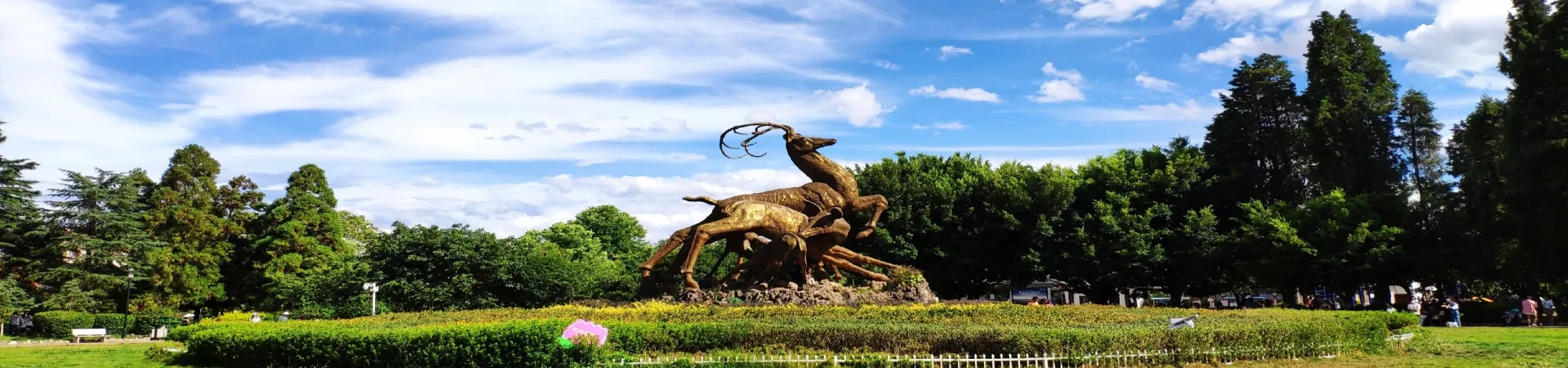
3.1 Emblems of Local Identity The park serves as an open-air gallery celebrating Chuxiong's identity. Most prominently, a sculpted herd of deer pays homage to the city's old name, "Lucheng" or "Deer City." Alongside this, the beautiful statue of Miyilu, a legendary Yi maiden, stands as a symbol of the Yi people's virtues: kindness, purity, and bravery. Plans for murals depicting the unique Yi "Flower Festival" further aim to embed the region's distinctive cultural风采 (elegant demeanor) within the park's landscape.
3.2 Literary Echoes in Stone and Wood Longjiang Park thoughtfully preserves the literary connections of famous historical figures who passed through Chuxiong. Their poetic impressions are permanently inscribed for visitors to discover. * Guo Moruo's Ode: A stone stele and pavilion commemorate the visit of the renowned poet and historian Guo Moruo in September 1961. His poem, penned on a journey between Kunming and Dali, skillfully weaves together Chuxiong's ancient history—referencing local ethnic groups from the Zhou Dynasty and legends of Zhuge Liang's southern expedition—with a vibrant snapshot of the prosperous, harmonious Yi homeland he witnessed. * Yang Shen's Lament: The poignant "Ode to the Weeping Willow" by Yang Shen, a Ming Dynasty scholar, is engraved on the park's waterside gallery. His verses, using the willow as a metaphor, express a personal melancholy during his travels, adding a layer of classical literary depth to the visitor's experience.
Section 4: Practical Information for Visitors
4.1 Admission and Accessibility Longjiang Park is an open public space with no entrance fee, making it freely accessible to all throughout the year.
4.2 Contact Information For inquiries, visitors can contact the park at: 0878-3130238.
(Information last updated: January 10, 2023. Credit to contributor Dong Mengmengdie for editorial input.)