Three Natural Bridges Wulong County
Subtitle: A Comprehensive Guide to Visiting the Natural Wonders of Wulong's Three Natural Bridges
1. Introduction to the Three Natural Bridges Nestled within the stunning karst landscape of Wulong, a district of Chongqing, China, the Three Natural Bridges (天生三桥, Tiānshēng Sān Qiáo) stand as a monumental testament to the power and artistry of natural geological forces. This site is not merely a scenic area; it is a breathtaking open-air museum of limestone sculpture, formed over millennia by the relentless work of water erosion. The sight of these colossal stone bridges spanning deep, verdant gorges is profoundly awe-inspiring, offering visitors a direct encounter with the raw, majestic beauty of nature's architecture. Recognized for their exceptional value, these landforms are a central component of the South China Karst UNESCO World Heritage Site, drawing geology enthusiasts, photographers, and travelers from around the globe seeking to witness one of China's most spectacular natural phenomena.
2. The Three Bridges: Names and Highlights The "Three Bridges" refer to three massive natural limestone archways formed by collapsed cave systems, each with its own distinct character and name drawn from Chinese mythology and their imposing presence.
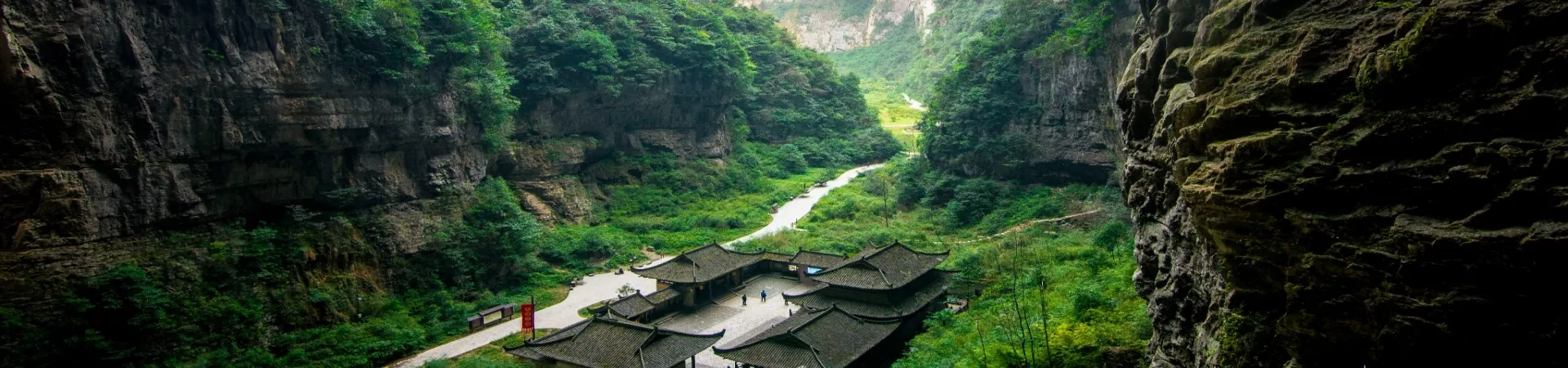
2.1. Tianlong Bridge (天龙桥 - The Heavenly Dragon Bridge) This is the first bridge encountered on the standard walking route. As the most visually prominent, it creates a vast, skylit chamber. Its most famous feature is the ancient Tianfu Official Post Station (天福官驿), a meticulously reconstructed complex of Qing Dynasty-style buildings nestled directly on the gorge floor beneath the bridge's span. This post station, which featured in the film Curse of the Golden Flower, appears as if it has been hidden from the world for centuries, adding a layer of cultural and historical mystique to the dramatic natural backdrop.
2.2. Qinglong Bridge (青龙桥 - The Azure Dragon Bridge) Widely regarded as the most elegant and tallest of the three, Qinglong Bridge soars to a height of approximately 350 meters. When sunlight filters through the arch, it often creates ethereal beams of light that illuminate the lush vegetation and mist below, contributing to its reputation as the most picturesque bridge. The play of light and shadow here is a photographer's dream.
2.3. Heilong Bridge (黑龙桥 - The Black Dragon Bridge) The final bridge in the sequence is renowned for its length and the unique micro-environment it shelters. The interior of the gorge beneath Heilong Bridge is darker and damper, fostering a habitat for rich mosses and ferns. Here, visitors can witness several spectacular karst features, including active waterfalls that cascade down the cliff faces and a series of unique "karst windows" or "eye of the sky" formations in the rock walls.
3. Practical Visitor Information A successful visit requires some practical planning due to the site's terrain and layout.
3.1. Ticketing and Opening Hours * Ticket Prices: Ticket prices vary by season. From March 1st to October 31st, the standard adult ticket is 125 RMB. During the low season (November 1st to February 28th), the price drops to 95 RMB. Significant discounts (半票) are available for children (height 1.2m-1.5m), seniors aged 60-64, and full-time students with valid ID. Free admission (免票) is granted to seniors aged 65 and over, active-duty and disabled military personnel, individuals with disabilities (and one accompanying caregiver for severe disabilities), and holders of fire rescue certificates. * Operating Hours: The general opening hours are from 8:30 AM to 4:30 PM, with last entry at 4:30 PM. These hours typically apply from September 1st to April 30th of the following year, but it is always crucial to verify the exact times on the official website or by phone before your visit, as schedules can change.
3.2. Recommended Itinerary and Tips * Route and Navigation: The scenic area is designed as a one-way walking route. Visitors descend into the gorge via a large sightseeing elevator near Tianlong Bridge and walk through the sequence of bridges, exiting at a different point. It is physically impossible to backtrack to the entrance, so follow the designated path. The entire walk covers several kilometers and involves numerous steps and uneven paths. * Footwear and Preparation: Comfortable, sturdy walking shoes with good grip are an absolute necessity. The paths can be slippery, especially near waterfalls and in the shaded areas under Heilong Bridge. Allow a minimum of 3 hours for a leisurely visit to fully appreciate the views and take photographs. * Visiting Strategy: To avoid large crowds and enjoy a more serene experience, consider visiting during the low season (November-February). Not only are ticket prices lower, but the cooler weather can make the extended walk more pleasant, and the misty atmosphere often enhances the mystical quality of the landscape.
4. Transportation Guide to the Three Natural Bridges The bridges are located near Xiannvshan (Fairy Mountain) Town in Wulong. The primary access point for all visitors is the Xiannvshan Tourist Reception Center. You cannot drive directly to the bridges; you must park at this center and take the mandatory official shuttle bus to the actual scenic area entrance.
4.1. From Chongqing City to Wulong/Xiannvshan Town * By Train: Take a high-speed train from Chongqing North Station to Wulong Station. The journey takes about 2 hours and costs around 25 RMB. Upon arrival at Wulong Station, transfer to a local bus or taxi for the 40-minute ride to the Xiannvshan Tourist Reception Center. Look for the distinctive pyramid-shaped building. * By Long-Distance Bus: Direct buses to Xiannvshan Town depart from Chongqing's Longtousi Station. Alternatively, take a bus to Wulong City from Chongqing's Sigongli Bus Station, then transfer to a local bus to Xiannvshan Town. For the most straightforward option, tourist shuttle buses run directly from liberation碑's tourist distribution center to the Xiannvshan Tourist Center. * By Car (Self-Drive): Drive via the G65 (Yu-Xiang) Expressway from Chongqing to Wulong County (approx. 2 hours). Then, take the secondary road from Wulong County to the Xiannvshan Tourist Reception Center (approx. 0.5 hours). Park your vehicle at the center's lot.
4.2. Access from the Tourist Center to the Scenic Area All visitors must purchase entrance tickets and board the official shuttle buses at the Xiannvshan Tourist Reception Center. These buses will transport you to the upper entrance of the Three Natural Bridges scenic area, where your walking tour begins with the descent via the sightseeing elevator.
For the most current information, including real-time opening hours and shuttle bus schedules, it is advisable to contact the scenic area directly. Phone: 023-77794266; 023-63818022; 4000235666