Zhantan Forest
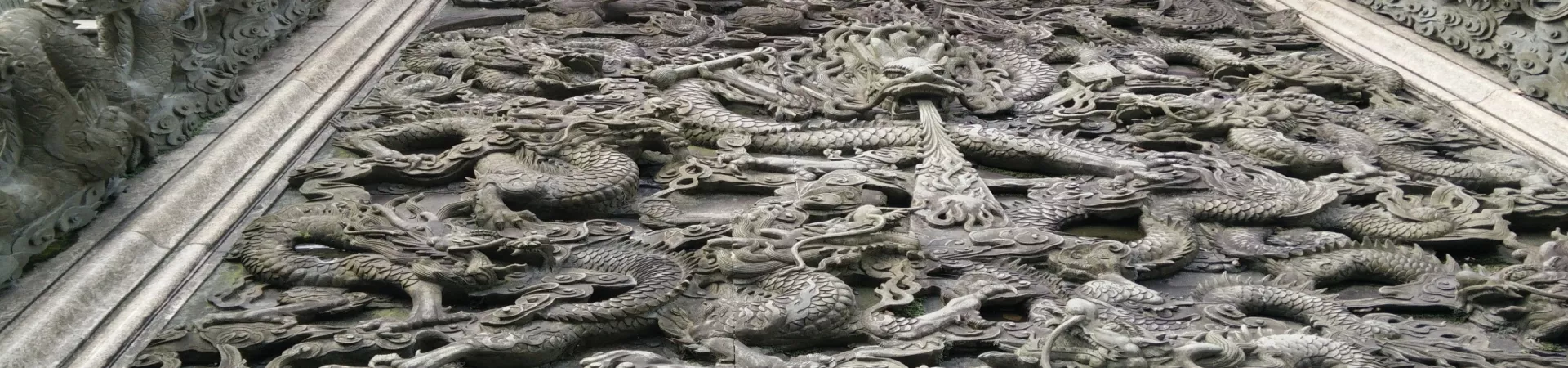
Subtitle: A Sanctuary of Grandeur and Myth: Exploring Zhantanlin, the Largest Temple Complex on Jiuhua Mountain
Introduction: A Legacy Carved in Stone and Faith
Nestled southwest of Jiuhua Street on the sacred slopes of Jiuhua Mountain, Zhantanlin, also reverently known as Zhantan Chanlin (Sandalwood Buddhist Grove), stands as a monumental testament to Chinese Buddhist architecture and devotion. Its origins trace back to the Kangxi period of the Qing Dynasty, where it began humbly as one of the seventy-two monastic lodgings (liaofang) affiliated with the historic Huacheng Temple. Over centuries, it has evolved far beyond its initial scope, transforming into the most expansive and architecturally imposing complex of palace halls within the entire Jiuhua Mountain landscape. For the modern visitor, Zhantanlin offers not just a spiritual retreat but a profound journey through art, mythology, and serene mountain ambiance.
Architectural Majesty: The Three Great Treasure Halls
The awe-inspiring scale of Zhantanlin is immediately defined by its three principal structures, which form the core of the complex. Each hall is dedicated to a central figure in Mahayana Buddhism, creating a powerful trinity of spiritual ideals.
1. The Hall of the Great Vow (Dayuan Baodian) This hall is primarily dedicated to Ksitigarbha Bodhisattva (Dizang Pusa), whose name translates to "Earth Treasury" and whose core vow is to deliver all beings from suffering, especially in the hell realms. As Jiuhua Mountain is considered his sacred bodhimanda (place of enlightenment), this hall holds particular significance. The atmosphere here is one of solemn compassion, inviting contemplation on the Bodhisattva's unwavering commitment to alleviating universal suffering.
2. The Hall of Great Compassion (Dabei Baodian) Dedicated to Avalokiteshvara Bodhisattva (Guanyin Pusa), the embodiment of infinite compassion and mercy, this hall radiates a sense of grace and benevolent power. The iconography within focuses on the various manifestations of Guanyin, who hears the cries of the world. Visitors often find this space conducive to quiet prayer and reflection, seeking blessings of peace and relief from distress.
3. The Hall of the Flower Garland (Huayan Baodian) This hall takes its name from the expansive and philosophically profound Avatamsaka Sutra (Huayan Jing). It is typically associated with Vairocana Buddha or the cosmic aspects of Shakyamuni Buddha, representing the ultimate nature of reality where all phenomena are infinitely interconnected. The architecture and artistic details here often reflect the sutra's grand vision of the universe, offering a more philosophical and cosmic dimension to the temple visit.
Artistic Details: Where Myth Meets Craftsmanship
Beyond its sheer size, Zhantanlin captivates with its exquisite and narrative-rich artistry. The architectural ornamentation transforms the complex into an open-air gallery of Buddhist lore.
1. Iconic Balustrades A distinctive feature of Zhantanlin is the use of the dragon motif adorning the temple balustrades. In Chinese culture, the dragon symbolizes power, wisdom, and good fortune, and its integration into a Buddhist setting reflects a harmonious blend of indigenous symbolism with Buddhist teachings. These sinuous, carved dragons add a layer of majestic and protective energy to the walkways.
2. Narrative Carvings on Brackets and Latticework The true artistic treasure lies in the intricate carvings that cover the dougong (interlocking wooden brackets) and window lattices. Here, artisans have meticulously carved scenes from two major narrative traditions: * The Journey to the West: Vivid tableaus depict the perilous and adventurous pilgrimage of the monk Xuanzang (Tang Sanzang) and his legendary disciples—Sun Wukong (the Monkey King), Zhu Bajie, and Sha Wujing—as they travel to India to obtain sacred Buddhist sutras. These scenes are universally recognizable and add a layer of popular mythology and heroism. * Buddhist Mythology: Other carvings illustrate classic stories and parables from Buddhist scriptures, bringing to life the teachings, past lives of the Buddha, and the deeds of various Bodhisattvas. Each panel is a masterpiece of miniature storytelling, inviting close inspection to appreciate the skill and devotion embedded in the wood.
Practical Visitor Information
Location & Transportation Zhantanlin is located within the Jiuhua Mountain Scenic Area in Chizhou City, Anhui Province. * By Train: Arrive at Chizhou Railway Station. From the adjacent Chizhou Bus Terminal, take either: * Chijiu Line: Direct bus to Jiuhua Mountain (Kecun) Bus Terminal (~50 mins). Transfer to the scenic area shuttle bus to Jiuhua Street (~30 mins). * Chiqing Line: Bus towards Qingyang, alight at Wuxi (~1 hour, ~6 RMB). Transfer to a minibus to Jiuhua Mountain (Kecun Transfer Center), departing every 15 mins (~30 mins, ~4 RMB). * Taxi: A direct taxi from Chizhou Station to Jiuhua Mountain costs approximately 100 RMB and takes about an hour. * By Long-Distance Bus: Jiuhua Mountain Bus Station in Kecun is the main hub, with direct routes from cities like Hefei, Nanjing, Shanghai, Hangzhou, Wuhan, and Huangshan. This station is also where scenic area entrance tickets are sold. * Internal Scenic Area Transport: * Traffic Control: Private vehicles are generally prohibited from driving up to Jiuhua Street from Friday noon to Sunday afternoon. They must park in the new district parking lot and visitors must use the shuttle buses. * Shuttle Buses: An efficient network connects Kecun, Jiuhua Street, and major sites like Phoenix Pine (for Tiantai Cable Car) and Huatai Peak. Note that tickets are typically for single-leg journeys; traveling from Huatai back into the core area may require a new ticket or a "re-entry" procedure. * Pedicabs: Within Jiuhua Street area, electric or human-powered pedicabs are available for short trips (approx. 3-5 RMB per person).
Admission & Hours * Ticket: Admission to Zhantanlin is included in the general entrance ticket for the Jiuhua Mountain Scenic Area. There is no separate fee for the temple complex. * Opening Hours: The temple is open daily from 8:00 AM to 5:30 PM, year-round.
Contact For inquiries, you can contact: 0566-2823169 or 400-111-0566.
Suggested Visit Duration A comprehensive visit to appreciate the architecture, art, and atmosphere of Zhantanlin typically requires 1 to 3 hours, depending on your pace and depth of interest.