Jiuhua Mountain Scenic Area
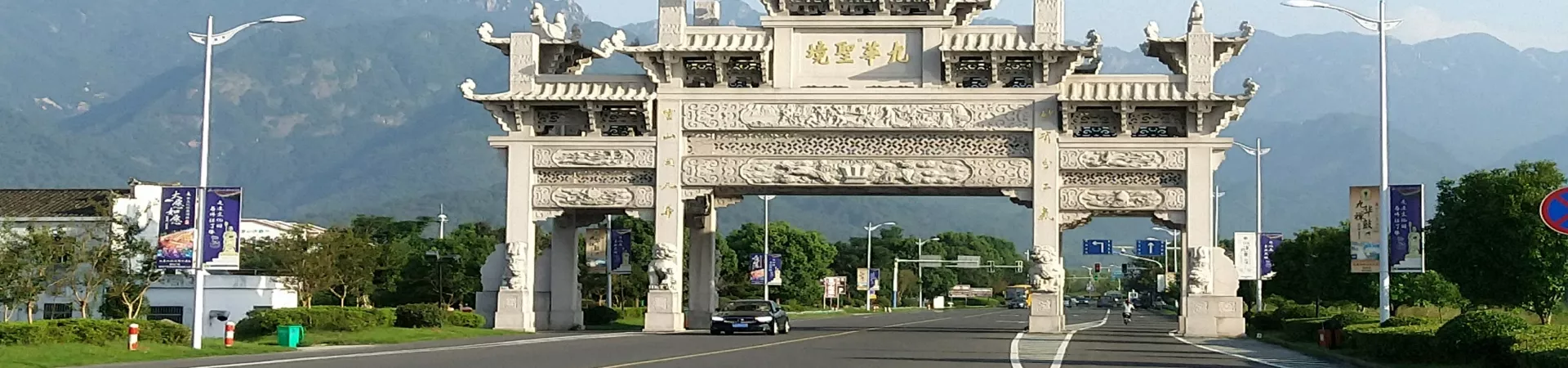
A Visitor's Guide to Jiuhua Mountain: China's Sacred Buddhist Realm
Nestled within Chizhou City in Anhui Province, Jiuhua Mountain stands as one of China's four sacred Buddhist mountains, revered as the bodhimanda of Ksitigarbha Bodhisattva (Dizang Wang). It presents a profound fusion of breathtaking natural geology and deep-rooted spiritual culture. Across its 99 peaks, often shrouded in ethereal mists, ancient temples cling to cliffsides, and serene forests whisper tales of millennia of pilgrimage. This guide synthesizes essential information to help you plan a meaningful visit to this unique destination.
1. Geological & Spiritual Significance
Jiuhua Mountain is not merely a scenic area; it is a living cultural landscape. Geologically, the main range forms a dramatic fault-uplift zone composed primarily of granite. The peripheral areas feature a fold-fault block uplift zone largely made of granodiorite, with some sedimentary rock formations. This complex geology has sculpted the mountain's iconic jagged peaks, deep valleys, and peculiar rock formations.
Spiritually, its history as a Buddhist sanctuary dates back over 1,200 years. It became officially recognized as a sacred site during the Tang Dynasty, following the ascetic practices of the Korean prince-turned-monk, Kim Gyo-gak, believed to be an incarnation of Ksitigarbha. Today, over a hundred temples dot the landscape, housing countless cultural relics, ancient scriptures, and exquisite Buddhist statues. The mountain's atmosphere is one of palpable tranquility, where the rhythms of monastic life harmonize with the natural world.
2. Planning Your Visit: Practical Information
2.1 Location & Orientation
Jiuhua Mountain is situated in the south of Anhui Province. It faces the mighty Yangtze River and Tianzhu Mountain to the northwest, while to the southeast, across the serene Taiping Lake, it shares the regional limelight with the world-famous Huangshan (Yellow Mountain). Its location makes it a perfect complement to a broader Anhui itinerary.
2.2 Opening Hours
The scenic area is open 24 hours a day, throughout the year. However, access to specific temples, cable cars, and internal attractions operate on their own schedules, typically from early morning until late afternoon. It is advisable to check specific points of interest for their exact opening times on the day of your visit.
2.3 Suggested Duration
A comprehensive visit to experience both the cultural highlights and natural beauty requires a minimum of one full day. Many visitors opt for a 2-day/1-night stay to fully immerse themselves in the ambiance, witness a sunrise from one of the peaks, and explore the temples at a leisurely pace. A rushed visit of just 3-4 hours would only allow for a glimpse of the foothill area.
3. Tickets & Fees
Ticket prices vary between the peak season (January 16 - November 14) and the off-peak season (November 15 - January 15 of the following year). All prices are in Chinese Yuan (RMB).
3.1 Scenic Area Entrance Ticket
- Peak Season: Standard adult ticket is 160 RMB.
- Off-Peak Season: Standard adult ticket is 140 RMB.
3.2 Cable Cars & Funiculars
To access the higher peaks and save hiking time, three main cable systems are available:
- Tiantai / Huatai Cableway: Serves the magnificent Tiantai Peak (the highest peak) and the scenic Huatai area.
- Peak Season: Round-trip 160 RMB; One-way 85 RMB.
- Off-Peak Season: Round-trip 120 RMB; One-way 65 RMB.
- Baisui Gong (Longevity Palace) Funicular: Takes visitors to the cliffside Baisui Gong Temple.
- Peak Season: Round-trip 100 RMB; One-way 55 RMB.
- Off-Peak Season: Round-trip 80 RMB; One-way 45 RMB.
3.3 Discount & Exemption Policies
Discounts (typically 50% off the standard ticket) are available for: * Children between 1.2m and 1.4m in height. * Seniors aged 70 and above (with valid ID). * Full-time students (with valid student ID). * Active-duty soldiers (with valid ID).
Free admission is granted to: * Children under 6 years old or under 1.2m in height. * Seniors aged 65 and above (with valid ID). * Active-duty military personnel, disabled veterans, and military retirees (with valid certificates). * Persons with disabilities (with valid disability certificate and ID).
Important Note: The above ticket information is for reference. Prices and policies are subject to change. Always verify the latest details at the official ticket counters or website before your visit.
4. Getting There: Transportation Guide
4.1 From Major Cities
- From Hefei (Provincial Capital): Direct tourist buses run regularly from the Hefei Tourist Bus Station and the Hefei South Gate Transfer Center. The schedule is frequent, but it is recommended to confirm departure times in advance.
- From Chizhou City: The most convenient gateway. Regular direct buses and public buses depart from Chizhou Bus Station to the Jiuhua Mountain tourist service center.
4.2 Internal Transportation
Upon arrival at the main tourist service center (at the mountain's base), all private vehicles must be parked. Visitors must purchase the scenic area entrance ticket and a mandatory internal shuttle bus ticket. These eco-friendly buses connect the service center to the main entry point of the temple cluster at Jiuhua Street. From there, exploration is on foot, or by using the cable cars/funiculars to reach higher elevations.
5. Key Attractions & Experiences
5.1 The Temple Cluster at Jiuhua Street
This ancient street, located on a mountain terrace, is the cultural heart of Jiuhua. It is lined with historic temples, guesthouses, and shops. Key temples here include: * Huacheng Temple: The oldest and most important temple on the mountain, considered the founding temple. * Baisui Gong (Longevity Palace): Famous for housing the mummified body of the monk Wu Xia. Reachable by foot or the Baisui Gong funicular. * Tiantai Temple: Situated near the summit of Tiantai Peak, it offers the most spectacular panoramic views. The climb is strenuous but rewarding, or the Tiantai Cableway can be used.
5.2 The Summit of Tiantai Peak
At 1,342 meters above sea level, Tiantai Peak is the highest point of Jiuhua Mountain. The summit is a spiritual apex, offering breathtaking 360-degree views of the surrounding peaks often floating on a "sea of clouds." The sunrise from here is considered a divine experience.
5.3 The Huatai Scenic Area
Known more for its natural beauty than temples, Huatai features a high-altitude walking trail along a ridge. It is renowned for its spectacular granite formations, ancient pines, and, in spring, a brilliant display of wild azalea flowers.
A journey to Jiuhua Mountain is a journey into a realm where earth meets heaven, and history breathes in the present. Whether you seek spiritual solace, architectural wonder, or majestic natural vistas, this sacred mountain offers a profoundly enriching experience.