Centenary Palace
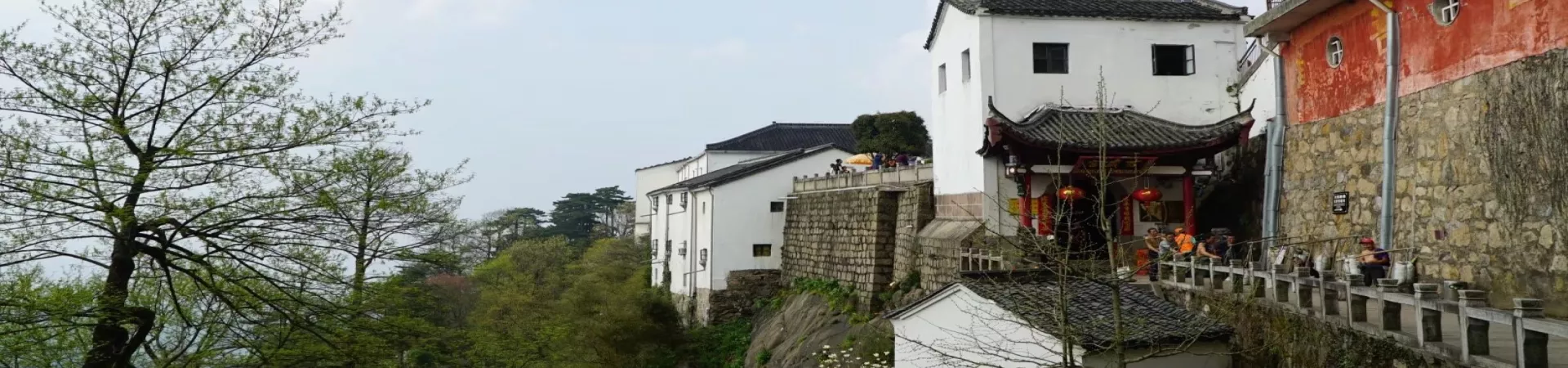
Subtitle: A Journey to the Mountain Sanctuary of Longevity
1. Introduction: The Monastery of the Centenarian Monk
Nestled amidst the serene peaks of Jiuhua Mountain, a sacred Buddhist site in Chizhou, Anhui Province, lies the remarkable Baishui Gong, or the Hundred-Year-Old Palace. This temple complex, a beacon of faith and architectural harmony with nature, offers visitors more than just religious insight; it presents a tangible connection to a profound legend of perseverance and spiritual devotion. Unlike many ancient temples, Baishui Gong's significance is intimately tied to a single, awe-inspiring artifact: the preserved body of a monk who achieved an extraordinary lifespan, making a visit here a unique exploration of history, belief, and natural beauty.
2. Historical Legacy and Spiritual Core
2.1. Origins and the Ming Dynasty Miracle The temple's origins date back to the Ming Dynasty, though the structures visible today primarily reflect architectural styles from the subsequent Qing Dynasty. The heart and soul of Baishui Gong is not merely its age but its sacred occupant. The temple enshrines the roushen, or the incorruptible body, of the Ming Dynasty monk Wuxia. Monk Wuxia's life is the stuff of local legend, characterized by extreme asceticism and deep meditation. His most astonishing feat was reaching the age of 126 before passing into nirvana, an achievement that directly bestowed the temple its name, "Hundred-Year-Old Palace." For pilgrims, his physical remains are not a relic of death but a powerful symbol of spiritual discipline and the triumph of the human spirit over mortal limits.
2.2. A Legend of Protection: The Miraculous Fire The reverence for Monk Wuxia's enduring power is cemented by a miraculous tale from the Qing Dynasty. In the third year of Emperor Xianfeng's reign (1853), a devastating fire threatened to consume the temple. As the flames encroached, legend holds that the seated body of Wuxia suddenly raised its hands in a gesture of prayer. Immediately afterward, a torrential rain descended from the sky, extinguishing the blaze and saving the sanctuary. This event profoundly strengthened the belief among devotees that the monk's spiritual force remains potent and protective. To this day, this story draws countless pilgrims who come to burn incense, offer prayers, and seek blessings, believing in the continued presence and compassion of the centenarian monk.
3. Architectural Harmony and Natural Setting
3.1. A "Mountain City" of Faith The architectural layout of Baishui Gong is as distinctive as its history. Instead of a centralized, sprawling compound, the main buildings are constructed in a long, narrow formation stretching north-south along the mountain cliffside. With their stark white walls and dark grey tiles, these structures, connected by corridors and steps, resemble a segment of an ancient mountain fortress or a miniature "city wall" clinging to the slopes. This design showcases a pragmatic and respectful adaptation to the challenging terrain.
3.2. Nature Intertwined with Sanctity What truly sets the temple apart is its breathtaking integration with the natural rock formations. The builders did not level the mountain but incorporated it. Massive, ancient boulders and rock faces protrude through courtyards, are embraced by hall foundations, and even form parts of interior walls. This creates a powerful aesthetic where human craftsmanship and raw, timeless nature exist in seamless dialogue. The ambiance is one of profound古朴 (gǔpǔ, rustic simplicity) and tranquility, reminding visitors that this is a place where spirituality is rooted in the very essence of the earth.
4. Practical Visitor Information
4.1. Location and Access Baishui Gong is located within the expansive Jiuhua Mountain Scenic Area. The temple sits on a relatively low peak, making it accessible for most visitors. There are two primary ways to reach it from the main service area of Jiuhua Street: * Hiking: A scenic stone-step pathway leads from Jiuhua Street up to the temple. The climb is moderate and typically takes around 30 minutes, offering beautiful views along the way. * Cable Car: For those preferring to conserve energy or enjoy an aerial perspective, the Baishui Gong cable car provides a convenient alternative. The fare is 55 RMB for a one-way trip and 100 RMB for a round trip.
4.2. Tickets and Opening Hours Access to Baishui Gong itself is included in the general admission ticket for the Jiuhua Mountain Scenic Area. The cable car operates at the separate fares mentioned above. The temple is open to visitors daily from 07:00 to 16:30, year-round.
4.3. Recommended Visit Duration A comprehensive visit to Baishui Gong, including time to appreciate the architecture, pay respects at the main hall, and enjoy the panoramic views, typically requires 1 to 3 hours.
4.4. Transportation to Jiuhua Mountain Reaching the Jiuhua Mountain area, the gateway to Baishui Gong, involves several options: * From Chizhou Railway Station: Outside the station, at the Chizhou Central Bus Station, take either the "Chi-Jiu" line direct to Jiuhua Mountain (Kecun) Bus Station (approx. 50 mins), or the "Chi-Qing" line to Wuxi (approx. 60 mins, 6 RMB), then transfer to a shuttle bus to Kecun. A taxi from the station directly to the mountain costs around 100 RMB and takes about an hour. * By Long-Distance Bus: The Jiuhuashan Bus Station in Kecun is a major hub with connections to over 30 cities including Hefei, Nanjing, Shanghai, Hangzhou, and Wuhan. It is also where scenic area entrance tickets are sold. * Internal Scenic Area Transport: * Traffic Control: Note that private vehicles are generally prohibited from driving up the mountain from Friday noon to Sunday afternoon. They must park in the lower Kecun area, where visitors transfer to official scenic area buses. * Scenic Buses: A network of eco-buses connects key points like Kecun, Jiuhua Street, and major trailheads. Tickets are checked and punched for each segment. Important: Routes are not all interconnected for free return; for example, a bus from the Huatai scenic point goes only to Kecun, requiring a new ticket or a re-entry procedure to go back up. * Local Transport: Within Jiuhua Street area, electric or human-pedaled trishaws are available for short trips, costing approximately 3-5 RMB per person.
4.5. Contact Information For specific inquiries, the temple can be contacted at: 0566-2831293.