Wenshu Academy
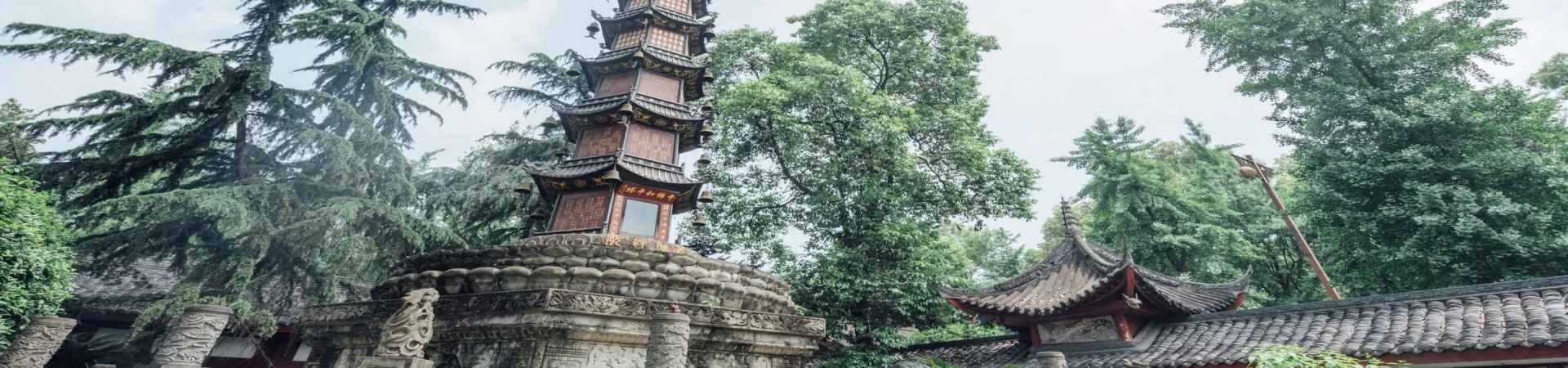
Subtitle: A Sanctuary of Serenity and Culture in the Heart of Chengdu
Introduction Nestled amidst the vibrant, modern expanse of Chengdu, the ancient Wenshu Monastery (Manjushri Monastery) stands as a profound sanctuary of peace, spirituality, and cultural heritage. As one of the most renowned and active Buddhist temples in Western Sichuan, it offers visitors a unique journey through time, art, and contemplative practice. Far more than a historical relic, Wenshu Yuan is a living community where the rhythmic chants of monks, the fragrance of incense, and the quiet appreciation of timeless art create an atmosphere of deep tranquility. A visit here is an essential experience for anyone seeking to understand the spiritual heart and historical layers of Chengdu, seamlessly blending profound religious significance with accessible cultural immersion.
Historical Significance & Architectural Layout Origins and Legacy Wenshu Monastery's history stretches back over a thousand years to its initial construction during the Sui Dynasty (581-618 AD). Despite damage and reconstructions throughout its long history, the present structures primarily date from the Qing Dynasty and later restorations. The monastery is dedicated to Manjushri, the Bodhisattva of Wisdom, making it a central place for Buddhist learning and scripture study. This scholarly tradition is physically embodied in its vast collection, which houses over ten thousand volumes of Buddhist scriptures, texts, and historical documents, some of which are invaluable cultural relics.
The Architectural Ensemble The monastery complex is a classic example of Sichuan-style temple architecture, organized along a central axis with a series of solemn and beautifully decorated halls. Visitors typically progress through a sequence of spiritually significant spaces: * The Heavenly King Hall (Tianwang Dian): The entrance hall, guarded by the statues of the Four Heavenly Kings, symbolizes protection of the Buddhist law. * The Three Great Bodhisattvas Hall (Sanda Shi Dian): This hall is dedicated to the bodhisattvas Manjushri (Wisdom), Samantabhadra (Practice), and Guanyin (Compassion). * The Mahavira Hall (Daxiong Baodian): The grandest and most important hall within the complex, it enshrines the statues of Sakyamuni Buddha and his disciples. Across the entire monastery, more than 300 Buddhist statues in various sizes, crafted from wood, stone, and bronze, reside in these halls, each an object of devotion and artistic merit.
Treasures and Cultural Highlights The Precious Jade Buddha Among the monastery's many artistic treasures, one holds a place of singular reverence and fame: the exquisite Burmese Jade Buddha. This statue is not only a masterpiece of religious art but also a testament to profound devotion. It was brought to Chengdu in the early 20th century by monks of Wenshu Monastery who, demonstrating incredible piety and determination, walked all the way to Burma (Myanmar) to procure it. The statue, carved from a single block of pristine white jade, radiates a serene and majestic presence. Its significance is such that it is celebrated as one of the "Eight Great Views of the Empty Forest" (Kong Lin Ba Guan), a traditional designation for the most remarkable sights within the monastery grounds.
A Living Cultural Experience: Tea and Performance Beyond its architectural and artistic splendor, Wenshu Monastery is cherished as a vibrant cultural space. Within its compound, the Wenshu Monastery Teahouse offers an authentically Chengdu experience. Here, locals and visitors alike gather to sip Sichuan-style "Gaiwan" tea from the iconic three-piece lidded bowls, a ritual that epitomizes the city's leisurely pace. The atmosphere is often enlivened by the sounds of traditional Chinese folk music and singing, performed by local artists. This combination of aromatic tea, soothing melodies, and the shaded, open-air setting provides a perfect opportunity to relax and observe daily life in Chengdu, making the spiritual and the social seamlessly intertwine.
Visitor Information Planning Your Visit * Suggested Duration: A comprehensive visit to explore the halls, appreciate the artifacts, and enjoy some time at the teahouse typically requires 1 to 3 hours. * Admission: Entrance to Wenshu Monastery is free of charge, making it an accessible destination for all. * Operating Hours: The monastery is open to the public daily from 8:00 AM to 5:00 PM. It remains open throughout the year, including weekends and public holidays.
Getting There Wenshu Monastery is conveniently located in the city center and is easily accessible by public transport: * By Metro: The most straightforward option is to take Chengdu Metro Line 1 and alight at Wenshu Yuan Station. Exit the station, and the monastery entrance is within a short walking distance. * By Bus: Several public bus routes stop nearby. You can take bus numbers 42, 75, or 298 and get off at the Wenshu Yuan (Fang) Station. Alternatively, night bus services like 16, 55, or 298 (overnight special) stop at Wanfu Qiao Station, from which it is about a 200-meter walk to the monastery.
Contact For any specific inquiries, you may contact the monastery administration at 028-86930623 or 028-86662375.