Huanglongxi Ancient Town
Subtitle: A Journey Through Time in Sichuan's Ancient Water Town
Introduction: The Living Heritage of Huanglongxi
Nestled approximately 50 kilometers southeast of Chengdu, the bustling capital of Sichuan province, lies Huanglongxi Ancient Town—a serene portal to a slower, more poetic chapter of Chinese history. More than just a collection of old buildings, Huanglongxi is a vibrant, living community where over 1,700 years of history whisper from its cobblestone lanes, ancient banyan trees, and murmuring waters. Recognized nationally as the "Hometown of Chinese Folk Art (Fire Dragon)" by the Ministry of Culture and honored as a National-Level Environmentally Beautiful Town, Huanglongxi masterfully balances cultural preservation with natural charm. It offers visitors not a static museum, but an immersive experience of Sichuan's rich architectural, artistic, and culinary traditions, all set within the enchanting framework of an ancient waterside settlement.
1. The Architectural and Natural Tapestry
1.1. A Symphony of Stone, Wood, and Greenery The core allure of Huanglongxi lies in its seamless fusion of human craftsmanship and nature. The town's layout is dictated by its waterways, with the Huanglong River meandering through its heart, crossed by classic stone-arch bridges. The main streets—Hongxing Street, Zhenlong Street, and Chaoyang Street—are paved with worn, smooth bluestone slabs that gleam after a rain, leading explorers on a journey back in time.
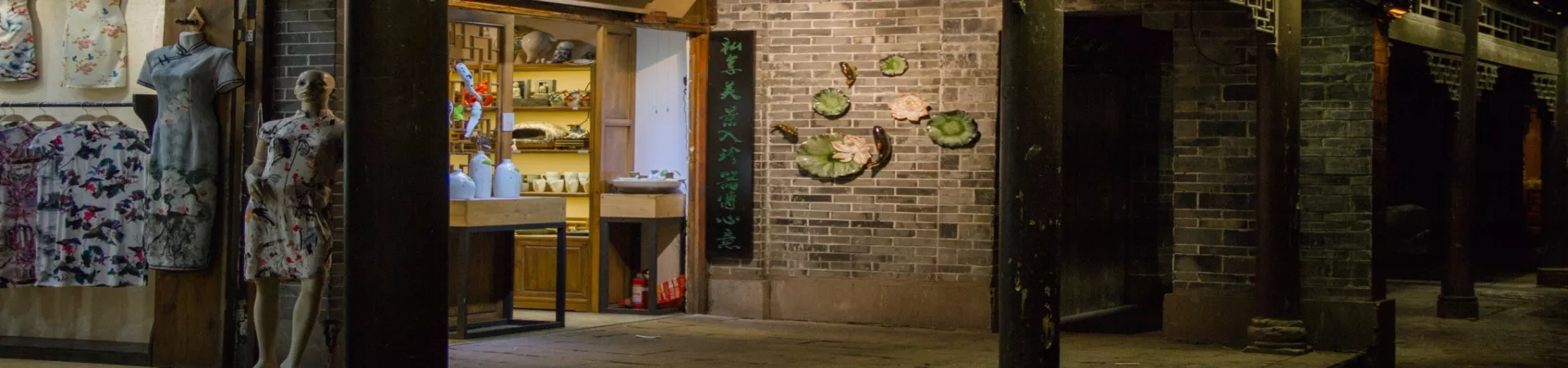
1.2. Ancient Structures Standing Guard Flanking these ancient lanes is a remarkably well-preserved ensemble of Ming (1368-1644) and Qing (1644-1912) dynasty architecture. Intricately carved ancient memorial archways mark entrances and celebrate historical virtues. Time-honored temples, such as the Zhenlong Temple and the Ancient Temple of the Three Prefectures, offer quiet sanctuaries of incense and history. Most captivating are the traditional wooden residential buildings with their grey-tiled roofs, upturned eaves, and colonnaded walkways that line the riverside. These structures, often built on stilts over the water, showcase the ingenious adaptation to the aquatic environment.
1.3. The Guardian Banyans Integral to this scene are the towering ancient banyan trees, some hundreds of years old. Their massive, gnarled roots embrace the stone banks, and their vast canopies shade plazas and teahouses. These trees are not mere scenery; they are silent witnesses to the town's long narrative and central gathering points for community life, symbolizing the enduring spirit of Huanglongxi.
2. The Pulse of Culture: The Fire Dragon Dance
Beyond its physical beauty, Huanglongxi is culturally defined by its fiery soul—the legendary Fire Dragon Dance. This intangible cultural heritage, which earned the town its prestigious title, is a spectacular performance rooted in ancient prayers for rain and good fortune. On festival nights, especially during the Spring Festival and Lantern Festival, the streets come alive as a team of performers manipulates a long, dragon-shaped frame studded with burning incense sticks. The dragon weaves and dances through clouds of smoke and the sparkle of fireworks, reflected in the dark river waters—a truly mesmerizing spectacle of light, movement, and primal energy. Visitors are often enthralled by the power and precision of this living tradition.
3. A Culinary Stroll Through the Ancient Alleys
The sensory experience of Huanglongxi is incomplete without indulging in its local flavors. The town is a haven for food lovers, with numerous restaurants and snack stalls tucked within its ancient buildings.
3.1. Must-Try Local Delicacies * Yigengmian (One Root Noodle): This is Huanglongxi's signature dish. A skilled chef stretches a single piece of dough into one continuous, incredibly long noodle that is served in a flavorful broth, often with a spicy meat topping. The preparation itself is a performance. * Douchi (Fermented Black Beans): A staple Sichuanese condiment, locally produced douchi here is renowned for its rich, savory, and slightly pungent aroma, used to enhance countless dishes. * Zhimagao (Sesame Seed Cake): A perfect snack for strolling, these sweet, fragrant cakes are made with ground sesame seeds and glutinous rice, offering a chewy and nutty treat.
3.2. The Simplicity of Farmhouse Fare For a more substantial meal, seeking out a riverside农家饭 (nóngjiā fàn, farmhouse meal) is highly recommended. These meals feature fresh, locally sourced ingredients like river fish, bamboo shoots, tofu, and seasonal vegetables, cooked in classic Sichuanese styles—often featuring the region's famous mala (numbing and spicy) flavors, but also offering milder, homestyle options.
4. Practical Information for Your Visit
4.1. Getting There The most straightforward way from Chengdu is by public bus. Visitors can take Bus S101 or S86 from the city and alight at the Xiajiadu Bus Station. From there, it is a short and pleasant walk of approximately 274 meters to the ancient town's entrance.
4.2. Admission and Hours Huanglongxi operates on a free admission policy for entry into the ancient town area, making it an accessible destination. It is open 24 hours a day, every day of the year. This allows for flexibility, whether you prefer the lively atmosphere of daylight or the mystique of the ancient streets softly lit by lanterns at night. Note that individual temples or attractions within the town may have separate, modest fees.
4.3. Suggested Duration To fully appreciate the town's atmosphere, explore its side alleys, enjoy a leisurely meal, and perhaps a cup of tea by the river, a visit of 3 hours or more is recommended. It is an ideal destination for a half-day or full-day excursion from Chengdu.
4.4. Contact For the most current information, especially regarding specific cultural event schedules like the Fire Dragon Dance, you may contact the town management at 028-62157666 or 028-62158555.
Information last updated: 2023-06-30. Credits and thanks to contributors including Ma Fengwo users and "进击的香蕉" for editorial input.