The Eighth Route Army Taihang Memorial Hall
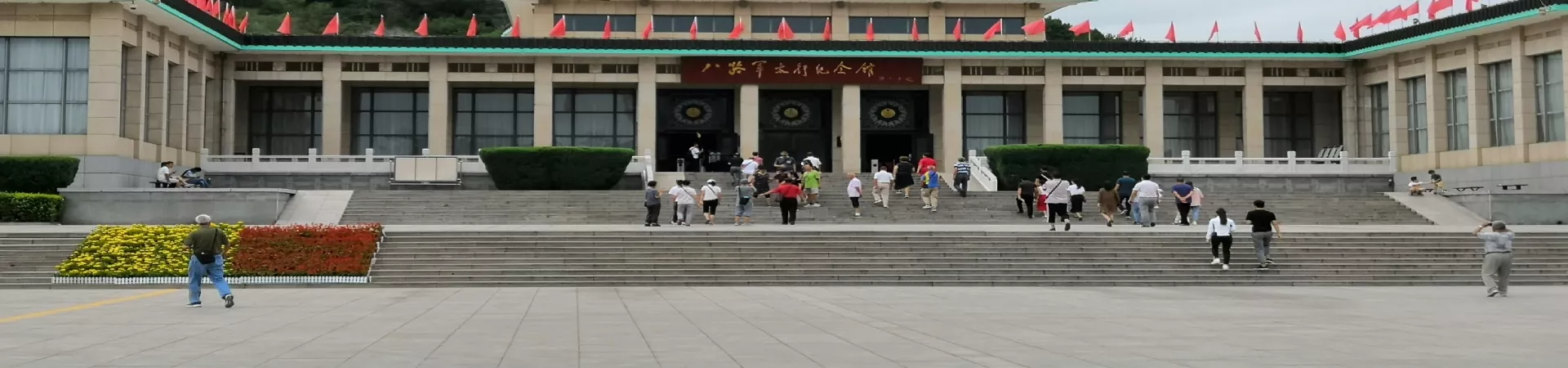
The Chronicles of Valor: The Taihang Mountain Memorial Hall of the Eighth Route Army in Changzhi
Situated in the county town of Wuxiang, the Taihang Mountain Memorial Hall stands as a testament to the heroic legacy of the Eighth Route Army during the arduous years of the Anti-Japanese War. Over 40 years ago, after eight years of bloodshed, the Chinese people achieved a resounding victory. The people of the Taihang Revolutionary Base Area, enduring hardships side by side with the Eighth Route Army, made significant contributions to this triumph.
The Taihang Mountain Memorial Hall serves as a repository of invaluable historical materials and revolutionary artifacts. It chronicles the glorious achievements of the Eighth Route Army and the people of Taihang during the eight years of relentless struggle. The hall showcases the original appearance of the Taihang resistance against the Japanese invaders, vividly portraying the exemplary figures of revolutionary leaders such as Zhu De, Peng Dehuai, Zuo Quan, Liu Bocheng, and Deng Xiaoping.
Architecturally, the memorial hall adopts a cruciform layout. The two flanking wings feature modern flat-roofed structures, while the central hall exhibits a pointed roof reminiscent of traditional architecture. The exhibition space employs profound lyricism, insightful philosophical contemplation, and dignified humanistic scenes. This is the refined essence of the renovated "Taihang Mountain Memorial Hall."
In 2005, commemorating the 60th anniversary of the victory in the Anti-Japanese War, the memorial hall underwent extensive expansion and transformation. The main exhibition hall, "Chronicles of the Eighth Route Army's Anti-Japanese War," ingeniously incorporates modern techniques such as sound, light, and electricity. Through a plethora of photographs, beautifully designed charts, and precious artifacts, it vividly recreates the entire epic of the Eighth Route Army's North China resistance.
Upon entering the memorial hall's prelude hall, visitors are greeted by the majestic melody of the Anti-Japanese War song "On Taihang Mountain." The front wall displays relief carvings representing the mighty Yellow River, the towering Taihang Mountains, and the extensive Great Wall. These form the backdrop for the striking red characters proclaiming, "The Spirit of the Eighth Route Shines Forever."
At the center of the hall, eight square bronze pillars stand tall, engraved with pivotal historical moments of the Eighth Route Army's eight years of heroic struggle. These pillars depict the arduous history of the Eighth Route Army's relentless fight across the vast expanse of North China, symbolizing the Chinese Communist Party as the backbone leading the nationwide resistance.
Notably, amid a cluster of flowers and greenery, a monumental combination of Hanbaiyu (Chinese white jade) forms an epitaph. At its top, a bronze design featuring the Eighth Route Army cap and an olive branch signifies the valiant Eighth Route Army fighting for peace. On either side of the monument, intricate patterns composed of bayonets, rifles, large knives, and landmines illustrate the challenging history of China's eight-year resistance.
The first exhibition hall, "Japan's Full-scale Invasion, Eighth Route Army Sets Out to Resist," narrates the experiences of the Eighth Route Army as they transitioned from the Chinese Workers' and Peasants' Red Army to the National Revolutionary Army's Eighth Route Army. They crossed the Yellow River and embarked on the front lines of North China, bravely shouldering the historic responsibility of national independence and liberation.
The sculpture "Leader Mao Zedong in the Anti-Japanese War" captures the towering figure of Comrade Mao Zedong against the backdrop of the majestic Baota Mountain, exuding his genuine concern for the nation and its people. The Battle of Pingxingguan, the first major victory after the Eighth Route Army's deployment to North China, is portrayed using the Qiaogou Battlefield as a prototype. Utilizing a combination of landscape and semi-painted images, the exhibition employs modern technology to showcase dynamic images, multimedia-controlled gunfire, and changing skies, vividly reenacting the true essence of the Pingxingguan battle.
The second exhibition hall, "Conducting Guerrilla Warfare in Enemy-Occupied Areas, Creating Anti-Japanese Base Areas," reveals the transition from conventional warfare to guerrilla warfare as the dominant strategy. The three main Eighth Route Army divisions implemented the strategic plan of sustaining prolonged resistance and initiating independent mountain guerrilla warfare. Base areas such as Jin-Cha-Ji, Jinxi Southwest, Jinxi Northwest, Daqing Mountain, and Jin-Ji-Yu were successively established in the vast hinterland of North China.
The memorial hall is a national key museum and a national patriotic education demonstration base. It is the only large-scale military-themed memorial hall in China that comprehensively recounts the splendid course of the Eighth Route Army's eight-year war of resistance. This iconic destination, a classic in China's red tourism, stands as a powerful window into the vigorous spirit of Taihang, reflecting the critical role played by the Chinese Communist Party and the Eighth Route Army during the Anti-Japanese War.
In conclusion, the Taihang Mountain Memorial Hall stands as an embodiment of courage, sacrifice, and the unwavering spirit of the Eighth Route Army and the people of Taihang. It is a living testament to China's historical journey