Hunan First Normal University (Old Campus)
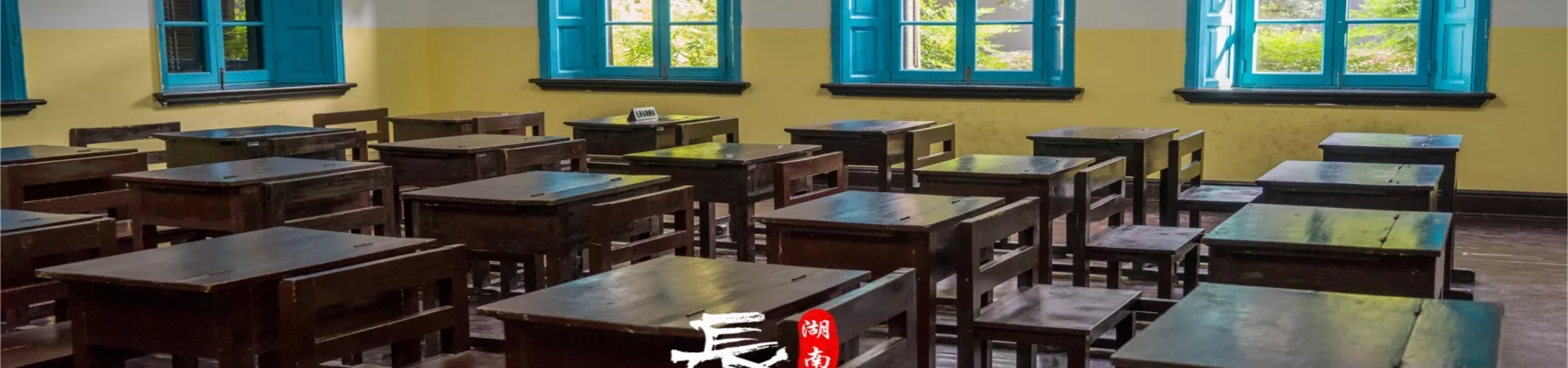
Subtitle: A Journey Through History: Exploring the Cradle of a Revolution at Hunan First Normal University (Old Campus)
Introduction: Where History and Education Converge
Nestled in the Yuelu District of Changsha, Hunan Province, the Old Campus of Hunan First Normal University stands as a serene yet profoundly significant site. More than just an academic institution, it is a living museum, a hallowed ground where modern Chinese history was tangibly shaped. The campus breathes an air of quiet reverence, offering visitors a unique opportunity to walk the same paths as one of the 20th century's most influential figures. While the architectural landscape today is a restoration, the spirit of a pivotal era—where youthful idealism met scholarly pursuit—remains palpably etched into its courtyards and classrooms. A visit here is not merely a tourist stop; it is an immersive lesson in the transformative power of education and the early foundations of revolutionary thought.
The Legacy of "Millennial Academy, Century-Old Normal School"
The university proudly carries the honorific title of "Millennial Academy, Century-Old Normal School," a testament to its deep roots in the region's long scholarly tradition and its specific century-long role in teacher education. This dual heritage forms the core of its identity.
- A Forge for Educators: As Hunan's first normal school (a historical term for a teacher-training college), its primary mission was to cultivate the educators who would shape future generations. This legacy of pedagogical excellence continues to this day, notably recognized through its selection as the first cooperative university in Hunan for the "Jack Ma Rural Normal Students Plan," aimed at nurturing teachers for rural communities.
- The Crucible of a Leader: The campus's global significance, however, is inextricably linked to the years from 1913 to 1922, when a young Mao Zedong studied and later worked here as a teacher. This period was formative. The intellectual environment, library resources, and discussions with peers and mentors here profoundly influenced his political philosophy and worldview. It was within these grounds that the theoretical and practical seeds of his future revolutionary endeavors were sown.
A Campus Reborn: Architecture and Artifacts
The physical site you explore today tells a story of destruction and symbolic rebirth. During the devastating "Wenxi Great Fire" of 1938, a catastrophic event in Changsha's history, nearly all the original campus buildings were destroyed.
- The Sole Original Artifact: Amidst the reconstructed structures, one authentic relic survives—a simple water well. This well holds a poignant story: it was here that the young Mao Zedong would draw cold water to bathe after his physical exercises, a practice he believed strengthened both body and will. This humble well serves as a powerful, tangible connection to the daily life of the historical figure, standing as a silent witness to his formative routines.
- Reconstructed Heritage: The current buildings, including the classic lecture halls, dormitories, and the stately main building with its distinct Sino-Western architectural style, are careful reconstructions. They have been faithfully restored based on historical records and photographs to reflect the campus's early 20th-century appearance. Walking through the arched gateways and colonnaded corridors, visitors are effectively transported back to the scholarly atmosphere of the 1910s and 1920s.
Practical Information for Your Visit
To fully appreciate the site, planning your visit with the following details in mind is recommended.
1. Location & Transportation The Old Campus is situated at 324 Hongqi Road, Yuelu District, Changsha City. * By Public Bus: The most convenient way to reach the campus is by taking public bus routes 122, 139, 160, 901, or 908. Alight at the "First Normal School (Di Yi Shi Fan)" bus stop, and the campus entrance is within short walking distance.
2. Admission and Opening Hours * Admission Fee: There is no entrance fee. The site is open to the public free of charge. * Opening Hours: The campus grounds are generally accessible 24 hours a day, every day of the week. However, access to specific indoor exhibition halls or museums within the campus may follow standard operating hours (typically 9:00 AM to 5:00 PM). It is advisable to check for any updates on indoor access upon arrival.
3. Suggested Duration & Experience * Time Allocation: Plan to spend approximately 1 to 3 hours for a comprehensive visit. This allows sufficient time to stroll through the serene courtyards, explore the key historical buildings and exhibition rooms (which often feature photographs, documents, and recreations of Mao's dormitory and classroom), and contemplate at significant spots like the historic well. * The Visitor Experience: The atmosphere is one of quiet reflection. Informational plaques (often in both Chinese and English) provide context. The experience is less about grand spectacle and more about connecting with history in a very personal, spatial way. It is a place to ponder the weight of history that permeates its restored walls and peaceful gardens.
Information last verified: February 2, 2023.