Tianjing Palace
Subtitle: The Birthplace of Laozi and a Monument to Taoist Architectural Grandeur
1. Introduction to Tianjing Palace
Nestled in Zhengdian Village, Guobei Subdistrict, Guoyang County, in the heart of Anhui Province, lies Tianjing Palace (天静宫), a site of profound historical and spiritual significance. This hallowed ground is revered as the birthplace of Laozi (also known as Lao Tzu), the great ancient Chinese philosopher, thinker, and the foundational patriarch of Taoism. According to historical records and local tradition, it was here that this seminal figure, author of the timeless classic Daodejing (Tao Te Ching), entered the world. The modern Tianjing Palace complex, a magnificent reconstruction undertaken primarily through donations from overseas Taoist devotees, stands on the original historic site. It is not merely a temple but a living memorial to Laozi's legacy and a monumental achievement in contemporary religious architecture, seamlessly blending historical reverence with grand scale and serene aesthetics.
2. Architectural Layout and Grandeur
The palace complex is a masterfully planned ensemble that embodies the principles of balance, harmony, and hierarchical order central to Taoist thought. The entire layout is organized along a central axis, flanked by eastern and western subsidiary routes, creating a symmetrical and expansive compound that guides visitors on a spiritual journey.
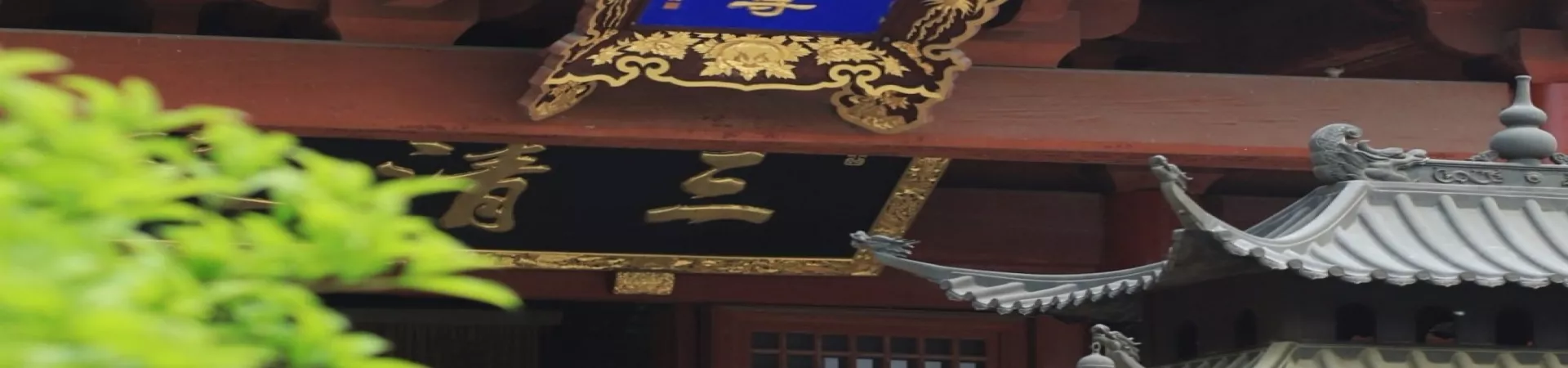
2.1. The Central Axis: The Heart of the Complex The central axis, stretching an impressive 615 meters, forms the spiritual backbone of Tianjing Palace. The progression begins with the Shanmen (Mountain Gate), the formal entrance. Visitors then cross the Huixian Bridge (Meeting Immortals Bridge), symbolizing the transition from the mundane to the sacred. This leads to the Lingguan Hall, dedicated to the guardian deity Wang Lingguan, who protects the temple precincts. The axis culminates at the core of the complex: the awe-inspiring Laojun Hall and the Sanqing Hall.
2.2. The Eastern and Western Routes: Complementary Pavilions Flanking the central axis, the eastern and western routes house a series of halls dedicated to important deities and figures in the Taoist pantheon and Chinese folk religion, serving both devotional and communal purposes.
The Eastern Route includes the Cihang Hall (dedicated to the Goddess of Mercy), Lüzu Hall (dedicated to Lü Dongbin, one of the Eight Immortals), Tianshi Hall (dedicated to the Celestial Masters), a Guest Reception Hall (Ketan), the "Origin of the Tao" Exhibition Room (part of the Laozi Memorial), and living quarters for male Taoist priests (Qiandao She).
The Western Route features the Caishen Hall (dedicated to the God of Wealth), Yuanchen Hall (dedicated to the deities of the sixty-year cycle), Laozu Hall, Chongyang Hall (dedicated to Wang Chongyang, founder of the Quanzhen Taoist school), a Shi'en Tang (Hall of Bestowing Grace), the "Beginning of Virtue" Exhibition Room (the complementary part of the Laozi Memorial), and living quarters for female Taoist priests (Kundao She).
2.3. Architectural Style The architectural design consciously draws from the majestic and robust styles of the Tang and Song dynasties, periods considered golden ages of Chinese culture and Taoist development. Elements from the Yuan and Ming dynasties are also incorporated. The extensive use of wood, sweeping upturned eaves, intricate bracketing systems (dougong), and a color palette dominated by vermilion, white, and the natural grey of stone, collectively create an atmosphere that is simultaneously grand, solemn, tranquil, and refined. The complex stretches 90 meters in total width, offering a sense of immense space and peaceful order.
3. The Crown Jewel: Laojun Hall
The undisputed centerpiece of Tianjing Palace is the Laojun Hall (Hall of the Supreme Lord Lao), a structure that holds the distinguished title of "the foremost hall among all Taoist temples in China."
3.1. Scale and Specifications Reconstructed according to strict Song Dynasty architectural regulations, its dimensions are staggering. The hall itself measures 47 meters in length (east-west), 28 meters in depth (north-south), and rises to a height of 23.75 meters. It stands atop a lofty 2-meter-high ceremonial platform (Chongtai), further elevating its majesty. The roof is a magnificent nine-ridged, multi-eaved design, a feature typically reserved for structures of the highest importance.
3.2. The Sacred Interior: The Bronze Triad Within the vast interior of Laojun Hall resides a breathtaking trio of giant bronze statues. The central figure is Laozi himself, depicted with the serene wisdom of a sage. Flanking him are Yin Xi, the legendary guardian of the Hangu Pass who compelled Laozi to write the Daodejing, and Donghua Emperor, a high deity in Taoist mythology. The statue of Laozi is 5.5 meters tall and weighs 6 tons, making it the largest bronze statue of Laozi in China. These monumental figures, cast in solemn bronze, radiate a powerful presence, inspiring reverence and contemplation in all who stand before them.
4. Practical Information for Visitors
4.1. Location and Contact Tianjing Palace is located in Zhengdian Village, Guobei Subdistrict, Guoyang County, Bozhou City, Anhui Province, China. For inquiries, you may contact: +86-558-7308259.
4.2. Opening Hours The palace is open to the public daily throughout the year. Operating Hours: 08:00 - 18:00 Last Admission Time: 17:30 (These hours apply from January 1st to December 31st, Monday through Sunday).
4.3. Special Admission Note As a gesture of profound gratitude for their service, medical personnel who aided in the relief efforts in Hubei province during the COVID-19 pandemic are granted lifetime free admission upon presentation of valid relevant certification.