Cao Cao's Road of Transporting Soldiers
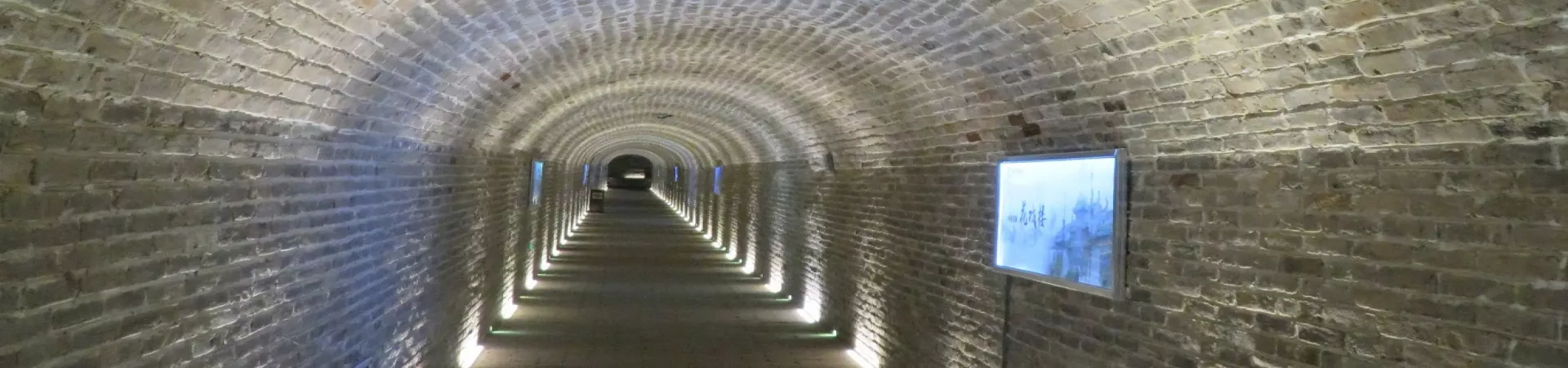
Subtitle: Exploring the Depths of History: A Guide to Cao Cao's Underground Troop Transport Path in Bozhou
1. Introduction: A Hidden Military Marvel Beneath the Ancient City
Nestled beneath the time-worn streets of Bozhou's old town in Anhui Province lies a remarkable feat of ancient military engineering: Cao Cao's Underground Troop Transport Path, also known as Cao Cao's Hidden Troop Tunnel. Centered around the historic Dayushou intersection, this sprawling network of subterranean passages once stretched outwards in multiple directions, reaching beyond the city walls. It stands today not merely as a relic but as China's oldest, largest, and most comprehensively preserved underground military facility from antiquity. More than a tunnel, it is a labyrinthine testament to the strategic genius of the Three Kingdoms period, offering visitors a unique, immersive journey into a hidden layer of Chinese history.
2. Historical Significance and Architectural Grandeur
2.1. A Strategic Masterpiece of the Three Kingdoms Era Constructed under the orders of the famed warlord and strategist Cao Cao (155-220 AD), this underground complex served a critical purpose during a tumultuous era of conflict. Its primary function was to allow the rapid, covert movement of troops and supplies within the city and to facilitate surprising maneuvers against besieging forces. The ability to shuttle soldiers unseen beneath the enemy's feet provided an immense tactical advantage, contributing to Cao Cao's military successes and the consolidation of his power.
2.2. Engineering and Structural Complexity The sheer scale and sophistication of the transport path are what elevate it to a status often called the "Underground Great Wall." Excavations have revealed over 8,000 meters of tunnels, with experts believing this represents only a portion of the original network.
- Layout and Design: The passages are not a single corridor but a complex, grid-like web. They intersect and branch out, creating a maze that could confuse intruders while allowing efficient movement for those who knew the layout.
- Multi-Level Construction: The facility features multiple levels, demonstrating advanced planning for different functions, including troop transit, command posts, and storage. This three-dimensional distribution adds to its complexity.
- Structural Features: Visitors can observe ingenious construction techniques adapted for underground warfare. The tunnels include features like trap doors, baffle walls (to muffle sound and impede progress), hidden niches, and ventilation shafts, showcasing a deep understanding of practical military needs in a confined space.
The site's value is considered by historians to surpass that of many above-ground ancient city ruins, preserving an unparalleled blueprint of ancient Chinese military architecture and urban defense strategy.
3. The Visitor Experience: From Tower to Tunnel
The modern protected site comprises two main components for exploration:
3.1. The Qiaowang Tower (Chao Watchtower) This reconstructed tower serves as the main entrance and visitor center. It is built upon the historical site of a watchtower used by Cao Cao for military review and observation. The tower offers an introductory perspective, housing exhibits on the Three Kingdoms history, Cao Cao's life, and the construction of the tunnels. It provides the essential context before descending into the depths below.
3.2. The Ancient Tunnel Network Descending into the restored and safely reinforced sections of the tunnel is the core of the visit. Walking through the cool, dimly lit passages—some narrow and requiring a stoop, others surprisingly spacious—visitors can physically sense the history.
- Atmosphere: The air is cool and still, with a palpable sense of secrecy. Carefully placed lighting highlights the ancient brickwork and architectural details.
- Notable Sights: Along the route, replicas of period weapons, pottery oil lamps, and lifelike soldier figurines in strategic positions help animate the tunnel's original purpose. Key structural elements like the baffle walls and ventilation systems are clearly marked and explained.
- Immersive Impact: The experience is profoundly immersive, allowing one to imagine the hurried footsteps of soldiers, the hushed commands of officers, and the tension of preparing for a surprise attack, all while being completely hidden from the world above.
4. Practical Information for Planning Your Visit
4.1. Tickets and Operating Hours * Ticket Price: The standard admission fee is 45 RMB per person. * Opening Hours: The site is open daily from 09:00 to 17:30. The last admission is at 17:00. These hours are generally consistent throughout the year (January 1st to December 31st, Monday through Sunday). It is always advisable to confirm timings locally before your visit, especially during public holidays.
4.2. Duration and Contact Information * Suggested Visit Duration: To fully appreciate the exhibits in the tower and explore the underground paths at a comfortable pace, allocating approximately 1 to 3 hours is recommended. * Contact: For the latest information or specific inquiries, you can contact the site administration at +86 558 555 1109.
4.3. Recognition and Accessibility The cultural and historical importance of Cao Cao's Underground Troop Transport Path has been formally recognized on a national level. It was listed as a National Key Cultural Relics Protection Unit in 2001. Furthermore, the entire Cao Cao Underground Troop Transport Path Scenic Area was designated as a National AAAA-level Tourist Attraction in 2016, certifying its standards for preservation, management, and visitor services. The site is developed for tourism, with walkways, lighting, and signage in place, making the underground sections accessible to most visitors, though some areas may be challenging for those with significant mobility constraints.