Manor of Wei Family
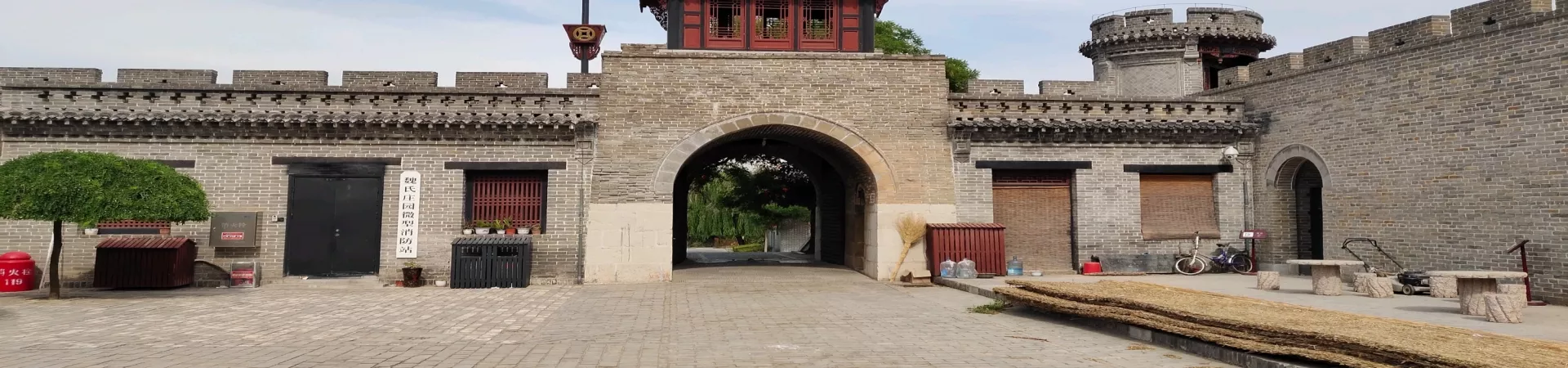
Subtitle: A Journey Through Time: Unveiling the Grandeur of China's Largest Preserved Qing Dynasty Fortified Manor
Introduction: A Fortress of History and Refinement
Nestled within the quiet village of Weiji, part of Huimin County's Weiji Town, approximately 30 kilometers southeast of the county seat along the G220 national highway, lies an architectural marvel that transcends the typical concept of a family home. The Weishi Manor (魏氏庄园) stands as a monumental testament to the wealth, social standing, and strategic acumen of the late Qing Dynasty gentry. Recognized not merely as a large residence but as the largest and most completely preserved castle-style vernacular dwelling ever discovered in China from the Qing era, it offers visitors a rare, tangible portal into a pivotal period of Chinese history. Constructed between 1890 and 1893 (the 16th to 19th years of the Guangxu Emperor's reign), this private estate was built for Wei Zhaoqing, a prominent official who served as the Provincial Administration Commissioner's Secretary (布政司理问) and Assistant Prefect (同知) of the Wuding Prefecture. Its survival through the tumultuous waves of 20th-century warfare and political movements is a story in itself, culminating in its well-deserved designation as a National Key Cultural Relic Protection Unit in 1996. A visit here is more than a sightseeing trip; it is an immersive exploration of defensive architecture, artistic craftsmanship, and the complex social narratives of imperial China's final chapter.
Architectural Synthesis: Where Grand Manor Meets Defensive Citadel
The most striking feature of Weishi Manor is its unique architectural identity, a bold fusion of luxurious residential comfort with the imposing, pragmatic design of a military fortress.
1. The Defensive Framework: Walls, Moats, and Battlements The entire complex is encircled by a formidable, high defensive wall, punctuated by robust watchtowers at its corners. This primary enclosure immediately distinguishes it from other contemporary aristocratic homes. Originally, a wide moat added an additional layer of security, a feature reminiscent of castle fortifications worldwide. The main gatehouse itself is a heavily fortified structure, designed to control access and withstand assault. These elements collectively reflect the pervasive sense of instability and local unrest that characterized the late Qing period, prompting even the wealthiest families to prioritize safety within their own homes.
2. Spatial Layout and Residential Philosophy Within the protective shell, the manor follows the sophisticated and symmetrical siheyuan (courtyard house) layout typical of northern Chinese aristocratic dwellings. A series of interconnected courtyards, aligned along a central axis, organize the living spaces. These include the ceremonial halls for receiving guests and hosting family rituals, the more intimate private quarters for family members, study rooms, and operational areas for servants and daily household management. The layout meticulously adheres to traditional Confucian principles of hierarchy, privacy, and harmony between humans and their built environment.
3. Artistic Embellishment and Craftsmanship Despite its martial exterior, the interior spaces and courtyard facades are adorned with exquisite artistic details. Intricate wood carvings, elegant lattice windows, decorative brickwork, and symbolic stone bas-reliefs abound. Motifs often feature bats (symbolizing happiness), peaches (longevity), and other auspicious symbols, expressing the family's hopes for fortune, health, and prosperity. The craftsmanship showcases the high level of skill possessed by artisans of the era and softens the austere defensive impression with layers of cultural refinement.
The Builder and His Era: Wei Zhaoqing in a Changing World
Understanding the manor requires understanding the man who built it. Wei Zhaoqing was a successful scholar-official, a product of the imperial examination system who rose to substantial regional authority. His positions involved judicial and administrative duties, indicating a family of significant education and influence. The resources required to undertake a three-year construction project of this scale speak volumes about the family's accumulated wealth, likely derived from official salaries, land ownership, and possibly commercial ventures.
The late 19th century was a period of severe decline for the Qing Dynasty, marked by internal rebellions like the Taiping and Nian uprisings, and increasing pressure from foreign powers. The decision to build such a defensible home was a direct response to this climate of insecurity. Thus, the manor physically embodies the paradox of the era: the persistence of traditional Chinese elite culture, architectural forms, and social structures, now forced to adapt and fortify itself against a world in chaos.
Practical Information for the Visitor
To facilitate your visit, please note the following essential details:
- Location: Weiji Village, Weiji Town, Huimin County, Binzhou City, Shandong Province. It is situated south of the G220 National Highway.
- Transportation: The site is most conveniently accessed by private vehicle or taxi from Huimin County or Binzhou city. Public bus services may also be available from Huimin County to Weiji Town.
- Admission Fees:
- Standard Ticket: 50 RMB (applicable throughout the year).
- Operating Hours:
- The manor is open daily from 09:00 to 17:00.
- Contact: For any specific inquiries, you may contact the site at +86-543-5658277.
Experiencing the Manor: A Suggested Pathway for Exploration
To fully appreciate the site, consider the following approach during your visit. Begin by walking the perimeter outside the main walls to grasp its sheer scale and defensive posture. Enter through the towering main gate, consciously transitioning from the public realm into the private, fortified world of the Wei family. Proceed sequentially through the courtyards along the central axis, noting the change in function from formal to private spaces. Pay close attention to the decorative details on eaves, doorframes, and windows in each courtyard, which contrast with the plain, thick exterior walls. Make sure to climb to one of the corner watchtowers if accessible, as it offers a commanding view of the entire complex layout and the surrounding village, highlighting the manor's dominant presence in the landscape. Finally, take a moment in a quieter courtyard to reflect on the daily life that once animated these spaces—the family gatherings, the scholarly pursuits, and the constant, watchful eye kept from the battlements on the world outside.