Nankan Grottoes
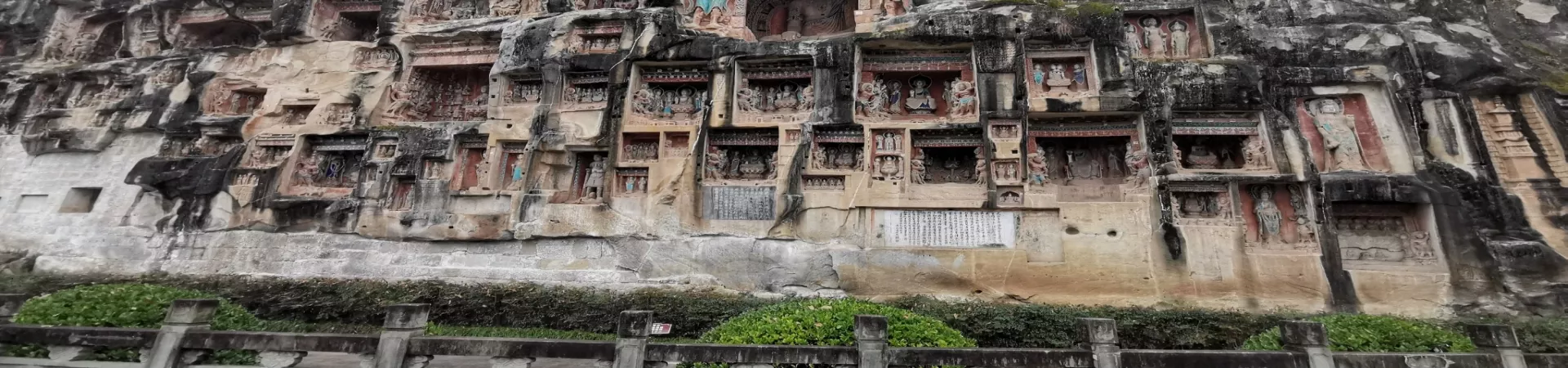
Subtitle: A Journey Through Time: Exploring the Ancient Buddhist Art of Bazhong's Southern Grottoes
1. Introduction: The Cliffside Sanctuary
Nestled on the verdant slopes of Mount Guanyin, overlooking the modern city of Bazhong in Sichuan Province, lies the Nankan Grottoes (Southern Grottoes), a serene and monumental testament to ancient Chinese Buddhist devotion. Unlike the more famous cave complexes at Dunhuang or Longmen, Nankan offers an intimate and profoundly atmospheric encounter with religious art, where history is etched directly into the face of a crimson sandstone cliff. This extensive site, comprising over 170 niches and 2,700 individual statues carved over centuries, serves not merely as a tourist attraction but as a silent library of faith, artistry, and the cultural exchanges that flourished along ancient Sichuan's trade routes. A visit here is a pilgrimage into the artistic and spiritual zenith of the Tang Dynasty and beyond, inviting contemplation amidst the quiet whispers of the past.
2. Historical Context and Development
2.1. Origins in the Sui and Flourishing in the Tang The genesis of the Nankan Grottoes is traced back to the Sui Dynasty (581-618 AD), a period of reunification that fostered the initial spread of Buddhist cave-chiseling traditions into the Bazhong region. However, it was during the subsequent Tang Dynasty (618-907 AD), particularly in the prosperous and culturally vibrant High Tang period (8th century), that the site experienced its golden age. The stability, wealth, and intense Buddhist piety of the era catalyzed a surge in construction. Local officials, wealthy patrons, monastic communities, and ordinary devotees pooled resources to commission caves and statues, seeking spiritual merit and eternal blessings. The artistic styles perfected in the imperial capitals of Chang'an and Luoyang gradually filtered into this remote area, making Nankan a brilliant regional reflection of the empire's supreme cultural confidence.
2.2. Later Additions and Preservation Following the decline of the Tang, activity continued sporadically through the Five Dynasties, Song, and even into the Qing Dynasty, though on a much smaller scale. These later additions provide a fascinating contrast in artistic style and iconography, showcasing the evolution of Buddhist sculptural traditions. The site's relative remoteness, while perhaps limiting its historical fame, ironically contributed to its preservation, shielding it from the most severe ravages of war and cultural upheaval that damaged other heritage sites. Modern conservation efforts, undertaken by Chinese cultural relics departments, focus on protecting the grottoes from natural erosion and environmental pollution, ensuring this cliff-side gallery endures for future generations.
3. Artistic Highlights and Iconography
3.1. The Majestic Central Triad of Cave 103 The undisputed masterpiece of Nankan is the colossal central triad housed in its largest niche, often numbered as Cave 103. This ensemble embodies the pinnacle of Tang Buddhist sculpture. At its center sits a magnificent statue of Vairocana Buddha, the cosmic Buddha who represents the embodiment of ultimate reality. Flanking him are two attendant Bodhisattvas: Samantabhadra, symbolizing universal practice and wisdom, typically depicted riding an elephant, and Manjushri, the Bodhisattva of transcendent wisdom, often shown on a lion. The figures are characterized by their serene, full-faced expressions, elegantly detailed and flowing drapery that seems to ripple with movement, and a palpable sense of dignified compassion. The sheer scale and refined execution of this triad inspire awe, demonstrating the technical skill and profound spiritual vision of Tang artisans.
3.2. Diverse Pantheon and Narrative Tableaus Beyond the central triad, the cliffs are adorned with a rich tapestry of Buddhist iconography. Countless niches feature Amitabha Buddha, the lord of the Western Pure Land, and the compassionate Bodhisattva Avalokiteshvara (Guanyin) in various graceful forms. A particularly noteworthy and rare feature at Nankan is the presence of several exquisite independent statues of Sakyamuni Buddha's disciples, Ananda and Kasyapa. Their highly individualized, realistic portrayals—capturing the youthful earnestness of Ananda and the aged, ascetic wisdom of Kasyapa—are considered some of the finest examples of such portraiture in Chinese cave art.
3.3. The Significance of Epigraphic Records Interspersed among the sculptures are numerous stone inscriptions, which are of immense historical value. These inscriptions record dates, names of donors, their official titles or hometowns, and the motivations for their pious acts. They serve as primary documents that allow historians to accurately date the caves, understand the social structure of patrons (from governors to local gentry and commoners), and trace the routes of artistic influence. The calligraphy itself, ranging from standard to more cursive scripts, adds another layer of artistic appreciation to the site.
4. The Visitor Experience and Practical Information
4.1. Navigating the Site and Key Viewpoints The grottoes are arranged across multiple tiers on the cliff face, connected by staircases and walkways that allow for a flowing exploration. The viewing typically proceeds from east to west. The initial path offers panoramic views of the Bazhong cityscape below, creating a striking juxtaposition of ancient serenity and modern life. The main viewing platform directly faces the monumental Cave 103, providing the best vantage point to appreciate its grandeur. As visitors proceed, the intimate scale of smaller, densely packed niches invites closer inspection of detailed carvings and faded pigments.
4.2. Architectural Harmony: The Surrounding Temples Integral to the Nankan complex are the traditional temple buildings nestled at the foot of the cliff and integrated into the hillside. Structures like the Dabei Temple (Great Compassion Temple) and others, while often rebuilt in later centuries, form a harmonious architectural ensemble with the grottoes. They represent the living, functional aspect of the site as an active center of worship, contrasting with and complementing the timeless, static art carved into the rock above. The tranquil temple courtyards, fragrant with incense, offer spaces for rest and reflection.
4.3. Planning Your Visit * Location: Nankan Grottoes Scenic Area, Bazhong City, Sichuan Province, China. * Contact: For the most current information regarding opening hours, ticket prices, or guided tour availability, it is advisable to contact the site management. A relevant contact number is +86 827 2632681. * Best Time to Visit: Spring (April-May) and Autumn (September-October) offer the most pleasant weather with mild temperatures and comfortable conditions for walking. * Accessibility: The site involves a significant amount of stair climbing and walking along hillside paths. Comfortable footwear is essential. While the main areas are accessible, some upper niches may be challenging for visitors with mobility issues. * Cultural Etiquette: As an active religious site and a protected cultural relic, visitors are encouraged to speak softly, refrain from touching the sculptures, and follow all posted guidelines to help preserve this fragile heritage.