Sichuan Shaanxi Museum
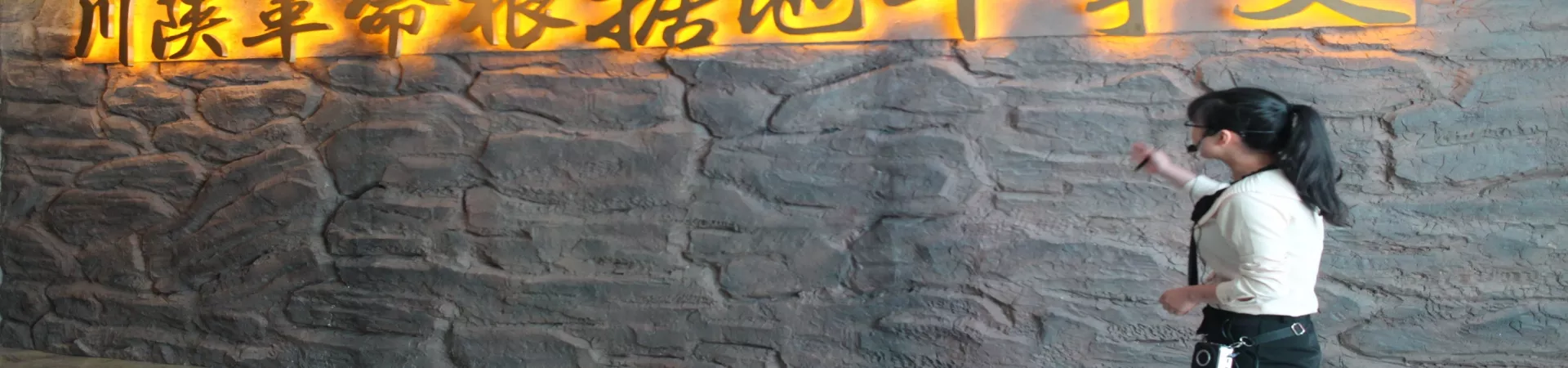
Subtitle: A Journey Through Revolutionary History: Exploring the Chuan-Shaan Museum in Bazhong, China
Introduction: A Portal to a Pivotal Era
Nestled in the mountainous heart of Bazhong City, Sichuan Province, the Chuan-Shaan Museum stands not merely as a repository of artifacts, but as a profound gateway to understanding one of the most critical chapters in modern Chinese history. This institution is dedicated to preserving and interpreting the legacy of the Chuan-Shaan Soviet, a significant revolutionary base area established by the Chinese Workers' and Peasants' Red Army during the 1930s. For any visitor seeking to comprehend the historical forces that shaped contemporary China, a visit to this museum is an indispensable and moving experience. It transcends typical historical exhibitions, offering an immersive narrative of struggle, ideology, and resilience set against the rugged landscape of the Sichuan-Shaanxi border.
I. Historical Context: The Chuan-Shaan Soviet * 1.1. The Crucible of Revolution The early 1930s was a period of intense turmoil and transformation in China. Following the setbacks in southern revolutionary bases, sections of the Fourth Front Army of the Red Army moved into the strategic border region of Sichuan and Shaanxi. Here, between 1932 and 1935, they consolidated their forces and established the Chuan-Shaan Revolutionary Base, often referred to as the Chuan-Shaan Soviet. This area became the largest Soviet zone outside the primary Jiangxi base, serving as a crucial sanctuary, a logistical hub, and a testing ground for political and military strategies. * 1.2. Strategic Significance and Daily Life The museum meticulously outlines why this particular region was chosen—its defensible mountainous terrain, the support of the local populace, and its relative remoteness from the Nationalist government's strongholds. Exhibits go beyond military campaigns to depict the social and economic experiments undertaken, including land reform, the establishment of local Soviets, and the development of education and culture under extreme conditions. This context transforms the historical figures from distant icons into relatable individuals and communities striving for a vision.
II. Museum Architecture and Layout * 2.1. Design Philosophy and Symbolism The museum's architecture itself is a statement. Often incorporating modernist lines with symbolic references to the era it represents—such as angular forms reminiscent of the region's cliffs or the star emblematic of the Red Army—the building is designed to evoke reflection. The spatial journey through the museum is carefully curated to guide visitors from the broader historical context into the intimate details of the struggle. * 2.2. Thematic Exhibition Halls The permanent collection is typically organized into a series of interconnected halls, each focusing on a specific theme. The flow is chronological yet thematic, ensuring a coherent narrative. * 2.2.1. Hall of Origins and Establishment: This section covers the background leading to the base's creation, featuring maps, documents, and photographs illustrating the army's arduous Long March into the region and the initial founding congresses. * 2.2.2. Hall of Military Campaigns and Defense: Here, the focus shifts to the military aspect. Detailed dioramas, strategic maps, displays of weaponry (from rudimentary homemade rifles to captured arms), and personal accounts from soldiers bring to life the famous battles fought to defend the Soviet against encirclement campaigns. * 2.2.3. Hall of Political and Social Construction: Perhaps the most revealing section, it showcases how life was organized within the base. Exhibits include decrees on land redistribution, specimens of currency issued by the Soviet bank, textbooks from Red Army schools, propaganda posters, and everyday items used by soldiers and civilians, highlighting the attempt to build a new society. * 2.2.4. Hall of Spirit and Legacy: This contemplative space addresses the later period, including the Red Army's eventual departure on the continuing Long March, and explores the enduring legacy of the "Chuan-Shaan Spirit"—emphasizing perseverance, sacrifice, and unwavering belief.
III. Key Artifacts and Immersive Experiences * 3.1. Treasures of the Collection The museum's strength lies in its authentic artifacts. Key pieces might include the original handwritten minutes of a key Soviet conference, the worn leather satchel of a famous commander, finely crafted sewing kits used by female soldiers, and poignant letters home from young recruits. Each object tells a micro-story, adding depth and humanity to the broader historical narrative. * 3.2. Multimedia and Interactive Displays To engage a modern audience, the museum skillfully integrates technology. Touch-screen interfaces allow visitors to explore digital archives of veterans' testimonies. Soundscapes recreating the atmosphere of a bustling Soviet market or the tension before a battle fill certain galleries. Perhaps most powerful are the panoramic or 3D theaters that visually transport visitors to key historical sites in the surrounding region, connecting the museum experience to the actual geography.
IV. Practical Information for Visitors * 4.1. Location and Accessibility The Chuan-Shaan Museum is located in Bazhong, a prefecture-level city in northeastern Sichuan. The city is accessible by rail and highway, with the museum itself often situated in a dedicated cultural district or a historically significant area within the city. Local transportation, including buses and taxis, can easily bring visitors to its gates. * 4.2. Opening Hours and Contact The museum is generally open to the public from 9:00 AM to 5:00 PM daily. It is advisable to allocate at least two to three hours for a thorough visit. For the most current information regarding special exhibitions, temporary closures, or group tour arrangements, visitors can contact the museum directly at +86 (827) 522-9398. * 4.3. Enhancing Your Visit To fully appreciate the context, reading about the history of the Chinese Soviet movements and the Long March beforehand is highly recommended. Consider joining one of the museum's guided tours, often available in Mandarin, which provide expert commentary and insights not always apparent from display captions. The museum gift shop may offer scholarly publications, replica artifacts, and historical literature for those wishing to delve deeper. Furthermore, the museum often serves as the starting point for broader "red tourism" itineraries in Bazhong, which include visits to nearby revolutionary sites, battlefields, and memorials scattered throughout the dramatic countryside.