Wudangzhao
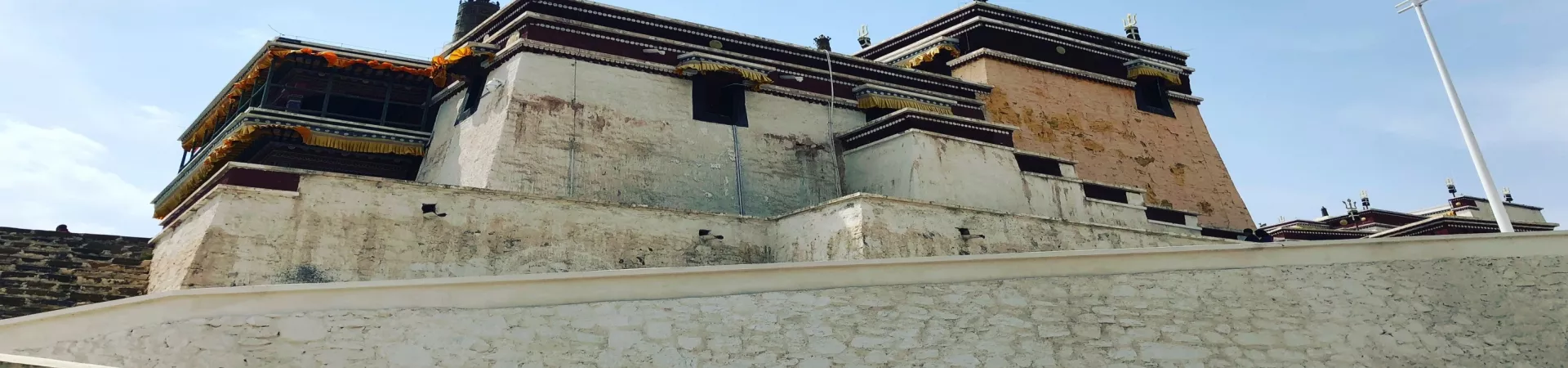
Wudangzhao: A Majestic Beacon of Tibetan Buddhism in Baotou
Wudangzhao, originally named Badaga'er Temple, translates to "White Lotus Flower" in Tibetan. It stands as the largest Gelugpa Tibetan Buddhist monastery in the Inner Mongolia Autonomous Region. Nestled approximately 60 kilometers northeast of Baotou City within the scenic Wudang Gully, adorned with numerous willow trees, it earns its name "Wudangzhao," where "Wudang" in Mongolian signifies "willow tree," and "zhao" means "temple."
Spiritual Oasis in Nature:
Founded during the Kangxi era of the Qing Dynasty (1662–1722) by the first living Buddha, Lobzang Gyatso, Wudangzhao underwent renovations in the 14th year of the Qianlong reign (1749), gradually expanding into the grandeur it embodies today. Designated as a national key cultural relic and a AAAA-rated scenic area, Wudangzhao proudly joins the ranks of China's four renowned Tibetan Buddhist monasteries alongside the Potala Palace in Tibet, Ta'er Temple in Qinghai, and Labrang Monastery in Gansu. Its rich collection of cultural relics and artifacts places it among the foremost in the autonomous region, boasting treasures seldom found elsewhere in China.
Architectural Marvels:
Wudangzhao's architectural ensemble exudes a distinctive Tibetan Buddhist style. Immaculate white walls characterize the structures nestled within the mountains of Wudang Gully. The grandest edifice, Sugqin Hall, situated at the forefront, houses the largest copper Buddha statue. Adjacent to Sugqin Hall is the teaching hall, Qieyilin Hall, dedicated to elucidating Buddhist doctrines. The central structure, Dongkuoer Hall, stands as the focal point, flanked by Gehide Hall, Akuide Hall, and Mandala Hall, each contributing to the spiritual ambiance of Wudangzhao.
Cultural Celebrations:
Annually, on the 21st day of the third lunar month, Wudangzhao hosts the Spring Festival, a grand ceremony held in the main hall. Pilgrims converge from all directions, presenting hadas, burning incense, and offering sacrificial items in a profoundly ceremonial manner. The festivities extend to traditional events such as horse racing, archery, and wrestling, enriching the cultural experience for attendees.
Practical Information:
Contact: For inquiries and assistance, contact 0472-8715022.
Duration: Plan for a visit of 1 to 3 hours to fully immerse yourself in the spiritual and cultural ambiance.
Getting There: Accessible by various transportation means, including buses, taxis, or private charter, visitors can easily reach Wudangzhao from Baotou.
Admission: A nominal fee of 60 RMB for a general ticket is applicable, granting access to this spiritual haven.
Conclusion:
Wudangzhao stands not just as a religious sanctuary but as a testament to the enduring cultural legacy of Tibetan Buddhism. With its architectural grandeur and serene surroundings, Wudangzhao offers visitors a transformative journey into the heart of Tibetan spirituality and the rich cultural heritage of Inner Mongolia. A visit to Wudangzhao is an odyssey into a realm where time seems to stand still, and the echoes of ancient rituals resound through the ages.