The Qin Great Wall Site
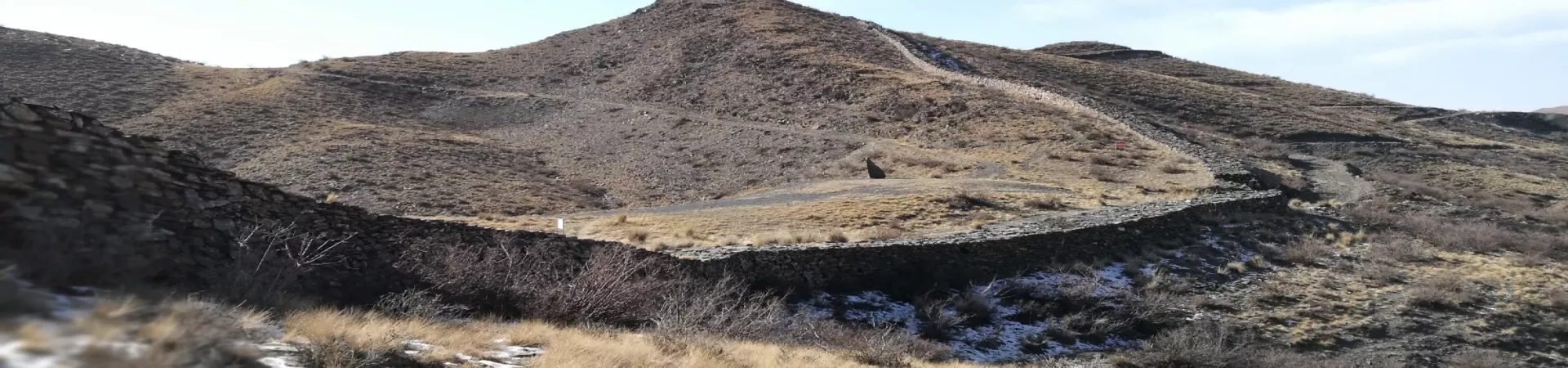
The Great Wall Remnants in Baotou: Echoes of Qin's Grandeur
Beyond the early Zhao Great Wall constructed by King Wuling, Baotou harbors a relatively intact section of the Qin Great Wall. In 215 B.C., Qin Shi Huang dispatched General Meng Tian with a formidable army of 300,000 to march northward, seizing territory in present-day Henan. To safeguard against the encroachment of northern nomadic tribes, the emperor ordered the construction of the Great Wall, a colossal barrier stretching from Lintunbei in the west (modern-day Shandan County, Gansu) to Liaodong Commandery in the east (present-day Liaoning). As it traverses Ningxia into Inner Mongolia, it meanders eastward from Wolf Mountain through locations like Xidoup, Yin Hao, and Da Miao villages in the northern part of Guyang County, entering Wuchuan County by way of the eastern regions of Daqing Mountain. The wall extends all the way into Hebei, leaving behind a plethora of relics and traces that attest to its historical significance.
Historical Vestiges:
Qin Currency Discoveries: In 1947, a Qin-era kiln site was unearthed in Zhongbao Village, yielding tens of thousands of Qin half-liang copper coins, providing concrete evidence of Qin rule.
Widespread Qin Tile Remnants: Numerous Qin tiles are scattered across the landscape, with visible concentrations at Longwangtai to the east of the city, Baitasi (White Pagoda Temple), and Bandagou in the north of Minshan Township.
Man-Made Trenches in Northern Mountain Areas: Extensive artificial trenches are found in the northern mountainous regions of Min County. The Zhuoping Trench, situated about 40 kilometers northwest of the county seat, consists of two sections. One extends southwest along the ridgeline, descending through two terraces directly to the banks of the Tao River, spanning approximately 4 kilometers, locally known as the Ancient City Trench. The other, known as the Hudao, connects to the Ancient City Trench at the edge of a stream, extending northwest to the south of Maliantan Village, covering approximately 1.5 kilometers. The local population refers to these as the Ancient City Trench and Hudao, respectively. The Ancient City Trench measures 5-11 meters in width, with depths mostly exceeding 5 meters. The trench bottom has been cultivated by villagers and converted into farmland. According to local accounts, these ancient trenches have endured for ages, leading to the inference that they are remnants of Qin-era habitation.
Practical Information:
Contact: For specific inquiries, contact 0932-3687480.
Admission: Details regarding ticket prices can be obtained by contacting the scenic area.
Opening Hours: 09:00-17:00 (Monday-Sunday, Year-round)
Information last updated: January 8, 2023
In revisiting the Qin Wall remnants in Baotou, one encounters not just an ancient structure but an enduring testament to the grandeur of the Qin Dynasty, a marvel that continues to whisper tales of a bygone era.